For more than six decades, the Search for Extraterrestrial Intelligence has largely been driven by the assumption that all advanced civilisation will eventually build radio transmitters. Astronomers have pointed antennas towards distant stars, searching for narrowband signals and other emissions that might reveal the presence of technology. Yet a civilisation could build pyramids, reshape planets with sprawling hydraulic systems and even explore other star systems without ever broadcasting a message towards Earth. Planetary Radar are about the only signals that can be picked up from the closest stars.
Technology leaves physical traces. On our planet, ancient cities, burial mounds, agricultural terraces and monuments preserve evidence of civilisations long after their builders have vanished. Their geometry reveals deliberate construction, while their materials record the technologies and resources available to the people who made them. These landscapes modified at scale by ancient humans have become an archaeological archive. Could the same principle work across the Solar System?
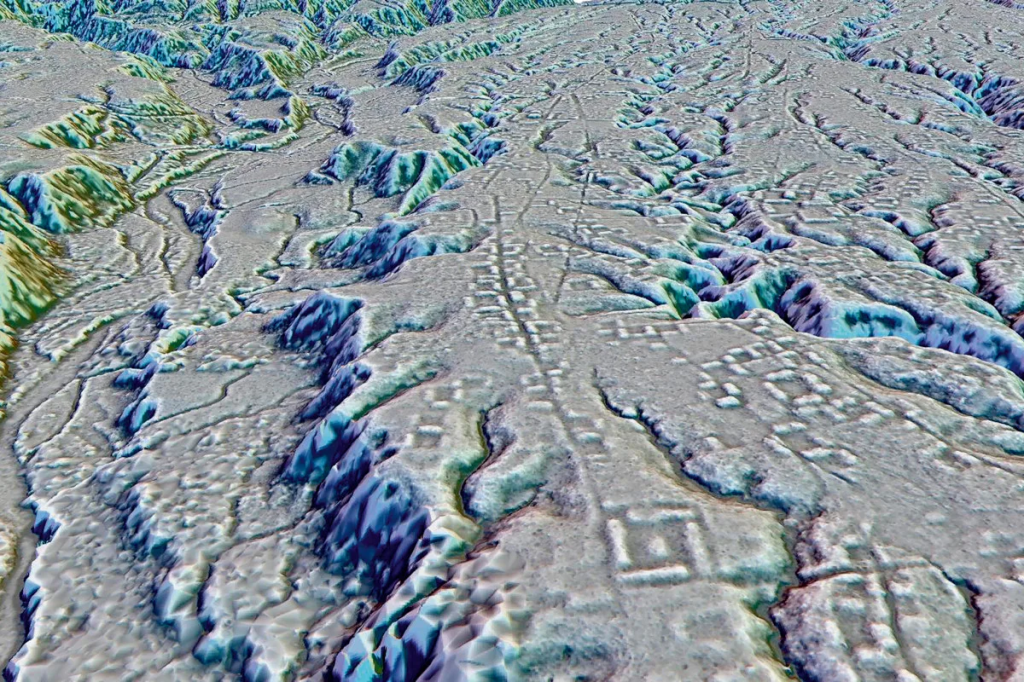
A lost city in Ecuador revealed by aerial lidar scans.
The search for extraterrestrial intelligence is beginning to expand into a form of planetary archaeology. Researchers are investigating whether artificial structures, manufactured materials, microscopic debris and deliberate alterations to planetary surfaces could survive long after their creators disappeared. The Moon, asteroids and other geologically quiet worlds offer particularly intriguing places to look. Their surfaces may preserve records of events stretching back billions of years.
The discovery of alien machinery is not even the most exciting aspect of this kind of search. If technological civilisations can leave durable physical signatures, the history of intelligence could be marked on the surfaces of worlds that have never hosted life themselves.
Radio Silence
Radio SETI searches for electromagnetic emissions that might distinguish technological activity from natural astrophysical processes. A sufficiently powerful transmitter could produce a signal detectable across interstellar distances, and a deliberately engineered transmission might possess characteristics difficult to explain through known natural sources.
However, radio searches face a problem of timing and geometry. A transmission must reach Earth while an observatory is listening, and its frequency, strength, duration and direction must fall within the search’s detection capabilities. A civilisation that broadcasts intermittently, uses unfamiliar communication technologies or remains radio-quiet could escape detection.
Even a civilisation that once transmitted powerful signals might leave behind no readily detectable radio emission millions of years later. Electromagnetic broadcasts disperse through space, while their sources may cease operating. A physical structure, by contrast, could persist after its builders have disappeared.
Signatures on Landscapes
Human civilisation has altered Earth’s surface on a planetary scale. Roads form connected networks. Cities produce distinctive arrangements of buildings and streets. Agricultural terraces follow slopes, while ancient monuments exhibit geometric regularities that reflect planning and construction.
These patterns provide clues to intentionality. Natural processes also generate geometry, symmetry and repetition, so no single shape establishes an artificial origin. Archaeologists instead examine relationships among structures, their surroundings, construction materials and the processes capable of producing them.
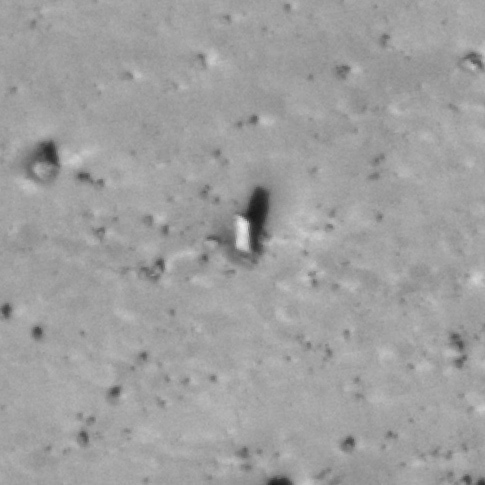
The ‘Mars Monolith’ is an apparently rectangular object, captured by NASA’s Mars Reconnaissance Orbiter.
Planetary technosignature research applies this reasoning beyond Earth. A candidate structure would need to exhibit features consistent with manufacture or engineering, while surviving scrutiny against geological explanations. A regular arrangement of objects, an unusual excavation or a material with an unexpected composition might justify closer investigation.
The challenge is to recognise technology without assuming that extraterrestrial engineering must resemble human architecture. An alien civilisation might favour materials, geometries or construction methods that have no direct terrestrial equivalent.
The anthropocentric trap
The search for technological life has also faced cultural obstacles. For decades, the prospect of extraterrestrial artefacts attracted ridicule in some scientific settings, while sensationalised accounts blurred the boundaries between testable hypotheses and unsupported claims. That history made it harder to separate unconventional research questions from extraordinary conclusions.
A more rigorous approach brings together planetary science, archaeology, materials analysis and machine learning. Each discipline contributes a different diagnostic tool. Archaeology examines patterns of intentional modification, planetary geology identifies natural processes, materials science tests the composition of candidate objects, and artificial intelligence helps process vast quantities of data.
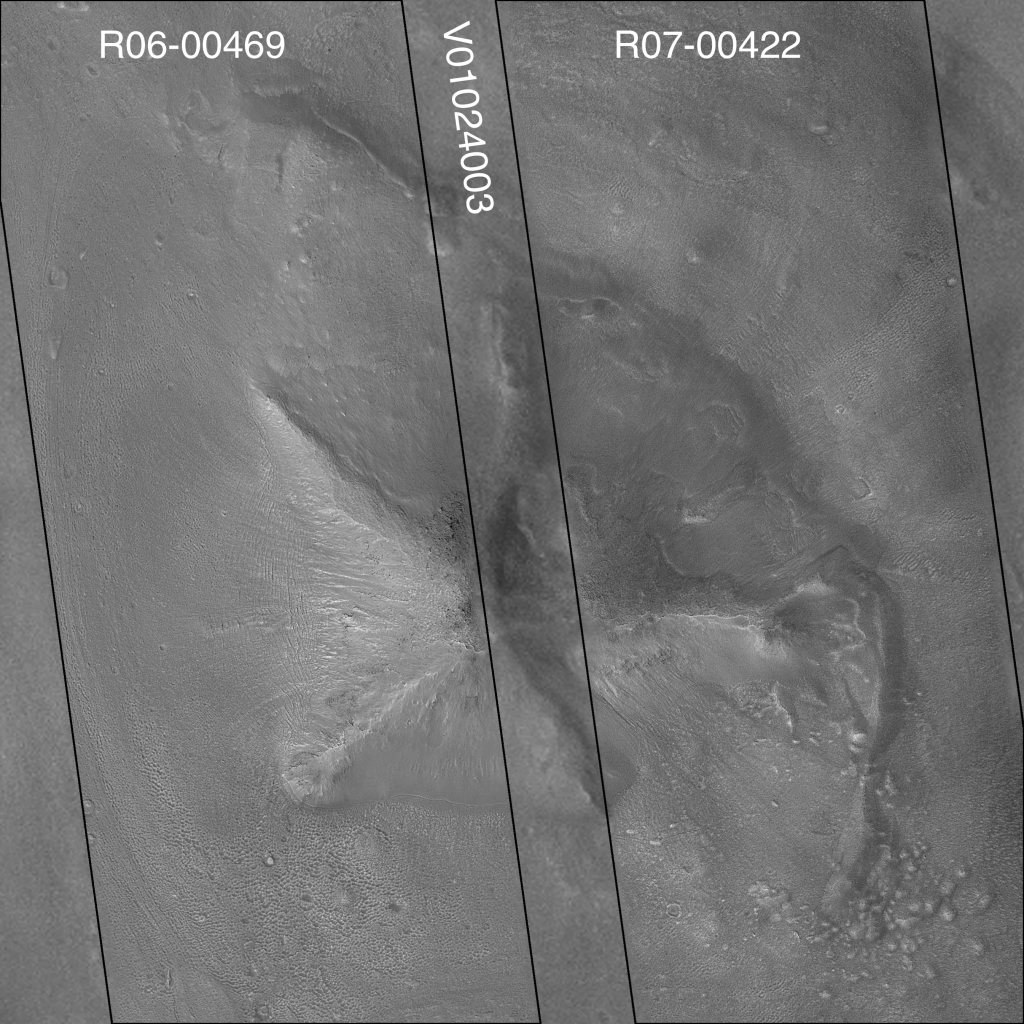
A pentagonal massif on Mars nicknamed the ‘D&M Pyramid’ after Vincent DiPietro and Gregory Molenaar, two NASA computer scientists who discovered and analyzed the landform. (Image Credit: NASA/JPL/Malin Space Science Systems)
The goal is to formulate hypotheses that can be tested against observations. An unusual feature becomes scientifically interesting when researchers can identify what produced it, establish what evidence would distinguish competing explanations and determine whether existing data can supply that evidence. The search then becomes a problem of detection rather than belief.
Earth is a difficult place to preserve ancient technology. Wind erodes monuments, water dissolves minerals, vegetation fractures stone, and sediment buries entire landscapes. Plate tectonics carries crust into the mantle, recycling material that once lay at the surface. The oldest surviving rocks have passed through immense geological changes.
Over millions of years, these processes can destroy the evidence of a civilisation. A technologically advanced species that disappeared on Earth hundreds of millions of years ago might leave behind a geological signature difficult to distinguish from natural processes today.
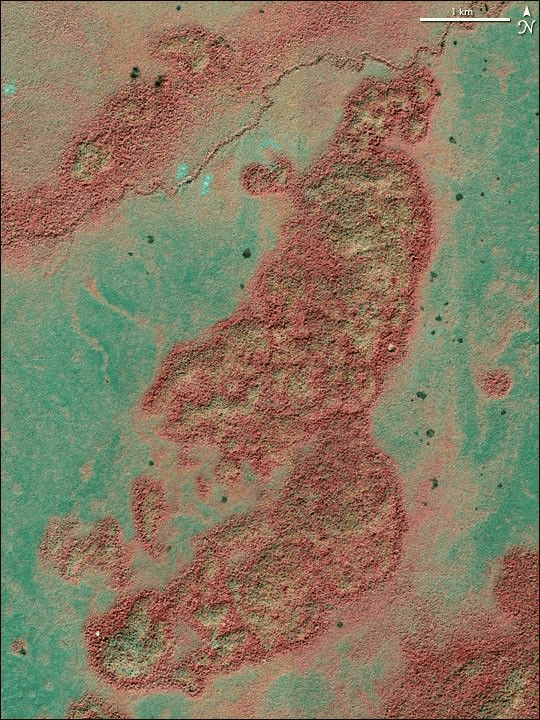
The yellow regions in satellite imagery mark forest over ancient Maya ruins. Maya monuments were built of limestone; as they weathered they altered soil chemistry, changing moisture and nutrient levels so that certain plants died, stayed away, or became discolored. These lasting vegetation differences shift the near-infrared reflectance, making the canopy over ruins appear yellow against the red of healthy surrounding forest. Image created by Jesse Allen, Earth Observatory using imagery provided courtesy of Tom Sever and Burgess Howell, Marshall Space Flight Center, and GeoEye.
Other worlds offer a different environment. The Moon has no substantial atmosphere, liquid-water weathering or active plate tectonics. Its surface changes primarily through impact cratering, radiation exposure and the continual bombardment of micrometeorites. These processes can damage or bury objects, but they also allow ancient surface features to survive for immense periods.
An abandoned spacecraft on the Moon could remain recognisable long after the civilisation that built it has vanished. Its exposed surfaces would gradually erode under micrometeorite impacts, while some components could become buried beneath ejecta from nearby collisions. Yet the resulting debris might retain identifiable manufactured materials, unusual geometries or chemical signatures.
Asteroids offer another potential archive. Small bodies such as Dimorphos, the asteroid moon whose orbit NASA’s DART spacecraft altered in 2022, preserve records of impacts and material transport across their surfaces. Their weak gravity and limited geological activity create environments in which some objects could survive for extended periods.
Mars presents a more complicated case. Its ancient surface preserves geological features billions of years old, but wind erosion, dust deposition, volcanism and other processes can obscure or destroy evidence. The planet’s geological history also includes periods when liquid water flowed across its surface, creating additional pathways for alteration.
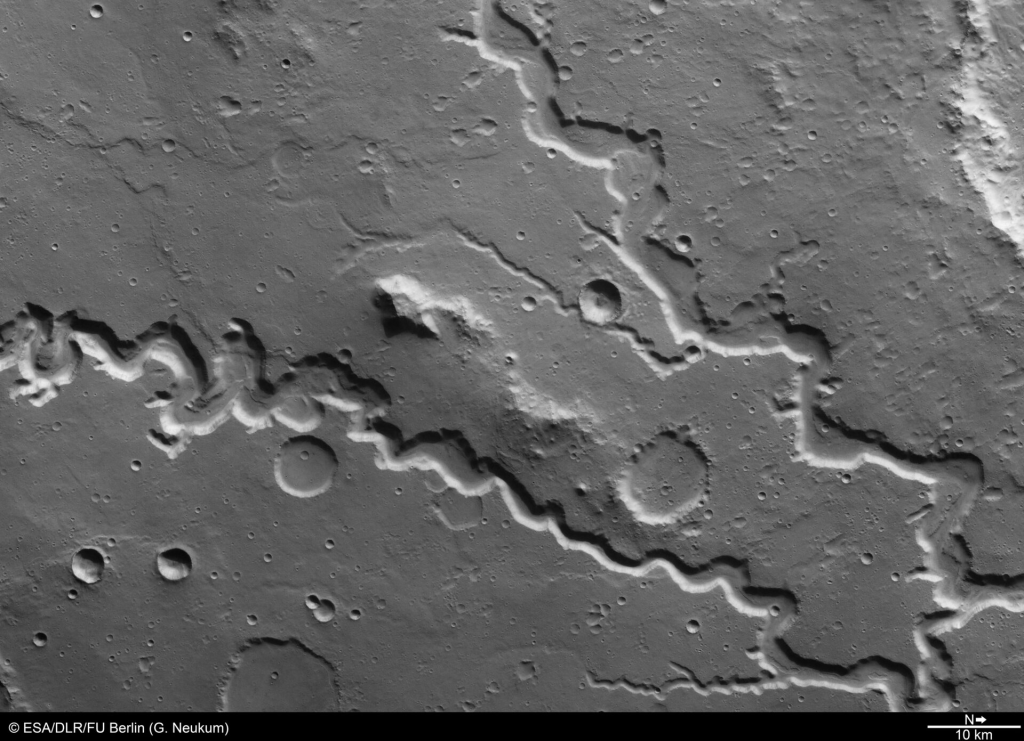
Two arms of the Nanedi Valles on Mars. (Image Credit: ESA/DLR/FU Berlin, G Neukum)
Farther out, some Kuiper Belt Objects preserve exceptionally ancient material from the Solar System’s formation. Their surfaces could retain physical and chemical records of early Solar System history, although impacts, radiation and internal geological activity vary from object to object.
These worlds offer different degrees of preservation. None guarantees that an artefact would survive intact for billions of years. Together, however, they provide a vast collection of environments in which the physical remains of technology could easily outlast the societies responsible for creating them.
Interstellar Debris
The Moon is particularly interesting because it collects material arriving from space. Its surface acts as a natural catchment, accumulating particles from asteroids, comets and other sources over billions of years.
Earth’s atmosphere destroys or transforms much of the incoming material before it reaches the ground. The Moon’s lack of an atmosphere allows many particles to strike its surface directly. Impacts can then mix this material into the loose layer of fragmented rock and dust known as regolith.
The result is a geological archive containing material from across the Solar System, very likely including traces of extrasolar matter.
Estimates place the concentration of extrasolar debris in lunar regolith at around 30 parts per million, with approximately 3 parts per million associated with material deposited more than four billion years ago.
These figures should be treated as model-dependent estimates rather than established measurements of a confirmed extrasolar component. The actual abundance depends on assumptions about the flux of interstellar material, its interaction with the lunar surface, its survival during impacts and its subsequent preservation.
Even a small extrasolar fraction could be scientifically valuable. A sample containing material from another star system would provide an opportunity to investigate chemistry that developed under different stellar and planetary conditions.
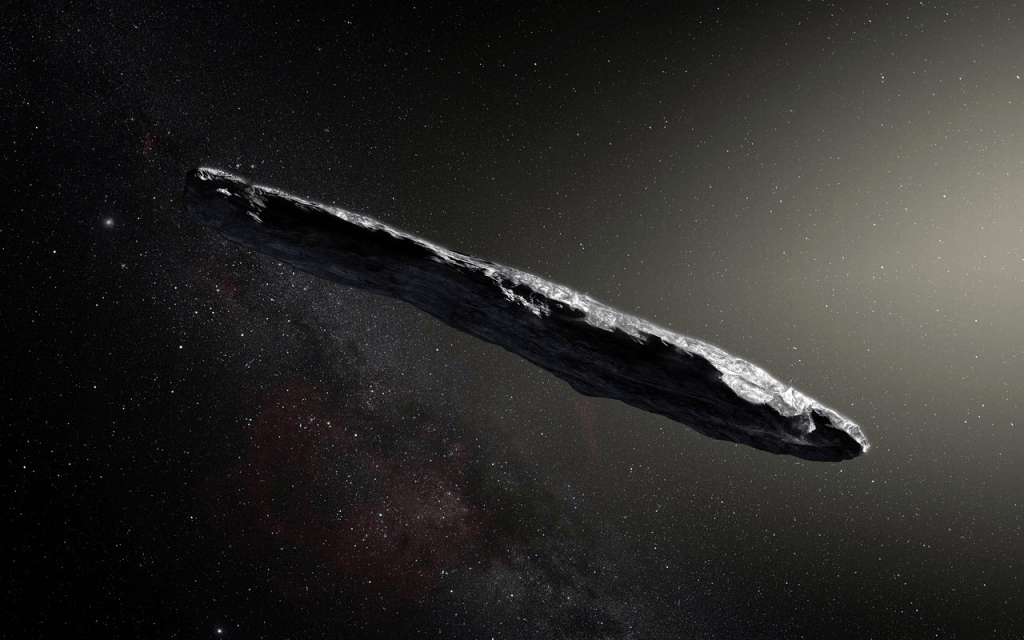
Illustration of ‘Oumuamua, the first confirmed interstellar visitor to the Solar System. (Image Credit: ESO/M Kornmesser).
Organic carbon would be one target. Some estimates place extrasolar organic carbon in lunar material at concentrations around 0.3 parts per million. Researchers could also investigate amino acids, nucleobases and other molecular building blocks associated with terrestrial biochemistry.
Finding these molecules would require careful interpretation. Amino acids and organic carbon can form through non-biological processes, and some organic material could originate from Earth or from other bodies within the Solar System. A convincing extrasolar identification would require evidence of provenance, supported by chemical composition, isotopic measurements and the geological context of the sample.
Atoms of the same element can contain different numbers of neutrons. These variants, called isotopes, behave similarly in many chemical reactions but can preserve clues to the environments in which a material formed.
The ratios of carbon-12 to carbon-13, nitrogen-14 to nitrogen-15 and different oxygen isotopes can help researchers distinguish materials with different origins. Stellar nucleosynthesis, chemical reactions and biological activity can all produce characteristic isotopic patterns.
A sample with an unusual isotope ratio might therefore indicate material formed outside the Solar System. However, isotope anomalies also arise through ordinary astronomical and geological processes. Researchers would need to compare several independent measurements against known sources before attributing an anomaly to extrasolar material.
The same analytical logic could help identify manufactured substances. Industrial alloys, synthetic compounds or materials with unusual elemental distributions might retain evidence of deliberate processing. Their presence would raise further questions about how they formed, where they originated and whether natural processes could reproduce their properties.
The strongest evidence would combine several independent signatures, an unusual composition, an identifiable manufacturing process, a plausible preservation history and a location consistent with the proposed origin.
A single strange molecule would offer a clue. A coherent collection of chemical and structural evidence could support a much stronger conclusion.
Dust From Dead Civilisations
Large spacecraft and surface installations are only one possible form of technological evidence. Civilisations that manufacture machines on a vast scale could also release enormous quantities of microscopic debris.
On Earth, industrial activity produces particles of metals, polymers, combustion products and other manufactured substances. Spacefaring societies might generate their own technological dust through spacecraft construction, mining, propulsion systems and the gradual breakdown of machinery. The galaxy may be brimming with Ozymandian Dyson structures.
Some theoretical discussions of extraterrestrial artefacts use the term Arkhipov particles for hypothetical microscopic technological debris associated with advanced civilisations. The concept extends the search for technosignatures from visible structures to particles that could travel through interstellar space.
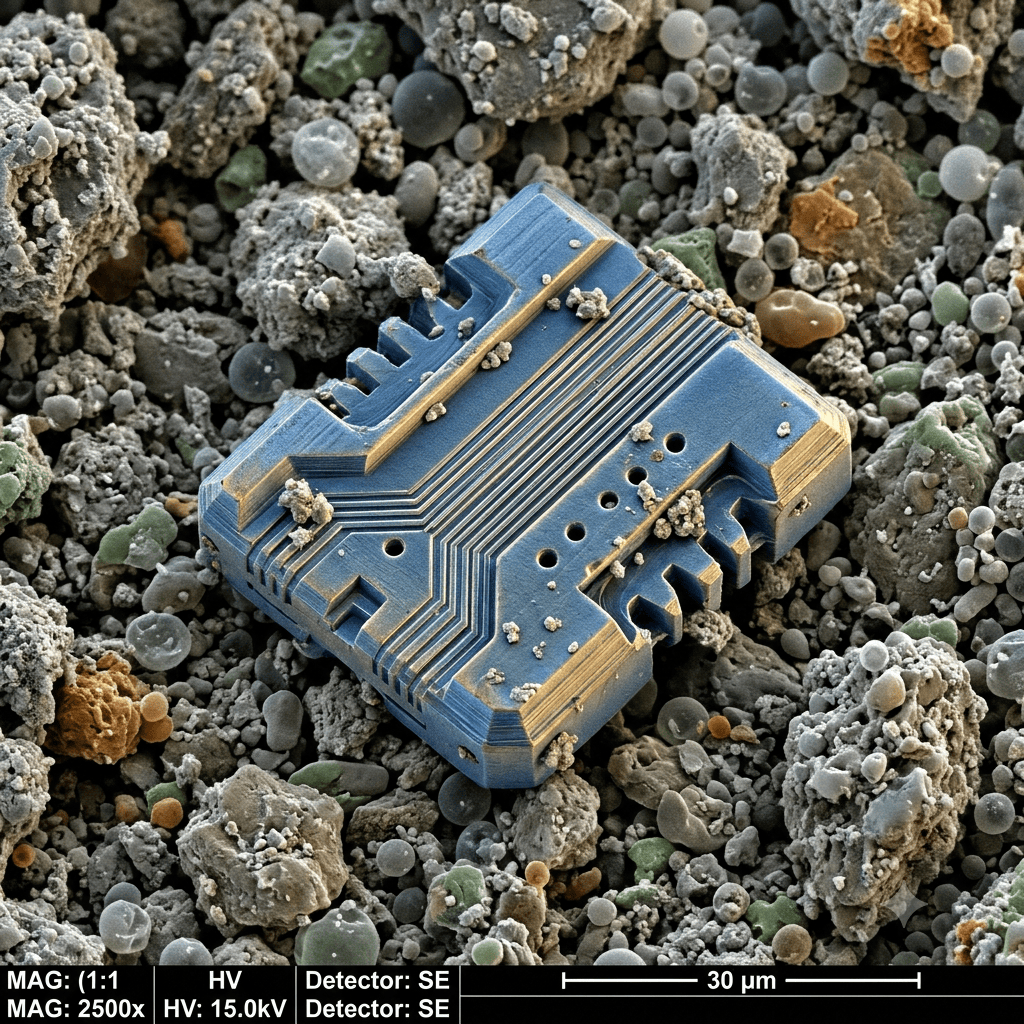
Arkhipov Particles are named in honor of Ukrainian astrophysicist Alexey V Arkhipov, who pioneered the theoretical study of non-terrestrial debris drifting into our solar system. Arkhipov particles are hypothetical microscopic grains or fragments of extraterrestrial technology, such as space litter, disintegrated probes, or industrial debris, that travel through interstellar space. This image was generated using Gemini.
Radiation pressure transfers momentum from photons to matter. For sufficiently small particles, the force can become significant relative to gravity, changing their trajectories through a planetary system. Stellar winds can also influence charged particles and dust, while interstellar magnetic fields affect the movement of electrically charged material.
These forces could redistribute microscopic debris over long periods. Their effectiveness depends on particle size, composition, electrical charge, initial velocity and the environment through which the particles travel. Radiation pressure alone would not propel every manufactured particle across interstellar distances, and the survival of fragile materials over such journeys remains a substantial challenge.
Nevertheless, microscopic debris offers a different search strategy. Researchers could investigate unusual particles trapped in planetary regolith, collected in spacecraft samples or preserved in other suitable materials. Laboratory instruments could examine their internal structure, elemental composition and isotopic signatures.
The difficulty lies in establishing that a particle is genuinely artificial. Human spacecraft already leave small amounts of contamination on the Moon and other bodies, while natural cosmic processes produce exotic minerals and complex organic compounds. Any proposed extraterrestrial technological particle would need to be distinguished from both.
The search for microscopic technosignatures therefore complements the search for large artefacts. One looks for machines and engineered landscapes, the other looks for the material residue of technological activity. Both could preserve evidence long after a civilisation’s active transmissions have ceased.
Teaching Machines to Find Ruins
The Solar System contains far more terrain than researchers can inspect manually. Spacecraft have returned enormous volumes of orbital imagery, but identifying a small, unusual structure within millions of square kilometres of cratered landscapes is a formidable task. Artificial intelligence offers a way to narrow the search.
On Earth, archaeologists already use satellite imagery to identify buried settlements, ancient roads, agricultural systems and monumental architecture. Human construction often produces spatial patterns that differ statistically from the surrounding landscape. A network of terraces follows a carefully organised contour, an ancient settlement produces clusters of structures, a large monument creates geometric relationships that persist across different viewing angles.
These patterns provide examples of how intentional activity modifies terrain. Consider the Ziggurat of Ur in Iraq, the agricultural terraces at Moray in Peru and the Pyramid of the Sun at Teotihuacan in Mexico. Each structure reflects a different purpose, building tradition and relationship with its environment.
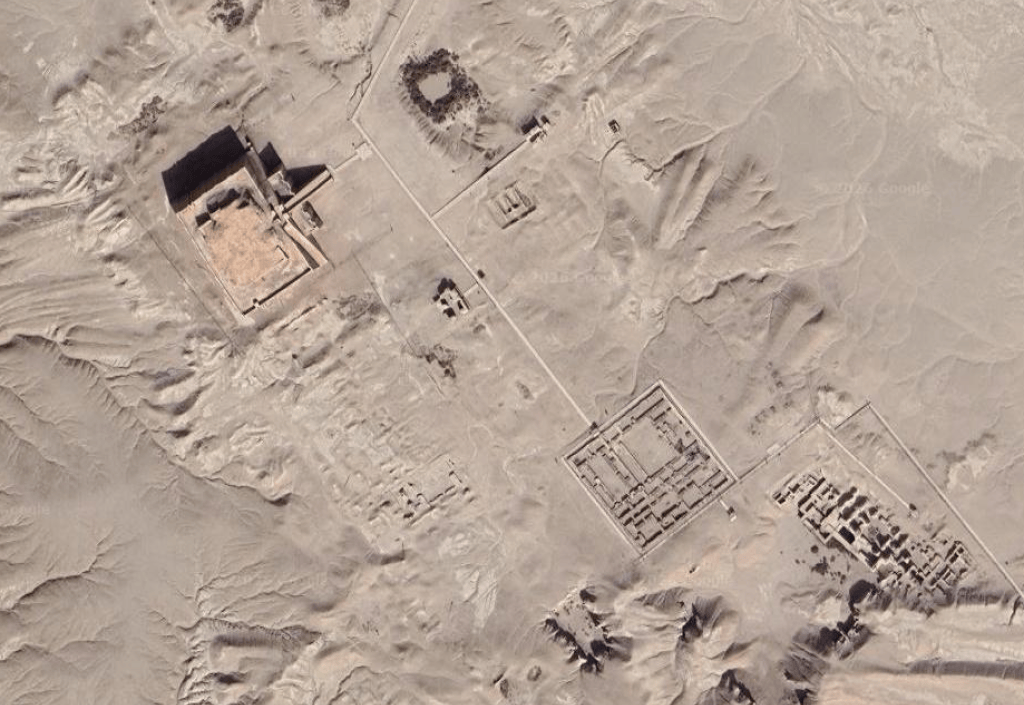
The Ziggurat of Ur in Iraq on Google Maps.
Their geometries offer useful training examples for computer vision. A supervised machine-learning model learns from images labelled by human researchers, gradually identifying features associated with known structures. Once trained, it can search new images for similar patterns.
Applied to planetary imagery, such a model might identify candidate features with regular edges, repeated forms or unusual spatial organisation.
Human monuments reflect human needs and construction methods. An alien structure could use unfamiliar shapes, materials or spatial arrangements, making it invisible to a detector trained exclusively on terrestrial examples.
Researchers must therefore distinguish two tasks: recognising structures that resemble known technology and identifying features that depart from expectations in ways that merit investigation.
The first is a conventional classification problem. The second requires methods that can identify unusual patterns without already knowing what those patterns mean.
Unsupervised and self-supervised machine learning offer ways to explore planetary images with fewer assumptions about the appearance of an artefact. These approaches learn statistical representations of data and can flag images or features that differ from expected patterns.
A variational autoencoder, for example, learns a compressed representation of images and attempts to reconstruct them. If a feature differs substantially from the patterns represented in its training data, the reconstruction may expose that difference. Other anomaly-detection systems identify unusual combinations of shape, texture and spatial relationships.
Such models cannot establish that an anomaly is artificial. A rare volcanic formation, an unusual impact crater or a patch of disturbed regolith might also attract attention. Their value lies in identifying candidates that human analysts might otherwise overlook.
Object-detection systems can perform a complementary task by locating known objects within complex images. Researchers working with Lunar Reconnaissance Orbiter imagery have demonstrated the use of machine-learning approaches to identify human hardware, including Apollo landing modules and Soviet Luna spacecraft, alongside natural features such as volcanic pits and fresh impact craters.
Systems described in this research area, including YOLO-ET, illustrate how computer vision can be adapted to extraterrestrial environments. Their performance depends on the imagery, training procedures, target classes and validation methods used. Detecting known spacecraft is a useful demonstration of the technique, but it does not establish the presence of extraterrestrial artefacts.
The larger ambition is to build systems capable of screening vast planetary datasets, ranking unusual features and directing researchers towards the most promising candidates. Machine learning becomes a discovery tool when it helps scientists decide where to look next.
Orbital photographs reveal shape, texture and shadows. They provide only part of the evidence needed to establish whether an unusual feature is artificial.
A structure could lie beneath dust, regolith or sediment. Other objects might have been partly buried by impact ejecta, making their surface geometry difficult to recognise. Researchers therefore need several complementary methods to examine candidate sites.
Beyond visible light
High-resolution cameras aboard the Lunar Reconnaissance Orbiter and Mars Reconnaissance Orbiter can resolve surface features at scales of tens of centimetres per pixel in their finest imaging modes. The Lunar Reconnaissance Orbiter Camera’s Narrow Angle Cameras and the Mars Reconnaissance Orbiter’s HiRISE instrument provide detailed views of geological formations, spacecraft landing sites and surface disturbances.
Optical imagery can reveal straight edges, repeated geometries, regular spacing and patterns of shadow consistent with constructed objects. Yet perspective, lighting and image resolution can make natural formations appear artificial. Researchers must compare candidate features across images taken under different illumination conditions and examine their geological surroundings.
Reflectance spectroscopy adds chemical information. Materials absorb and reflect different wavelengths of light according to their composition and physical structure. Spectral measurements could help identify unusual minerals, metal-rich surfaces or compounds that warrant laboratory analysis. A spectral anomaly alone would still require an explanation, since natural minerals and space-weathering processes produce complex signatures.
Radar and laser instruments provide other ways to investigate terrain. Ground-penetrating radar can reveal buried layers and subsurface structures where the instrument, wavelength and ground conditions permit sufficient penetration. LiDAR measures distance using laser pulses and can generate precise three-dimensional maps of surfaces. Orbital radar and laser altimetry can help characterise terrain, although their capabilities differ from close-range ground-penetrating surveys.
No single instrument supplies a definitive answer. The strongest strategy combines geometry, topography, reflectance, radar measurements and geological context to test whether a candidate feature fits a natural explanation.
The same measurements can reveal new impact structures, buried geological boundaries and previously overlooked surface processes. The search for artificial objects could therefore produce useful discoveries even if every candidate ultimately proves natural.
Three Cosmic Histories
If researchers discover an object with convincing evidence of manufacture on an ancient planetary surface, several explanations would deserve investigation. The possibilities differ radically in their implications, and each would require a distinct chain of evidence.
One hypothesis proposes that technological civilisations elsewhere in the galaxy have sent spacecraft through the Solar System. Such visitors might include autonomous probes, derelict vehicles or spacecraft propelled by light sails, which use radiation pressure to generate thrust.
A probe could have passed through the Solar System millions of years ago, explored a planetary body and left behind hardware. A more ambitious proposal involves Von Neumann probes: hypothetical autonomous machines capable of reproducing themselves using resources gathered from their surroundings.
Self-replication could, in principle, allow a population of probes to spread through a galaxy over long periods. However, the engineering challenges of autonomous repair, resource extraction, reliable replication and long-term navigation remain substantial. No evidence currently establishes that extraterrestrial Von Neumann probes have visited the Solar System.
If such a visitor had left a physical object on the Moon or an asteroid, researchers would need to establish its artificial construction and investigate its material composition, age and possible trajectory history. An object with a composition inconsistent with known Solar System materials could strengthen the case for an extrasolar origin, although unusual composition alone would be insufficient.
A more radical hypothesis asks whether a technological species could have evolved within the Solar System before humanity.
Early Earth possessed liquid water and the chemical ingredients required for life billions of years ago. Ancient Mars also experienced environments that may have supported microbial life. Venus may have passed through earlier climatic conditions different from those prevailing today, although the details of its ancient habitability remain uncertain.
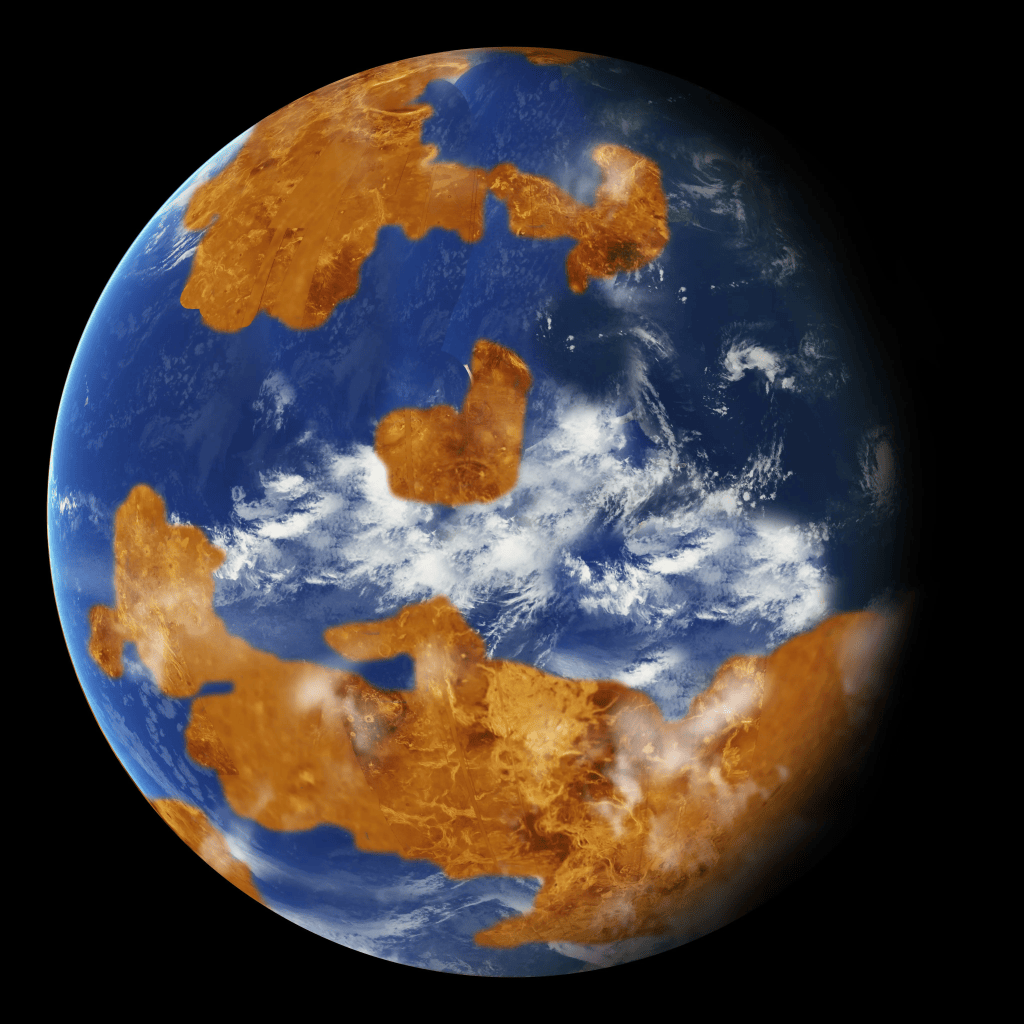
Illustration of a habitable Venus, based on climate modelling. (Image Credit: NASA).
These environments raise questions about the possible history of life, but evidence of ancient habitability does not establish the existence of complex organisms, let alone technological species. No credible evidence currently demonstrates that an earlier technological civilisation evolved on Earth, Mars or Venus before humanity.
The geological record also imposes constraints. Earth’s crust continually recycles material, and Venus has undergone extensive volcanic resurfacing. Both processes could erase many surface traces over geological timescales.
A hypothetical civilisation that developed spaceflight might have left hardware on the Moon, asteroids or other bodies with more stable surfaces. Such objects could outlast evidence of the civilisation’s home world.
This possibility remains speculative. Establishing it would require evidence of technology, a defensible age and a credible connection to the proposed civilisation. Researchers would also need to exclude contamination and misidentification of natural formations.
A third explanation requires no ancient civilisation or interstellar visitor. The artefacts could simply remain undiscovered because much of the Solar System has yet to be surveyed in sufficient detail.
Spacecraft have mapped extensive regions of the Moon and Mars, but coverage varies in resolution, lighting, viewing geometry and scientific purpose. Many asteroids have received only brief observations, while much of the outer Solar System remains poorly characterised at surface scales.
Even where high-resolution images exist, their enormous volume creates a practical obstacle. Researchers cannot manually inspect every feature at every available resolution, and existing image-processing systems have generally been designed for specific scientific objectives.
This creates a spatial-resolution gap between the existence of orbital data and the ability to identify every potentially significant feature within it.
A small object might occupy only a few pixels in one image, disappear into shadow in another or become indistinguishable from surrounding material. Dust and impact ejecta could obscure its shape. The absence of a detected artefact therefore provides meaningful evidence only within the limits of the area surveyed, the resolution achieved and the detection methods applied.
Future missions and better algorithms will progressively narrow these gaps. They will also help establish where the existing evidence genuinely rules out particular classes of structures and where uncertainty remains.
The Search Has Already Begun
Searching for extraterrestrial artefacts does not require an immediate fleet of new spacecraft. Much of the initial work can use existing planetary mission archives, including publicly available orbital images, topographic measurements and spectral observations.
These datasets represent years of exploration and enormous scientific investment. Machine-learning systems can revisit them with questions that earlier missions were never designed to answer.
A useful detection pipeline would begin by identifying candidate features, comparing them across observations and ranking them according to the strength of their anomalies. Researchers could then examine the highest-priority cases using independent instruments and geological models.
The process must also account for false positives. A detector trained to identify geometric structures might repeatedly flag impact craters, fractures or volcanic formations. Testing the model against known natural features and spacecraft hardware would help establish how reliably it distinguishes different classes of objects.
Researchers could also compare the performance of algorithms across different terrains, illumination conditions and image resolutions. Such validation would reveal where the systems work well and where they remain unreliable.
The resulting methods would have value far beyond SETI. Improved anomaly detection could identify previously overlooked craters, map unusual volcanic formations, locate geological boundaries and refine estimates of micrometeorite bombardment. Automated analysis could also help catalogue human spacecraft and their changing condition on the Moon and Mars.
The scientific return therefore extends to planetary geology, remote sensing and the history of Solar System impacts.
A different kind of SETI
Radio astronomy remains an essential part of the search for extraterrestrial intelligence. It can reveal emissions from distant technologies and investigate signals that would be difficult to explain through natural astrophysical processes. Physical technosignatures offer a complementary approach, extending the search into planetary landscapes, ancient materials and the long-lived consequences of engineering.
The two strategies operate on different timescales. Radio searches can detect activity happening now or signals emitted in the distant past that are still travelling towards Earth. Archaeological searches investigate material traces that may survive after their creators and their transmissions have disappeared.
Future lunar missions could improve access to ancient regolith, while higher-resolution orbital surveys could reveal previously overlooked surface features. Better spectrometers, subsurface instruments and laboratory techniques would help researchers test the composition and origin of unusual samples.
The Habitable Worlds Observatory and other future astronomical facilities may eventually investigate atmospheric signatures of life on distant planets, while planetary missions explore the physical records preserved much closer to home. Each approach examines a different part of the same problem, which is how to recognise life and technology across cosmic distances and timescales.
The universe may contain civilisations whose signals have already faded, whose home worlds have been transformed by geology and whose machines have drifted into darkness. Whether any such civilisation has left evidence within our own Solar System remains unknown.
The first convincing discovery might arrive as a radio transmission, an unusual spectrum or a strange shape in an orbital image. It might also begin with a microscopic particle whose composition resists every natural explanation researchers can test.
A landscape can outlive its inhabitants. A machine can outlast its makers. Any trace of technology discovered is likely preserve a history that no living observer was ever meant to read. The question is, whether we have learned how to recognise it?
Sources:
Searching the Moon for Extrasolar Material and the Building Blocks of Extraterrestrial Life
Visions of Human Futures in Space and SETI
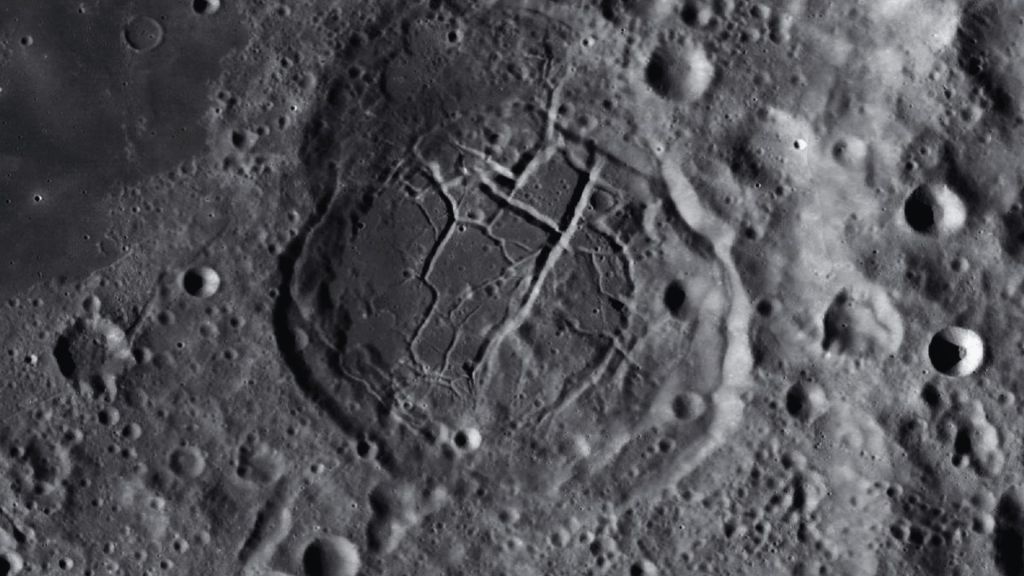
Cover Image: A region on the far side of the Moon at 24.49156° N, 152.53971° E.

Leave a Reply