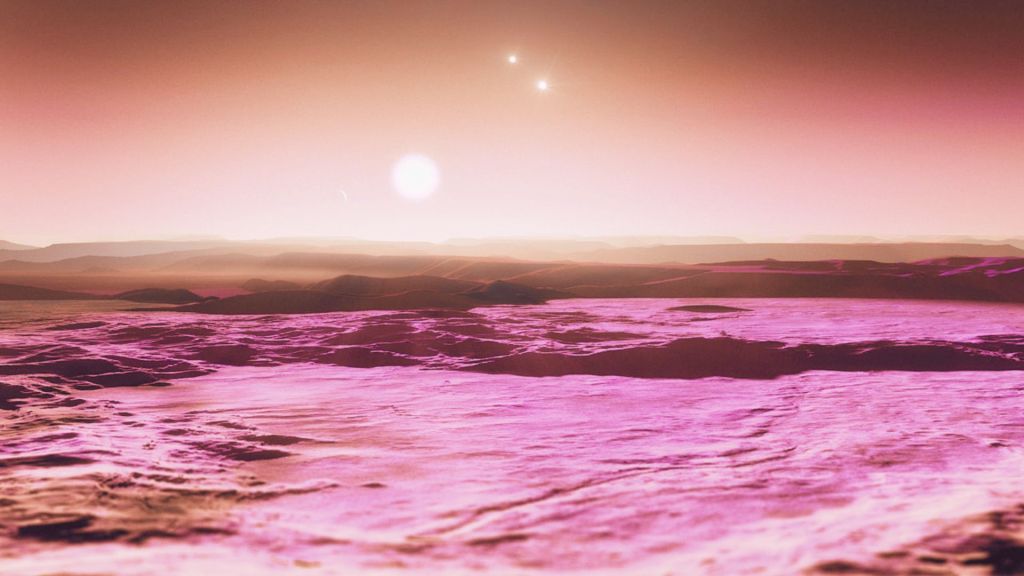
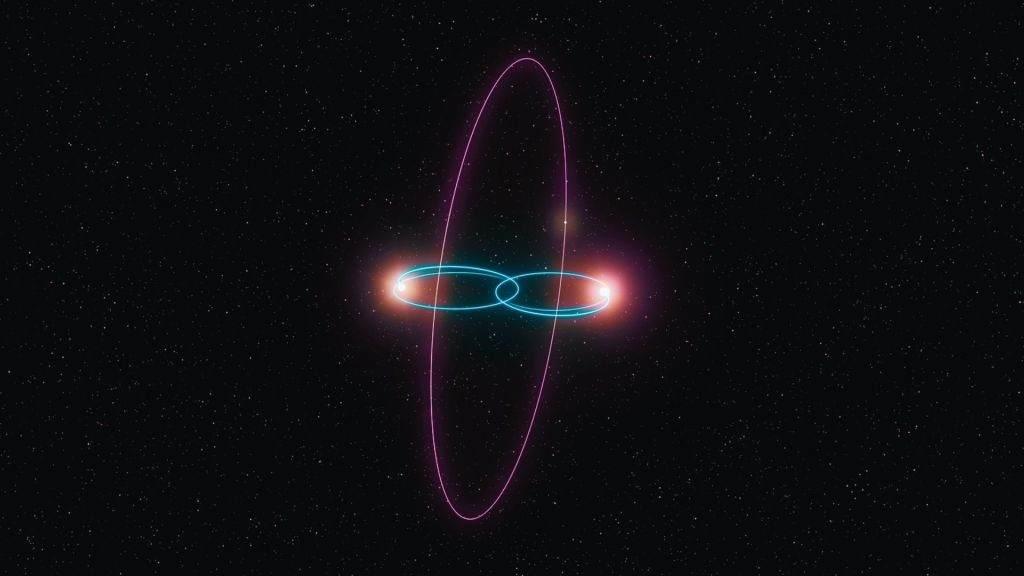
Gliese 667C c is an exoplanet in orbit around a small red dwarf star, in a hierarchical triple-star system. There are three suns in the sky, with the host star of the exoplanet the smallest of the trio, about a third of the mass of the Sun. This star, Gliese 667C is gravitationally bound to a pair of brighter and more massive companions, both of which are orange K dwarf stars. This pair of orange dwarfs orbit each other, with the red dwarf orbiting the binary pair, at a distance of 230 AU.
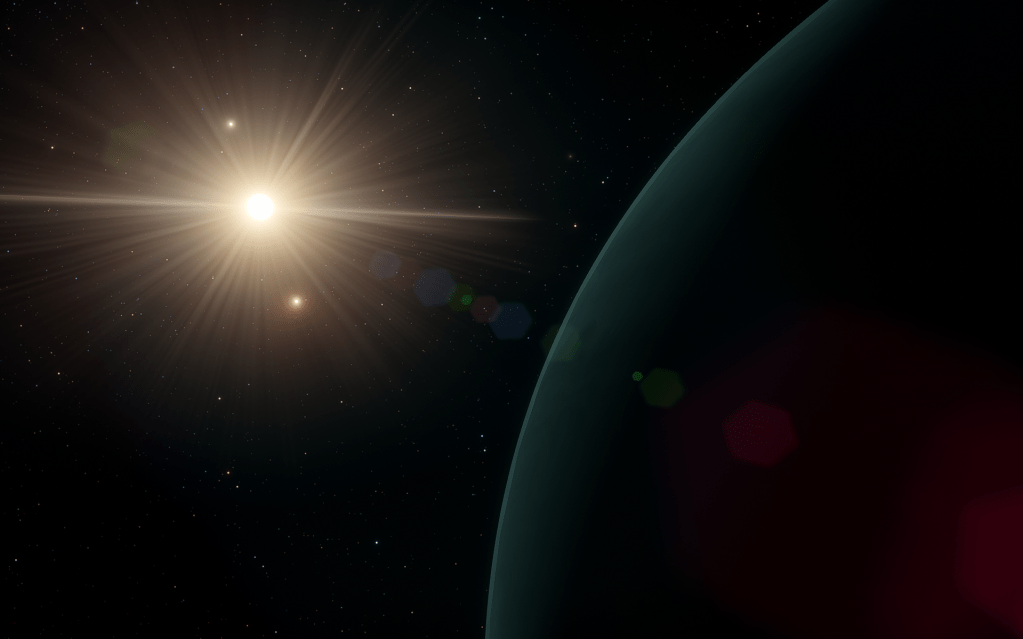
Gliese 667C c is a Super Earth or a temperate Sub Neptune, containing 3.8 times the mass of the Earth. The orange dwarfs in the system would appear as brilliant points of light in the skies of Gliese 667C c, outshining the faint, red glow of the host star. The habitable zone of Gliese 667C is much closer to the host star than the Earth is to the Sun, because of the lower luminosity of the dwarf. A year on Gliese 667C c lasts only 28 Earth days. Because of the proximity, the planet is tidally locked to the host star.
Noon Hotspot
The cold red sun bakes the dayside, that has a bright spot of perpetual noon. The proximity to the host star makes it dominate the sky, appearing three times larger than the Sun in the skies of Earth. The far side is in a permanent night. Between the day and night side, is a terminator line, a belt of neverending twilight with temperate conditions. Gliese 667C c orbits the host star comfortably in the Goldilocks zone, the region where liquid water can exist on the surface. This world with three suns could have dense, dark vegetation, where the leaves are black or purple to extract energy from the dim light of its red sun.
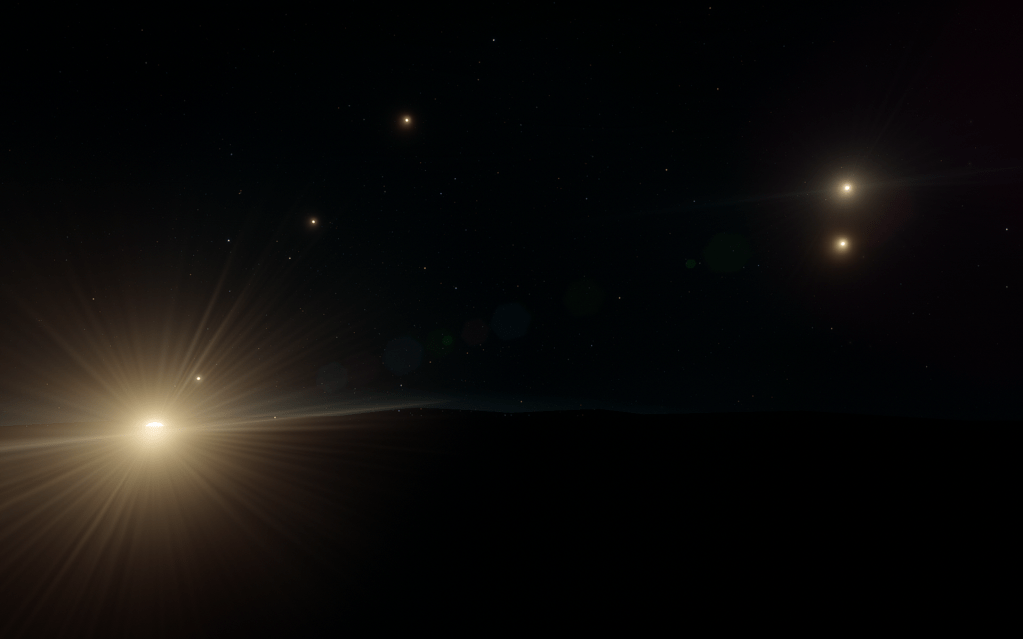
The host star emits most of its energy in the red and infrared spectrum. Gliese 667C c is bathed in a crimson glow, without a day-night cycle. The atmospheric composition is unknown, the light could be filtered through thick clouds, or scatter across a rocky expanse with a barren landscape, the soil devoid of moisture and desiccated. The gravity on this world is stronger than that of the Earth, with any organisms spending more energy for locomotion. Jumping would not be a very effective strategy for moving around, escaping or ambushing. There are three more worlds in the system that could potentially exist, provisionally designated as d, e and f. If they exist, d and e would also orbit the host star in its habitable zone.
The Terminator Line
If liquid water exists, it might pool in shallow seas, or seep out to the surface from underground reservoirs. The tidal locking means that the world would not experience any seasons. The extra suns, each brighter than Venus, might illuminate the nightside, which would otherwise would have been perpetually in shadow. The terminator line would be a thrilling place to live, with warm breeze from the dayside blending with the chill of the neverending night. The red star would be on the horizon, locked in a perpetual sunset. Time would appear to stand still for a human observer. Gliese 667C c is a super-Earth teetering on the edge of habitability.
Image Credits:
Cover Image: ESO/M. Kornmesser
Other Images: Space Engine

Leave a comment