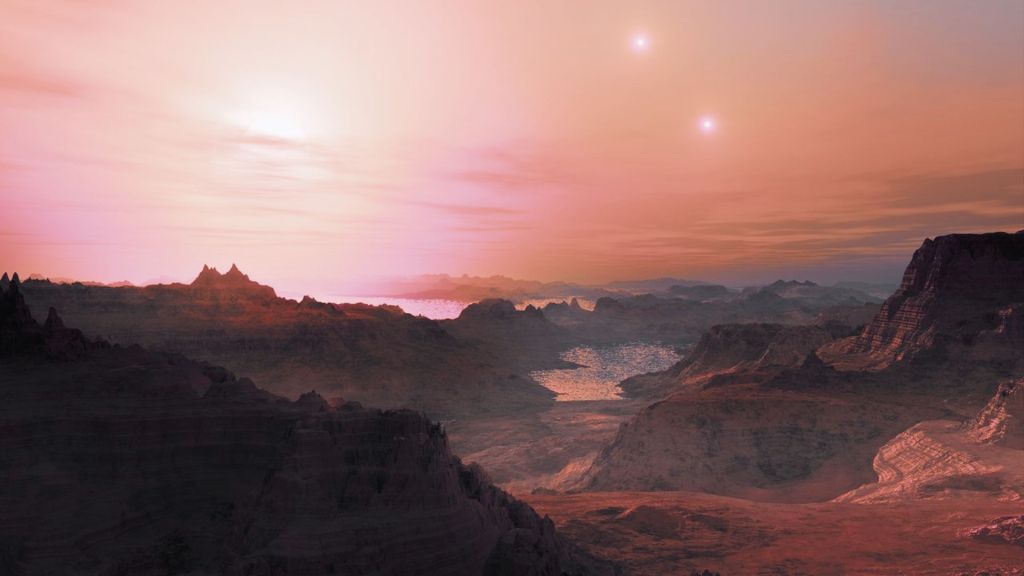
Earthlings have assumed that the best chances for life to spring up elsewhere on the universe are on worlds similar to Earth – terrestrial exoplanets that orbit their host stars at just the right distances for liquid water to exist on the surface. There are a whole bouquet of assumptions here, including that life needs a planet to spring up, that life can only emerge in a grown up universe enriched with heavier elements, and under an extremely specific set of circumstances. Despite the requirement of a long list of exacting parameters, the Earth does have twins. These are potentially habitable exoplanets where carbon-based lifeforms have everything necessary to thrive. 30 such worlds are known.
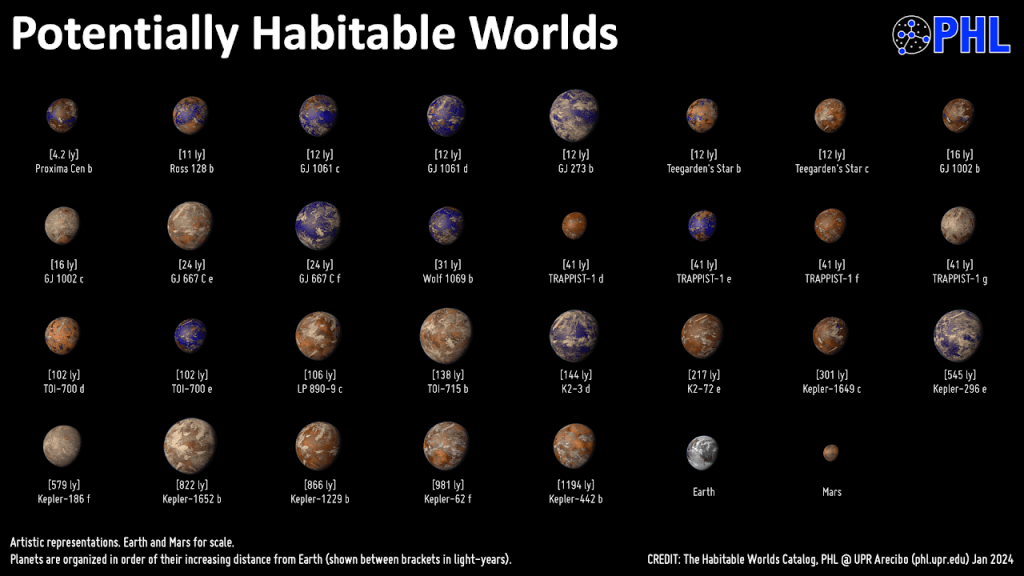
These exoplanets are detected either through the radial velocity method or the transit method. The former measures slight gravitational wobbles introduced to the host star by the orbiting world, while the latter measures the dip in brightness of the host star as the world passes in front of it. The radial velocity method gives a great mass estimate, while the transit method gives a good radius estimate. There are uncertainties about some of these parameters, which are guesstimates. TRAPPIST-1 d is particularly small and dense, hinting at a more metallic composition. 42°C is the upper limit of surface temperature among known rocky exoplanets in the hab zone. The range of observed parameters of the known potentially habitable terrestrial exoplanets are listed below.
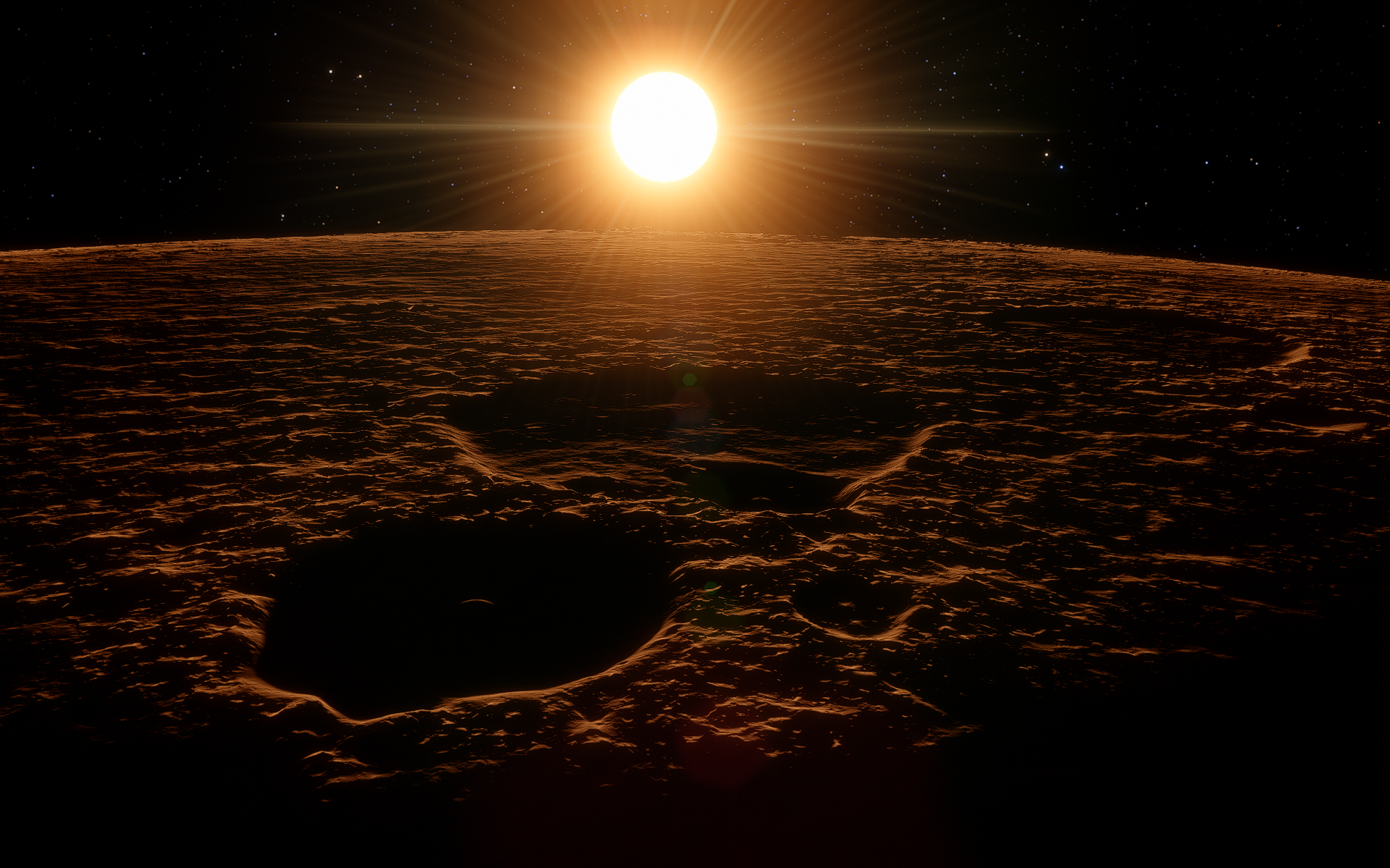
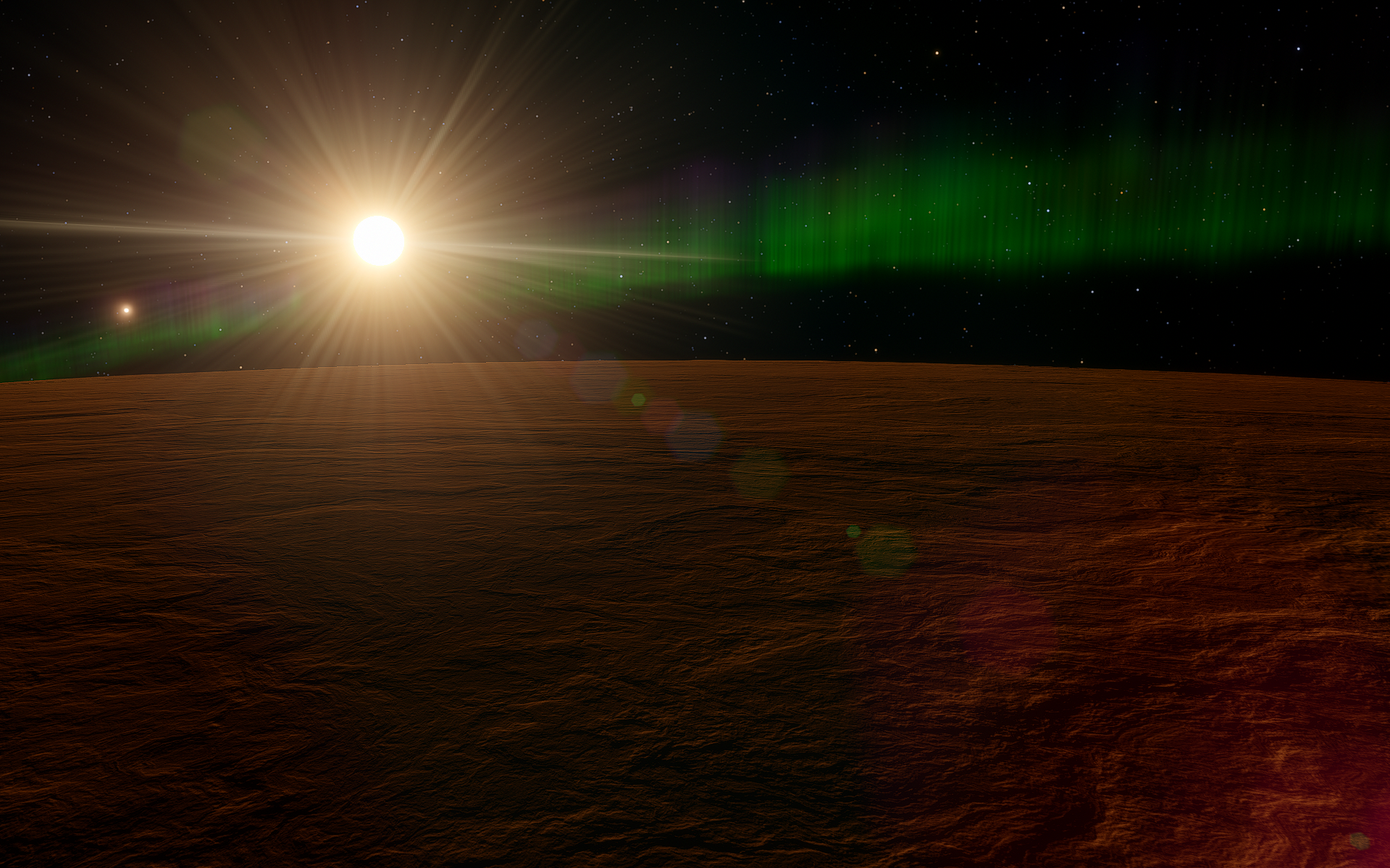

Mass in Earth masses
- Min: 0.39 (TRAPPIST-1 d)
- Max: 35 (Kepler-62 f)
Radius in Earth radii
- Min: 0.79 (TRAPPIST-1 d)
- Max: 1.6 (Kepler-1652 b)
Flux or irradiation from host star in terms of Earth at 1.0
- Min: 0.25 (TRAPPIST-1 g)
- Max: 1.48 (Ross 128 b)
Surface Temperature in Kelvin
- Min: 203 (TRAPPIST-1 g)
- Max: 316 (Ross 128 b)
Period of orbit around host star in Earth days
- Min: 4.05 (TRAPPIST-1 d)
- Max: 267 (Kepler-62 f)
Distance from Earth in light-years
- Min: 4.2 (Proxima Cen b)
- Max: 1193 (Kepler-442 b)
Age in billion years
- Min: 0.5 (Trappist-1)
- Max: 8 (Teegarden’s Star)
ESI (Earth Similarity Index):
- Min: 0.58 (GJ 1002 c, TRAPPIST-1 g)
- Max: 0.97 (Teegarden’s Star b)
Planets can only orbit the Sun, according to the official definition by astronomers on Earth. Exoplanets are worlds in orbits around distant stars. A star is the same for everyone in the universe, but an exoplanet is an other only from the perspective of the Earth. If we were to call a friend on Proxima Centauri b, Earth would be an exoplanet from their perspective. We would find it challenging to exchange notes on Trappist-1. Almost everything we know about other worlds, is in relation to ourselves, our Sun and the planets in orbit around it. The Earth Similarity Index gives a score to how ‘like’ Earth an exoplanet is. The parameters can be converted to a scale of 10, for comparing the exoplanets.


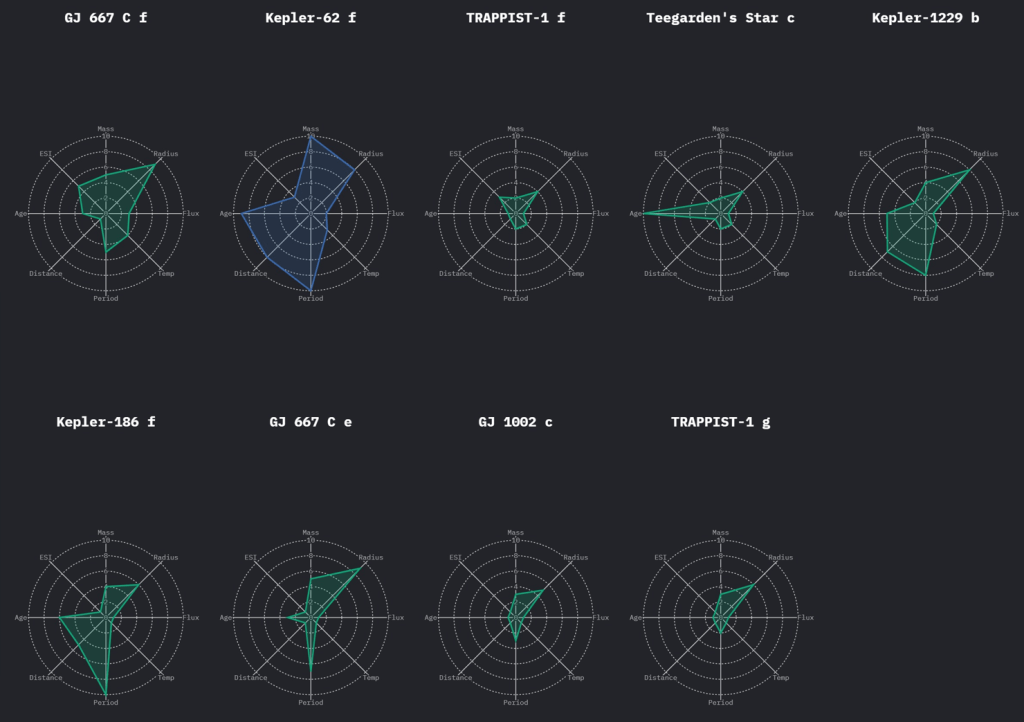
Subterrans are smaller than the Earth while Superterrans are larger. M-type stars are the most common species of star to host rocky exoplanets, and are dim, red dwarf stars that can shine for trillions of years. K-type stars are slightly larger orange dwarf stars, that have more visible light output. The Sun is a G-type yellow dwarf star, that can burn for about 20 billion years. The larger blue and white giant stars live for only a few million years. Of the 5,500 known exoplanets, there are none that share the same radius as the Earth, orbiting a yellow dwarf star in its habitable zone.




Trappist-1 is an ultracool red dwarf that hosts seven terrestrial worlds, all of which are tidally locked and in tight orbits. There may be water on these worlds.

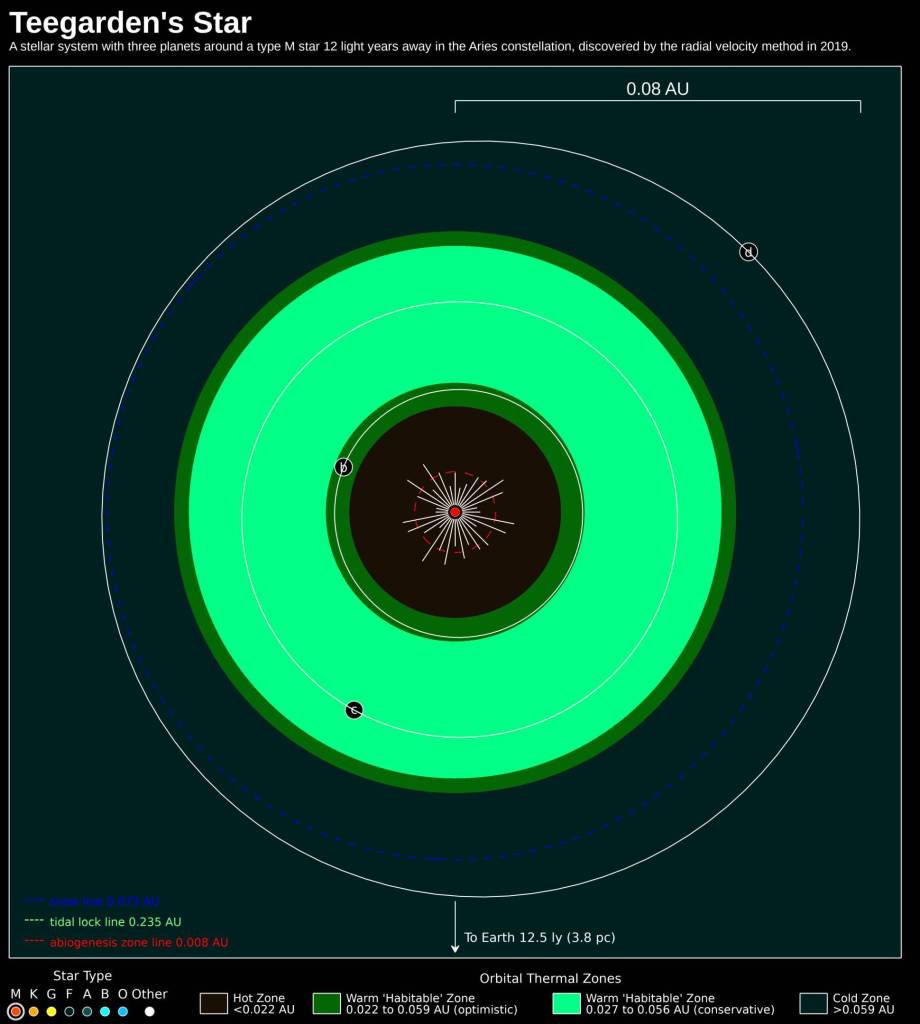
Teegarden’s Star is orbited by a pair of small, terrestrial worlds. The red dwarf star is between eight and ten billion years old, around twice the age of the Sun.

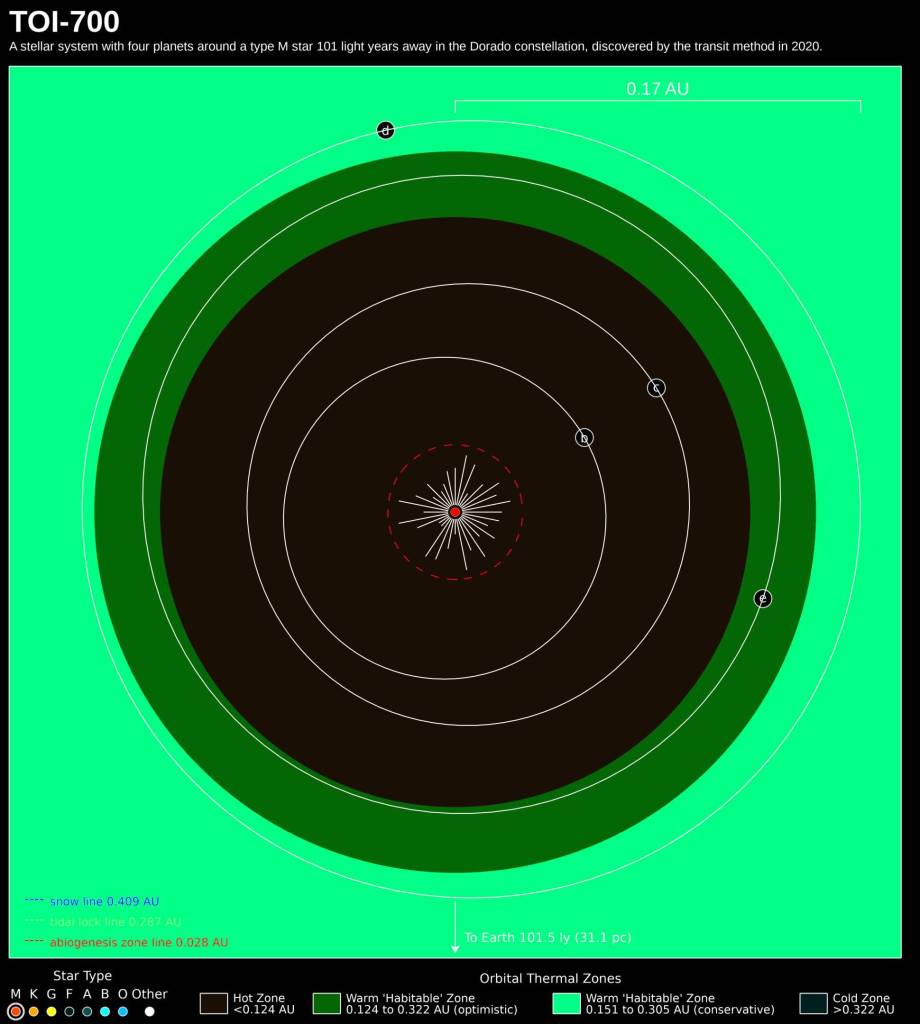
TOI 700 hosts three rocky planets, the outermost of which is within the inner edge of the habitable zone. All the three worlds are tidally locked to the host star.

GJ 1002 hosts a pair of terrestrial worlds that orbit around it in the habitable zone. The amount of UV radiation reaching these worlds is not well understood.

GJ 1061 is a red dwarf star that hosts two Super-Earths in orbit around in, in the inner and outer edges of the habitable zone.

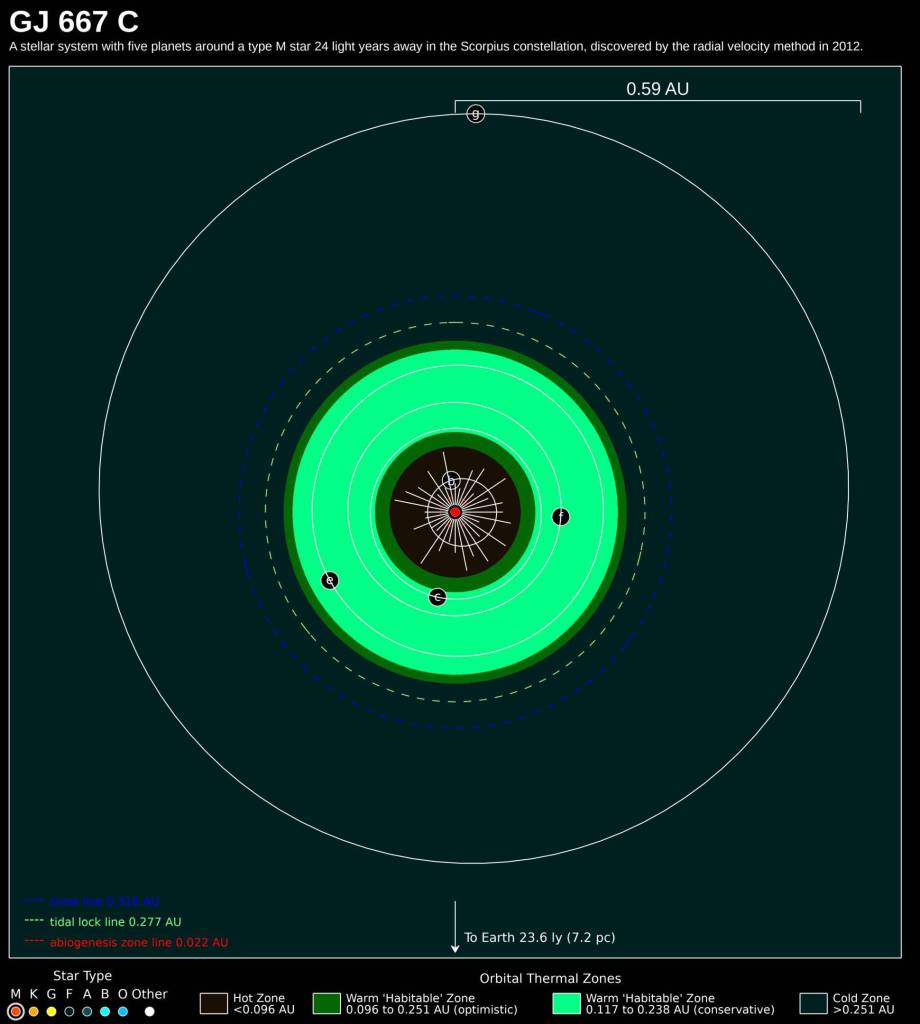
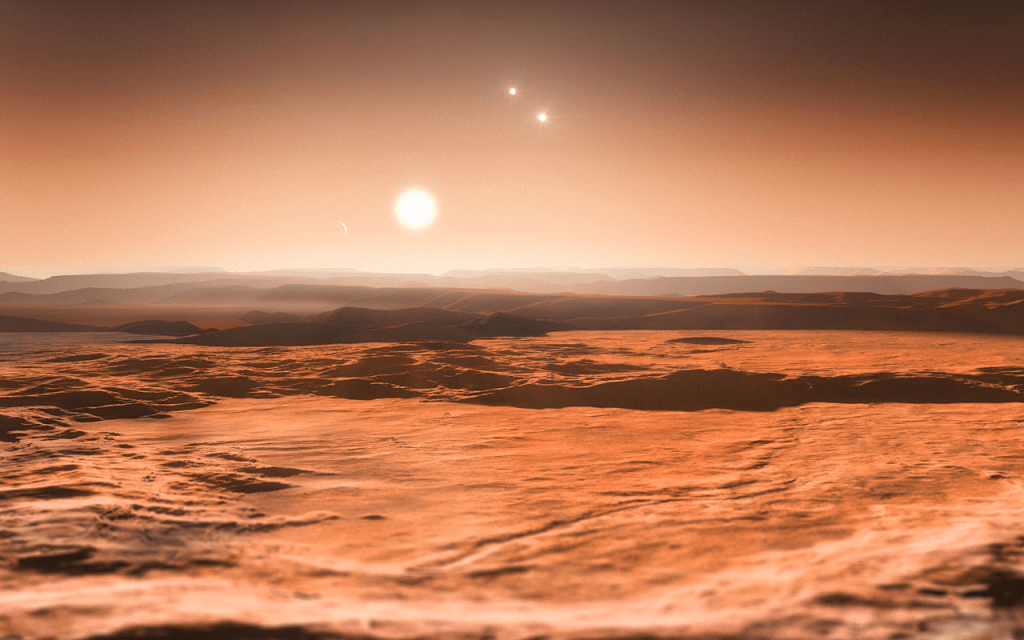
GJ 667 C is the third star in a triple star system. There are three terrestrial worlds orbiting the star, one of which is a superterran.
As most of the Earth Analogues have been discovered around cooler stars, they all have much smaller orbits than that of the Earth. For water to exist as liquid on the surface, it is necessary to get up close to the dim red dwarf stars. The years on all of these worlds are less than 365 Earth days. It is not surprising that so many stars have been spotted around red dwarf stars, which are the most common type of star in the universe. Transits or movements across the face of the star, or the gravitational wobble the planet causes to the host star, can be measured over astronomical distances.
On the Red Edge
The universe does not really care about some romantic notion of terrestrial islands providing habitable oases in the emptiness of space. Despite how rosy the picture has been so far, these worlds are all hostile and alien environments, with harsh, tempestuous host stars. Teegarden’s Star b has the highest ESI score, but only a three per cent chance of retaining an atmosphere. Red Dwarf stars flare up frequently, boiling away the atmospheres of planets in close orbits. These flares can also expose any organisms to ultraviolet light, that is damaging to cells on Earth. The process of atmospheric stripping can increase the carbon dioxide in the atmospheres. The number of known exoplanets where earthlings could just walk out into the surface from spaceships, without using a spacesuit or an oxygen tank is zero.
LP 890-9 c is a Super Earth 25 times as massive as Sol d, hosting a thick atmosphere. The pressure on the surface is so crushing that explorers need exoskeletons on top of spacesuits. Kepler-186 f and Kepler-442 b are both likely to have retained a carbon dioxide rich atmospheres, and are possibly worlds where the surface can be navigated using only oxygen tanks, without the need for spacesuits. Kepler-1649 c, a superterrestrial exoplanet, might just have a breathable atmosphere, and is the closest candidate to a world that we may not require a spacesuit or oxygen tank on, at least in the temperate zones.
Image Credits:
Artist’s impression of sunset on the super-Earth world Gliese 667 Cc: ESO/L. Calçada
Orbital Plots: PHL @ UPR Arecibo.
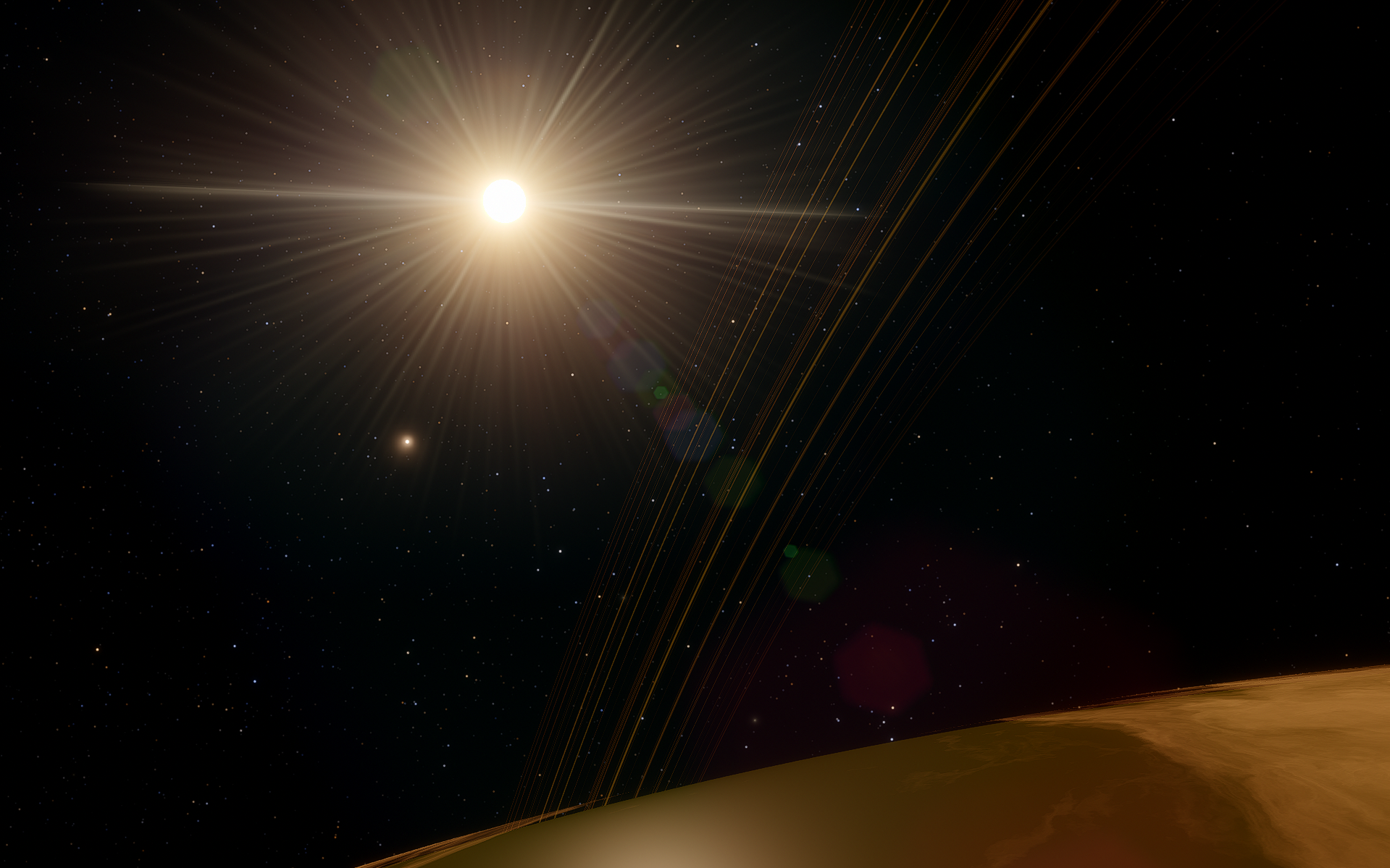
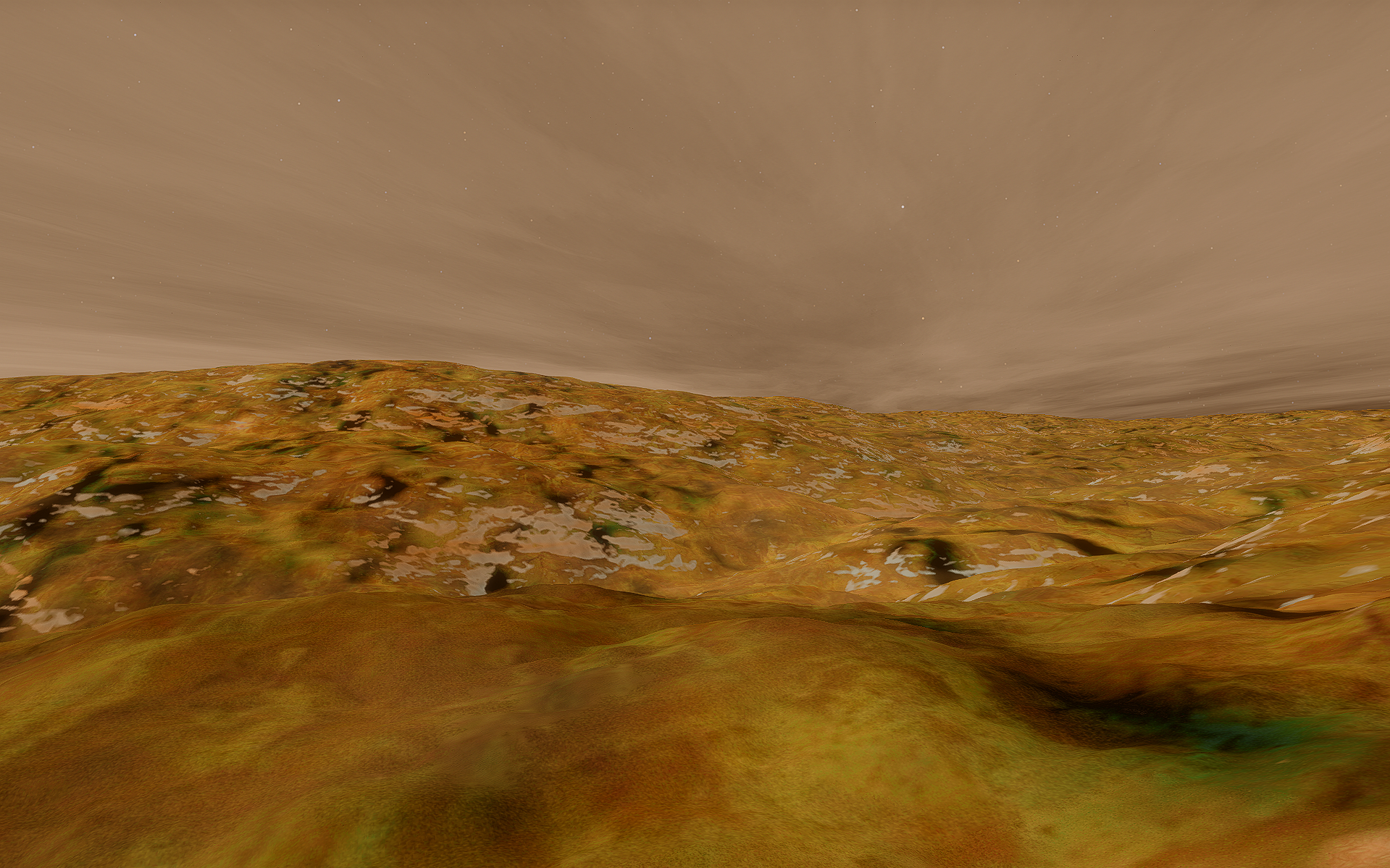
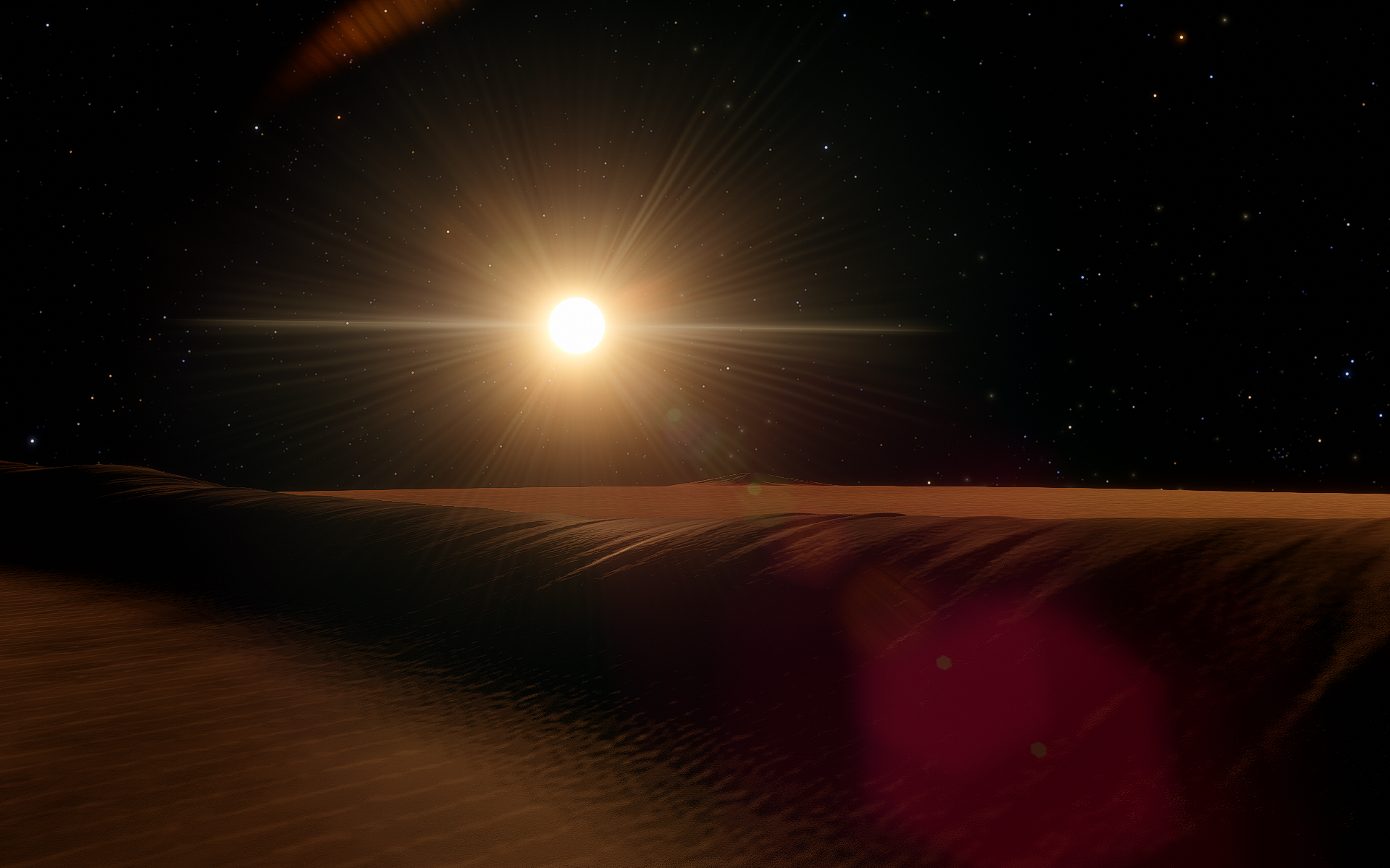
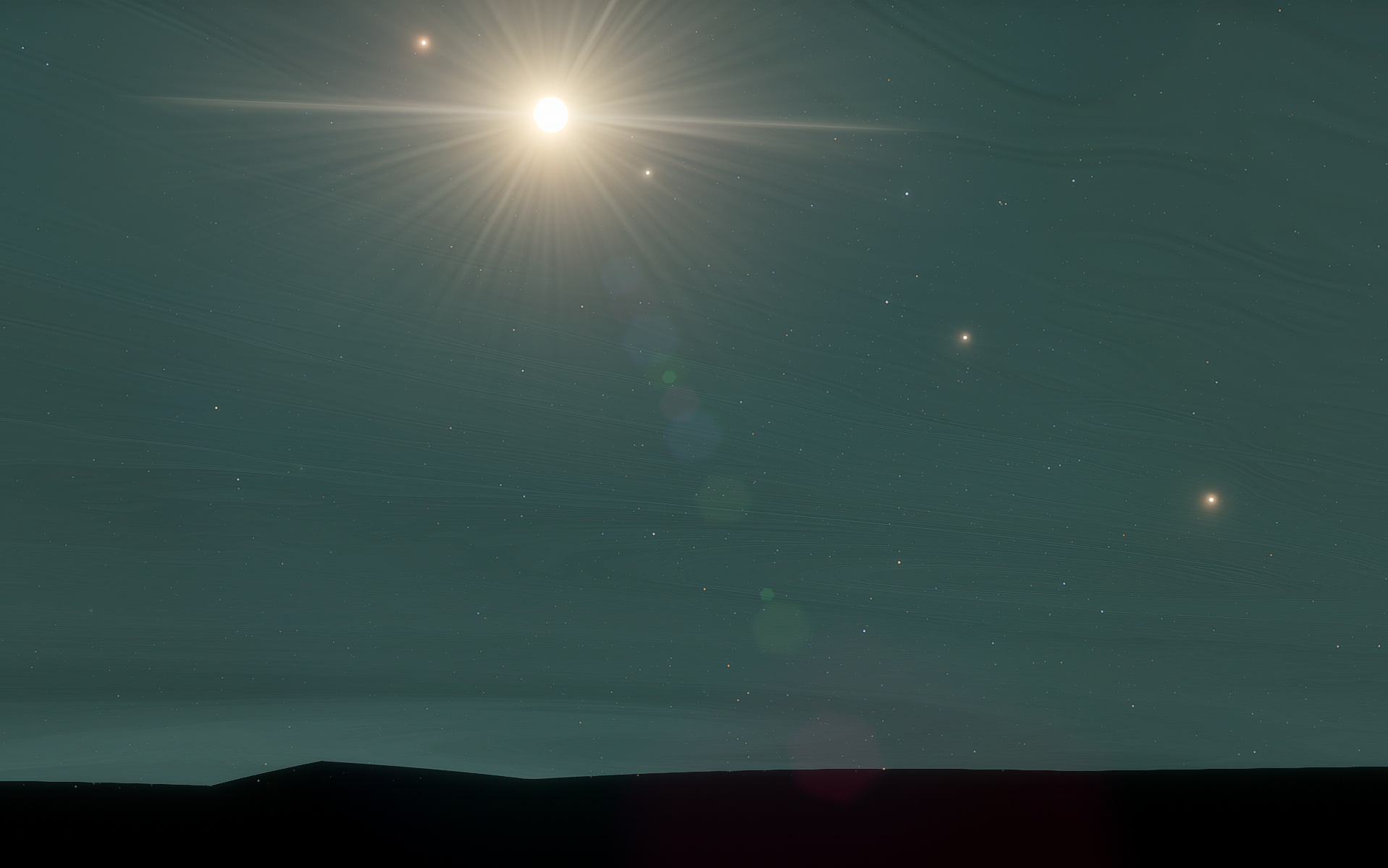
Exoplanets: Space Engine
Potentially Habitable Exoplanets: PHL @ UPR Arecibo
Trappist-1: NASA JPL
Teegarden’s star: NASA/JPL-Caltech
TOI 700, GJ 1002, GJ 1061, : NASA
Gliese 667Cb: ESO/L. Calçada – ESO
Gliese 667C – ESO/M. Kornmesser


Leave a reply to satyam rastogi Cancel reply