The Big Bang produced vast amounts of matter and antimatter, that instantly destroyed each other through a process known as annihilation, radiating electromagnetic energy. Because of a slight imbalance of mysterious origin, there was slightly more matter than dark matter, which is responsible for everything in the universe that we can see. The Big Bang produced mostly hydrogen and helium, and a trace amount of lithium, the lightest elements in the periodic table. All the other elements were forged in the nuclear furnaces that make up the cores of stars. The first generation of stars were massive spheres of hydrogen, that lived fast and died young, with entire clusters exploding like strings of fireworks.
Scientists have hypothesised another type of luminous objects that shone in the early universe along with the first stars. These are dark stars, that are powered by dark matter annihilation, rather than nuclear fusion. They formed within primordial clouds of pristine molecular hydrogen, just like the first stars. The annihilation of dark matter would halt the gravitational collapse of the baryonic clouds, before it became hot and dense enough to sustain nuclear fusion. Despite their names, dark stars are composed almost entirely out of ordinary hydrogen and helium. Even 0.1 per cent of the star’s mass being made out of dark matter is sufficient to power a dark star.
The formation of a Dark Star
As the dark matter is spread throughout the volume of the star, dark stars are puffy, cool giants. They could have radii as large as 30 times the distance between the Sun and the Earth. As the dark stars have low surface temperature, the radiation is not sufficient to halt accretion, allowing them to readily grow into supermassive dark stars, containing as much as ten million solar masses. When the dark matter fuel is exhausted, the star is dislodged from an environment rich in dark matter, and collapses rapidly into a black hole. These remnants may provide the ‘seeds’ necessary to explain supermassive black holes at high red shifts. The theoretical objects explain how the universe could have formed supermassive black holes so rapidly after the Big Bang. The theory of dark stars was developed by Katherine Freese, Doug Spolyar and Paolo Gondolo, who published the research in 2008.
The giant diffused structure created would be spherical. The energy from the dark matter annihilation sustains hydrostatic equilibrium without nuclear fusion. The extended atmospheres would capture the surrounding gas efficiently. The dark matter would deplete at the core, causing the star to contract. These stars could live for millions of years. The cool surfaces would inhibit the formation of molecules. The spectra from such objects would be dominated by atomic rather than molecular lines. Humans may have already discovered dark stars.
Blue Monsters
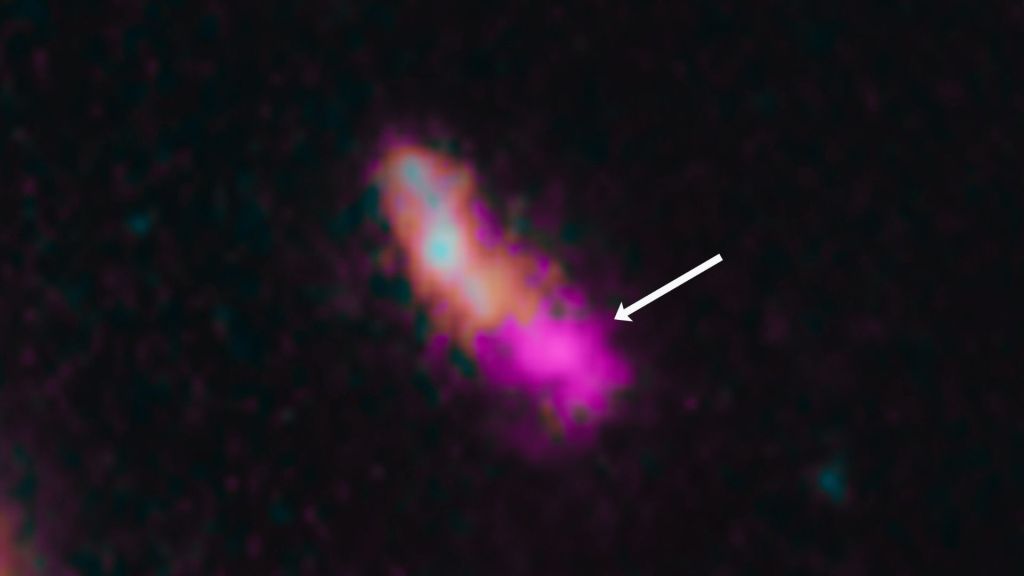
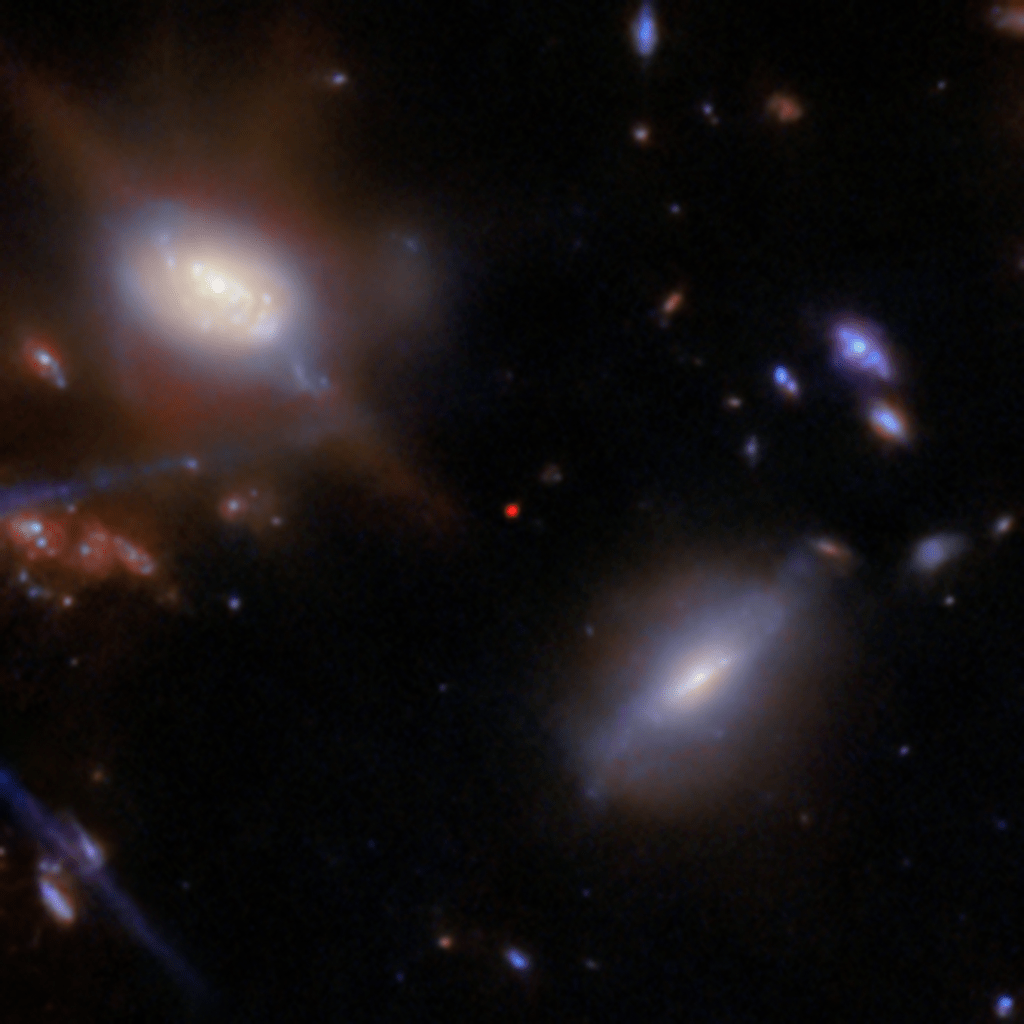
The James Webb Space Telescope is the only operational astronomical instrument capable of observing dark stars. Webb is allowing scientists to explore the Cosmic Dawn, when the first stars and galaxies began to shine, some within 300 million years of the Big Bang. Among the earliest galaxies spotted by Webb in the infancy of the universe, there are objects that are candidates for dark stars. Based on photometric data, JADES-GS-z13-0, JADES-GS-z12-0, and JADES-GS-z11-0 were first identified as dark star candidates in 2023. Subsequently, in September 2025, JADES-GS-z14-0, JADES-GS-z14-1, JADES-GS-13-0, and JADES-GS-z11-0 were found to be consistent with the supermassive dark star interpretation, based on their spectra and morphologies.
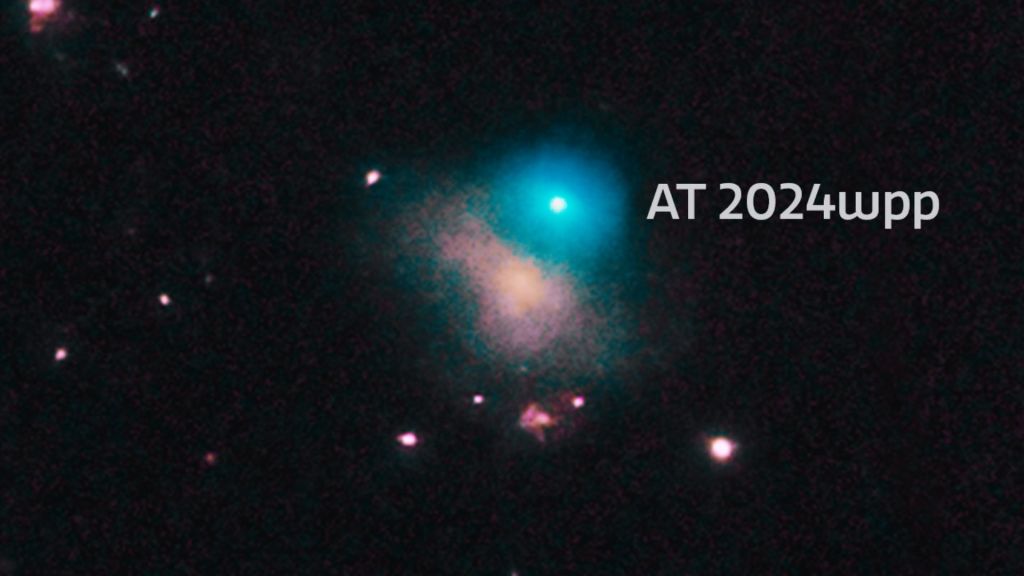
Webb has discovered other anomalous objects that defy explanation by conventional theories. There are ultra-compact, bright galaxies at high redshifts, dubbed ‘blue monsters’ that are too massive and luminous for the time period that they appeared in. The Little Red Dots are devoid of the epected dust. There are also quasars that are supermassive black holes that appeared too early in the infancy of the universe. Supermassive dark stars offer a unified explanation. Dark stars can directly form massive black holes, bypassing the slow growth required in conventional scenarios. If confirmed, dark stars have the potential to write the first chapter in stellar evolution. They offer a bridge between the microphysics of dark matter to the large-scale structure of the universe. Dark stars may have introduced the first light to a dark and barren universe.
Image Credits:
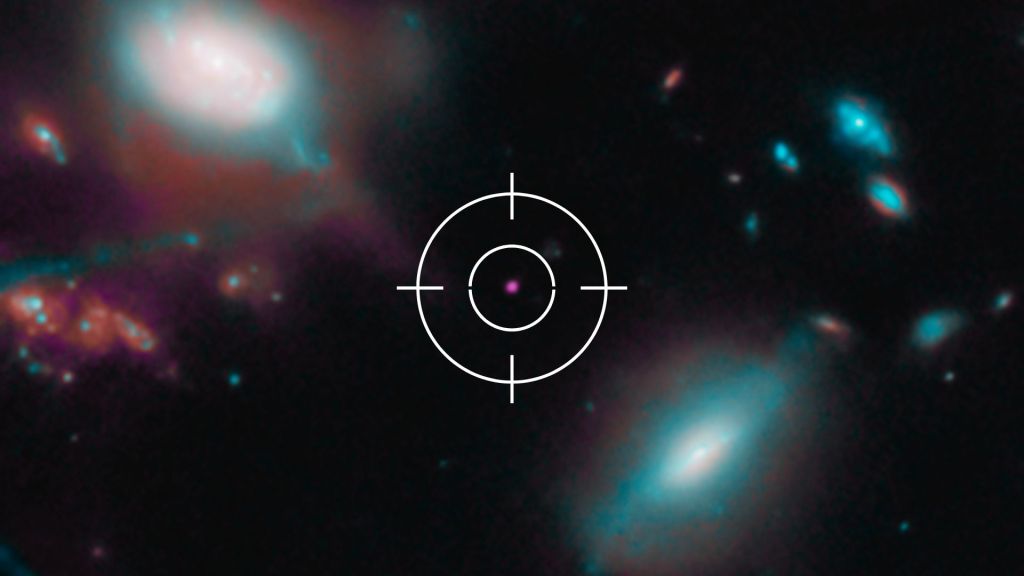
JADES-GS-z14-0: (NASA, ESA, CSA, STScI, B. Robertson (UC Santa Cruz), B. Johnson (CfA), S. Tacchella (Cambridge), P. Cargile (CfA)).
AT 2024wpp: International Gemini Observatory /CTIO /NOIRLab /DOE /NSF /AURA /NASA /ESA /Hubble /Swift /CXC /ALMA (ESO/NAOJ/NRAO). Image Processing: J. Miller & M. Rodriguez (International Gemini Observatory/NSF NOIRLab), T.A. Rector (University of Alaska Anchorage/NSF NOIRLab), D. de Martin & M. Zamani (NSF NOIRLab)).
JADES GS-z13-1: Image: NASA, ESA, CSA, JADES Collaboration, Brant Robertson (UC Santa Cruz), Ben Johnson (CfA), Sandro Tacchella (Cambridge), Phill Cargile (CfA), Joris Witstok (Cambridge, University of Copenhagen), P. Jakobsen (University of Copenhagen), Alyssa Pagan (STScI), Mahdi Zamani (ESA/Webb)

Leave a comment