
The James Webb Space Telescope (JWST) has discovered mysterious objects at the dawn of time known as Little Red Dots (LRDs). These appeared even in the very first observations by the flagship deep space observatory. These are compact objects whose most defining characteristic is their deep red colours. They appear to be supermassive black holes, but how they formed within the first billion years of the Big Bang is a mystery. Scientists have a number of theoretical proposals on their natures. The LRDs may be supermassive black holes directly collapsing from entire stellar nurseries worth of molecular clouds, they may be rapidly accreting primordial black holes from the first gravitational collapses in the universe, of they may be tidal disruption events from black holes consuming entire clusters of massive, young stars. There are problems with all of these explanations. Now, researchers have proposed a new explanation, LRDs could be Black Hole Stars.
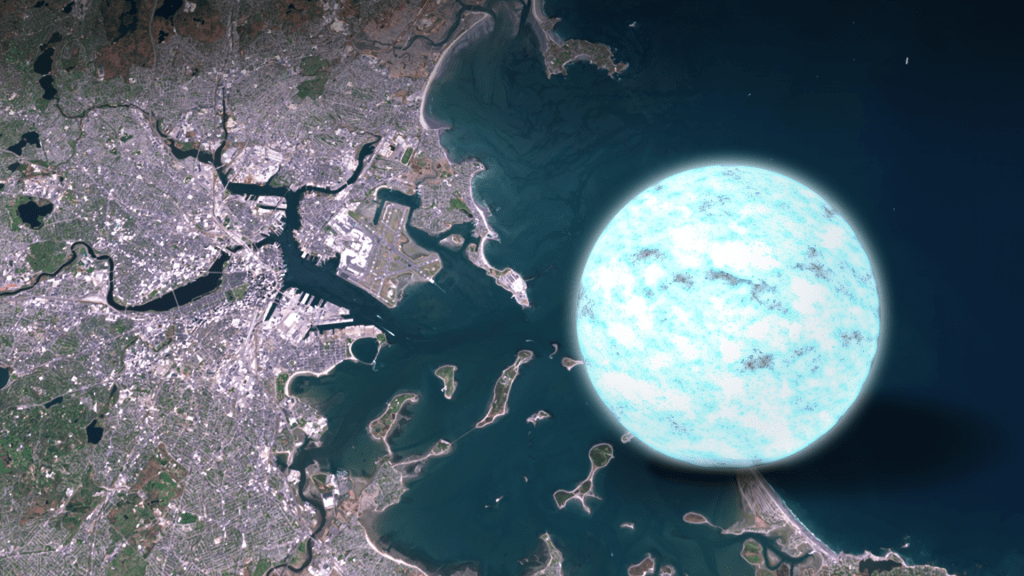
Scientists were not aware of any such structure as black hole stars. There are very few varieties of black holes in the universe. Primordial black holes that could have formed in theory, with an object containing about 10 Earth masses being about the size of an apple. Any smaller black holes would quickly evaporate. Planetary mass black holes can form from dark matter in gas giant cores that grow and consume the surrounding world, and may contain up to 10 Jupiter masses. The deaths of the most massive stars results in the formation of stellar mass black holes, containing up to 100 solar masses. Then there are intermediate mass black holes going all the way up to 100,000 solar masses, before we get to the supermassive black holes occupying the cores of large, evolved galaxies. So where do Black Hole Stars fit in?
Bright Black Holes
Scientists believe that the supermassive black holes occupying the cores of large, evolved galaxies such as the Milky Way were produced through a series of mergers between smaller objects. These gargantuan beasts snack on the gas and dust in the surrounding galaxy, but also on wayward stars and the dense, spent corpses of dead stars such as neutron stars, white dwarfs and stellar mass black holes. However, no scientist has seen this process obviously, and there are other theoretical pathways through which these SMBHs could have formed. According to the new research, the LRDs that Webb is picking up may just be the earliest stages of the SMBHs that form the hearts of galaxies.
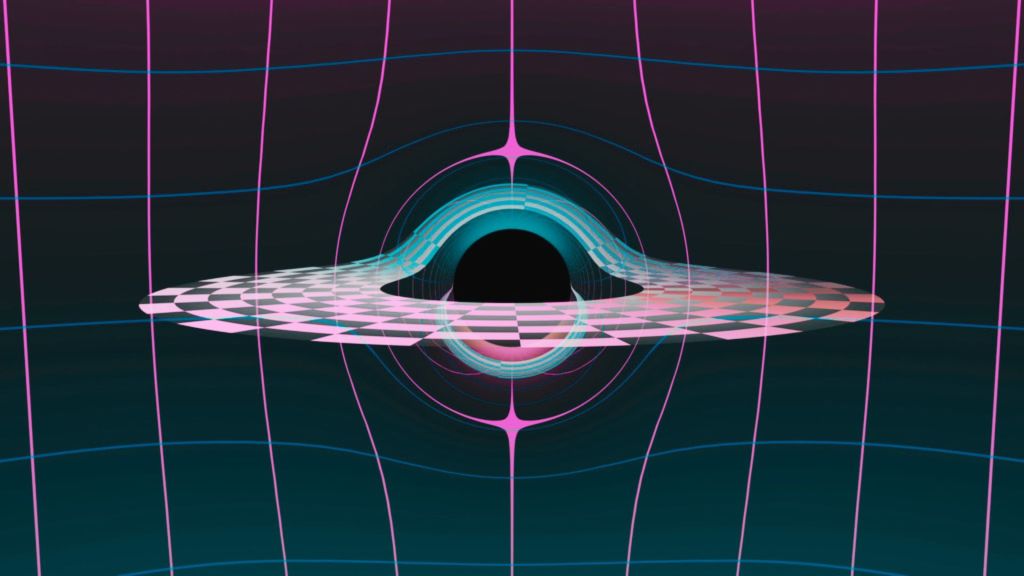
Actively feeding supermassive black holes are surrounding by a debris disk of infalling gas and dust. The extreme friction in the tortured material causes it to glow in frequencies across the electromagnetic spectrum, resulting in bright black holes that can at times outshine all the other stars in the surrounding galaxy. One of the hallmarks of AGNs are broad hydrogen Balmer lines, a characteristic feature in spectral charts of the objects, which also appear on 70 per cent of LRDs. Bright black holes are also bright in X-ray frequencies, but the LRDs are surprisingly muted. If the objects are shrouded by thick clouds of gas and dust, this discrepancy can be explained, and that is exactly what seems to be happening with the Black Hole Stars.
The Cliff
When an astronomer points at a light in the sky and says it is a star, the statement is backed by a theoretical understanding of what a star is, that is a ball of plasma held together under the influence of gravity, powered by a nuclear furnace at the core that is fusing hydrogen into helium. When an astronomer points at an LRD they cannot really explain what it is. These are early galaxies, rich in stars, surrounded by vast amounts of dust. Reconciling all of these observed features into a model has proved challenging. The density of stars within these LRDs is a hundred thousand times that of the Milky Way. Even the nucleus of the galaxy has only a thousandth of the staggering number of stars required to explain the LRDs. If an LRD were to exist in the neighbourhood of the Earth, it would be blindingly bright.
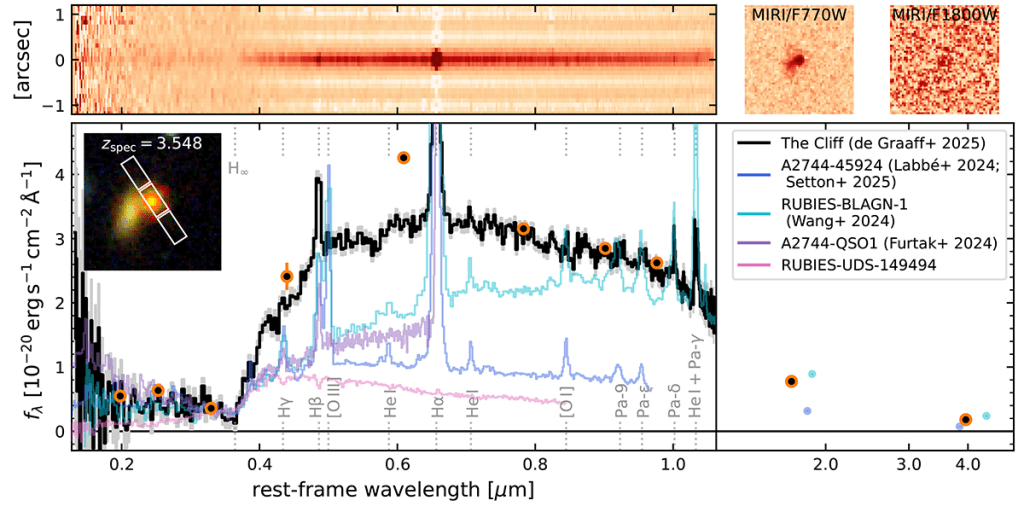
Over the course of 2024, 60 hours of precious Webb observation time was dedicated to obtaining the spectra of 4,500 distant galaxies. 35 LRDs were found in these observations, many of which had also been spotted in previous observations. One object in question though, was very unusual. At a distance of 11.9 billion lightyears, this LRD displayed a steep rise in the ultraviolet region. A similar feature, known as the ‘Balmer Break’ is found in regular galaxies that are not producing new stars at a furious rate, but the rise is not as steep. This object has been dubbed ‘The Cliff’ by the astronomers. The Cliff did not fit into any of the theoretical models for LRDs, with astronomers suggesting that the feature may be caused by objects other than stars. This insight led to the proposed concept of Black Hole Stars, or BH*.
Rapid Early Galaxy Formation
The LRDs measure between Measuring 500 to 1,000 lightyears across. Instead of dust reddening the black hole and the surrounding accretion disk, there might be a roughly spherical envelope of pristine hydrogen gas. This gas may be swirling turbulently, churned to a degree in excess of stellar atmospheres. Just like the nuclear fusion in a stellar core heats the outer layers of a star, the voraciously feeding black hole may be heating up the surrounding gas envelope. These black hole star models describe the LRDs much better than any conventional physics, as well as the unusual feature observed in The Cliff. Similar systems had been proposed previously for intermediate mass black holes. The configuration also allows for the rapid growth of black holes, which is necessary to explain the rapid evolution of galaxies following the Big Bang.
“This is the best idea we have and really the first one that fits nearly all of the data, so now we need to flesh it out more. It’s okay to be wrong. The universe is much weirder than we can imagine and all we can do is follow its clues. There are still big surprises out there for us.” -Astronomer Joel Leja
The density of the plasma atmospheres surrounding the supermassive black holes and their accretion disks is so high, that the entire object resembles stars. Scientists believe that these exotic objects may be the first stages of the SMBHs residing in galaxy cores. Coauthor of the research, Joel Leja says, “Basically, we looked at enough red dots until we saw one that had so much atmosphere that it couldn’t be explained as typical stars we’d expect from a galaxy. It’s an elegant answer really, because we thought it was a tiny galaxy full of many separate cold stars, but it’s actually, effectively, one gigantic, very cold star.”
Sources:
PSU Press Release: Mysterious ‘red dots’ in early universe may be ‘black hole star’ atmospheres
MPI Press Release: “Black Hole Stars” could solve JWST riddle of overly massive early galaxies

Leave a comment