
A rocket several times the height of The Great Pyramid is required to lift a small, terrified payload into orbit around a planet ten times as massive as the Earth. Such Super-Earths have a stronger gravitational pull than the Earth, and the inhabitants of such worlds, Super Earthlings may never be able to leave the planet at all. The sizes of the rockets required to launch a spaceship into orbit increases dramatically with the mass of the planet, driven by fuel requirements. Most of the rocket would essentially be fuel.

If the Super Earthlings are using kerosene, it would require a 14 megaton rocket, roughly 5.5 times as high as the Burj Khalifa. Just building such a rocket would require disassembling a small moon, and over 1000 years of sustained activity. Even with the most refined cryogenic fuel to launch a crewed spaceship rocket on a world ten times as massive as the Earth would have to be at least 230 metres tall, or 1.6 times the height of The Great Pyramid. Launching a module for an orbital complex would require a 300 metre tall rocket, weighing 56 megatons. Point is, the rocket sizes quickly start ballooning with higher gravity.
NAVY SEALS
The highest mountains in the Solar System are found on the objects with lower gravities. The central peak of the Rheasilvia crater on the asteroid Vesta rises 22 km from the base to the peak. The worlds with higher gravity are expected to have flatter topologies. Mountains and highlands would erode faster, and large, stable continents would struggle to form. As elevated landmasses are less likely to persist, these worlds are likely to host surfaces dominated by archipelagos. These worlds with thicker atmospheres would retain more water.
NAVY SEALS in the Abyss
Along with a crushing gravity, life on Super-Earths may have another obstacle to cross, an ice shell kilometres in thickness, comparable to the ones on Europa or Enceladus. These rockets would have to double up as submarines to start with. A series of atom bombs can be used to blast through the ice shell, with the rapidly evaporating gas providing additional propulsion to the rocket. The inhabitants would have to worry about nuclear fallout just a bit, as most of it would sink back into the ocean, and the hole would quickly very quickly, leaving little time for the ascent of the rocket. Accessing space could be a monumental effort on these worlds, requiring sustained efforts over many centuries, and the use of a significant portion of the available resources on the planet.
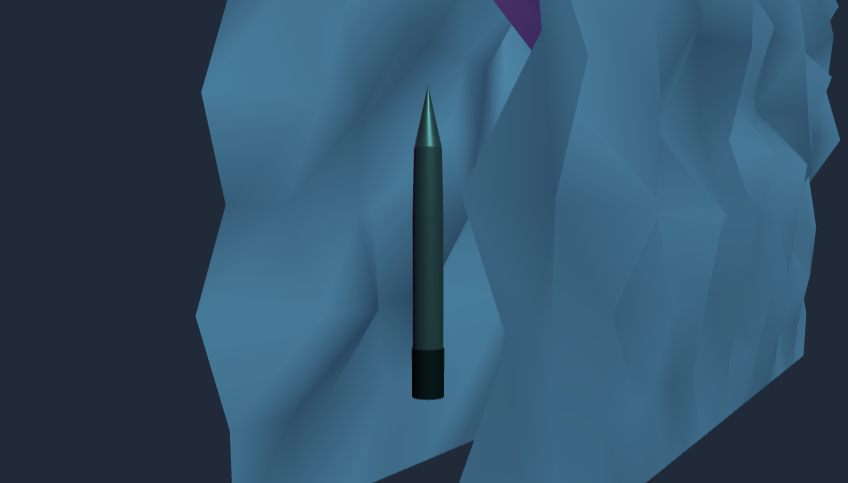
In fact, the cost of escaping the planet would be so enormous on the higher mass Super Earths, that it might just be cheaper to disintegrate the planet itself. A significant portion of it would anyway have to be converted into fuel. We are really lucky, because the more we learn about the universe, the more we understand why humans are finetuned to venture beyond their cradles. These ideas are from this ridonkulously cool paper on rocket science: Super-Earths in need for Extremly Big Rockets.


Leave a comment