
The tug between any two bodies, such as a world and its host star, forms a system with five balanced regions of stable gravity called Lagrange points. In one of the many Lagrange points that pepper stars, a sleek cylindrical craft, half matte black and half glinting with a metallic sheen, drifts silently. Ionised xenon thrusters rapidly spin a dark cylinder made up of a carbon nanotube composite, the casing splitting along heated seams. A shell peels away, revealing a titanium-graphene hub. Hissing pneumatic pistons extend a 50 metre spine, locking in with a soundless clank.

Radial arms snap outward, 36 carbon-fiber trusses coated treated with nickel-titanium memory metal, heated by coils powered by thorium. Centrifugal forces do the heavy lifting, stretching out the arms to 500 metres each, forming a skeletal starburst. Graphene-silicon membranes unfurl between them, 10 microns thick. This gossamer material is reflective on one side and absorbent on the other. Micromotors pool the sheets, that are stretched taut with help from the spin. Piezoelectric actuators kill any ripples. The structure, a kilometre across, is a jagged disk.
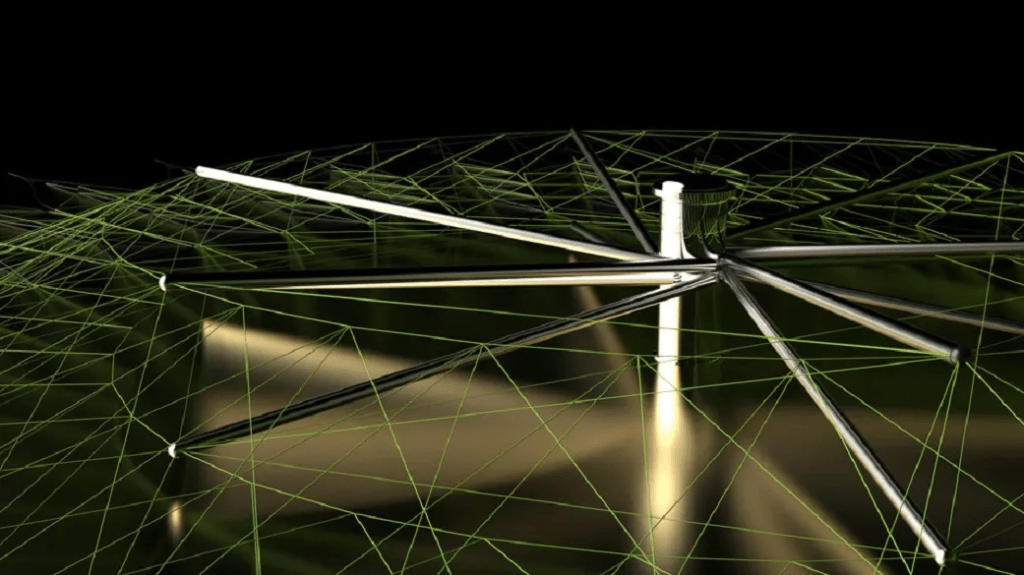
The flexing memory-metal ribs snap into place, morphing the edges into petals, and optimising light blockage. The tips contain thin yet hardy mylar solar sails to stabilise the orbit using radiation pressure. At the heart of this celestial parasol is a nuclear reactor, a shadow of the furious furnace nearby. The fusion core powers thrusters for micro-adjustments, keeping the megastructure aligned and oriented. Tension, spin and the gentle pressure of photons are sufficient to stabilise the starshade.
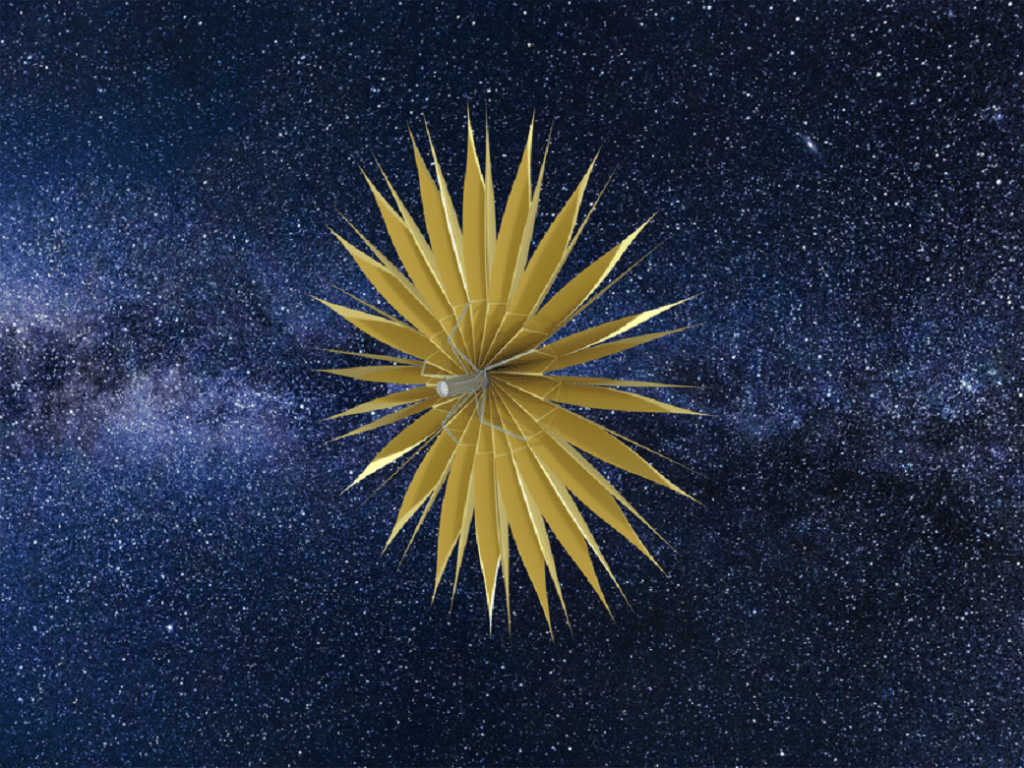
A starshade is an orbital structure designed to block the light from a star. The design is elegant, fold up a circular array of thin, lightweight material, selectively reflective or absorbent, to cast a shadow or bounce light where it is required once unfurled and deployed. For worlds living on the edge of habitable zones, it can help tweak the climate. A starshade can cool down a world that is getting too hot, to prevent a runaway greenhouse gas effect, or it can protect a planet from its star by slowing down the stripping of an atmosphere. If a world is receiving too little light, a starshade can focus and direct the light where required, like a lens. On a tidally locked world in orbit around a red dwarf star, a starshade can focus energy on the night side, directing sufficient energy to make it habitable.

A starshade can produce energy when paired with collectors on the ground. For worlds in orbit close to the host star, it can help in harvesting energy. A shadowed planet could possibly mask their presence, and aliens can use starshades to create artificial eclipses, for observing the outer atmospheres of their host stars. A kilometre wide starshade requires materials tough enough to withstand stellar wind and micrometeorites. Despite being featherlight per square metre, it would weigh tons. Building such a starshade may require mining swarms of asteroids or dismantling moons.
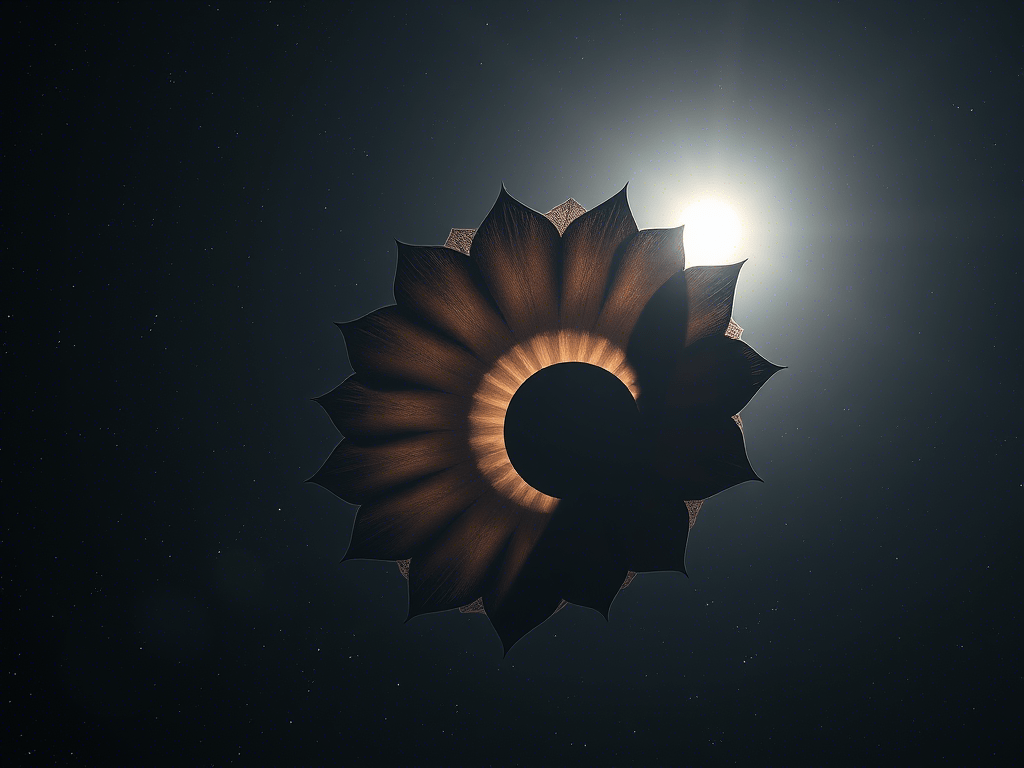
A starshade can also modulate the light from the star, flashing it like a cosmic probe, or dimming in patterns for communication. Over interstellar distances, such a starshade would appear as a beacon, or even a billboard. If aliens are using starshades, we might be able to find them. A starshade crossing the host star can dim it, with a jagged, artificial dip unlike the gentle curve of a transiting planet. The signature however might be very similar to an exomoon. The light from the host star would drop by a tiny fraction, far less than a planetary transit, but within the limits of detection. The constant exposure would cause the starshade to heat up and start radiating heat. This waste heat from an energy source may be the surest way to discover advanced alien civilisations in the vast emptiness of space.
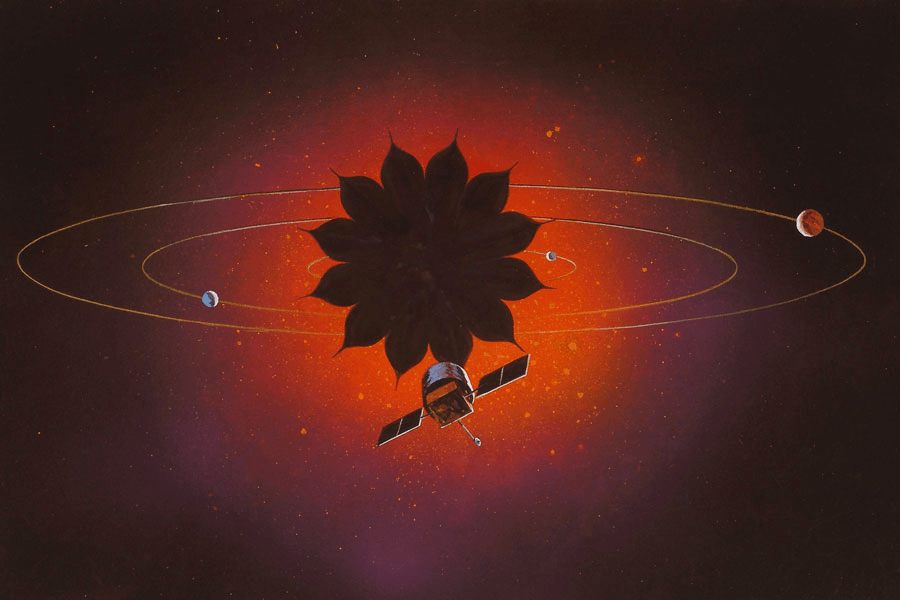
A planet cooler or warmer than suggested by its orbit might hint at a starshade. Dust clouds, stellar flares, or exomoons can all mimic the sings of a starshade. Eliminating all such natural objects that can cause the same signature is a challenge. Multiwavelength observations in infrared, optical and radio frequencies can help resolve the nature of such objects. Starshades are not as flashy as Dyson Spheres or as sprawling as a Galaxy Shroud, but they are practical for civilisations just past their planetary limits. They demand just a slice of the energy output from the host star. A starshade is the sign of a civilisation that actively shapes the universe that it lives in, with an exquisite instrument that provides granular control of a planetary climate, much like a thermostat. A starshade indicates the presence of an active, thriving intelligence.
Image Credits: NASA, Qwen

Leave a comment