
The radical frontiers of consciousness in a multiverse of possibilities
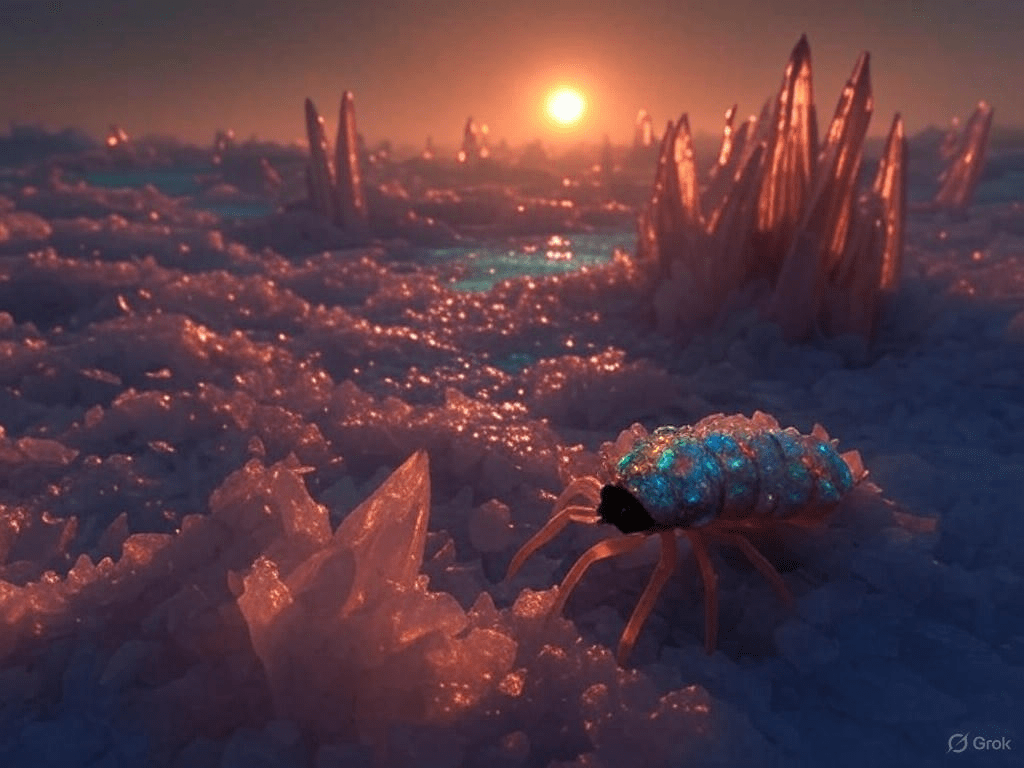
An ultracool red dwarf star burns a hole in the ice of a tidally locked terrestrial world in its orbit. Jagged silicon spires pierce an amber sky, over rolling dunes of dark hydrocarbon grains. Rivers of liquid methane carve valleys into crystalline plains. A being composed of layered silicate polymers slowly shifts its prismatic body towards the dim glow of the small red star. The tremendous gravity of the large world makes locomotion taxing and slow. The banks of the lakes are shaped by tiny waves, mere millimetres in size. This creature does not see in wavelengths of light, nor does it breathe oxygen. It processes reality through vibrations in the resonant crust of the planet. Its physiology is tuned to murmurs from the deep interior of the world.
Humanity is shackled to the idea that life across the universe must mirror life on Earth, carbon-based, water-dependent and shaped by terrestrial evolution. These are the assumptions by which we direct our search for extraterrestrial life. Despite discovering over 5,500 planets, we know of only one temperate rocky planet in orbit around a yellow dwarf star hosting carbon-based lifeforms. Merely exploring the concept of xenolife, a multiverse teeming with alternative biochemistries living under different physical laws challenges our understanding of life, intelligence and reality itself.
The Copernican Principle of Consciousness
In the early 16th century, the Polish Astronomer Nicolaus Copernicus suggested a dramatic yet humble idea: The Earth is not the centre of the universe. The Copernican Principle of Consciousness demands a similar humility, the understanding that sentience is not a fluke of terrestrial chemistry. In the phase-space of possible universes, life can arise in countless chemical dialects, silicon, ammonia and plasma. Life might rely on superconductivity in low-temperature universes hosting quantum biospheres, with cognition emerging even at temperatures close to absolute zero. In worlds with runaway greenhouse effects, acid might be a viable solvent. Silicon bonds can underpin biology on planets with extreme temperatures, from frozen iceballs with subsurface hydrocarbon oceans to volcanic worlds covered in magma seas.

A radical idea in the understanding of consciousness is that it is not merely processing of information gathered by the senses, but extends to physiological responses as well. Beings might perceive time as viscous and slow on a hypergravity planet. Sonar cognition could evolve in the darkness of a nebula, with beings rendering vision as topological soundmaps. Hypothetical waterworlds wracked by storms that perpetually block out the star can host colonies of bioluminescent jellyforms that form a hive mind or collective intelligence through networked pulses of ultraviolet light. Liquid helium on the coldest worlds and fluid plasma on surfaces of stars can act as a solvent for life. On worlds with dense atmospheres, pheromone gradients can transmit complex narratives, enabling chemical telepathy.
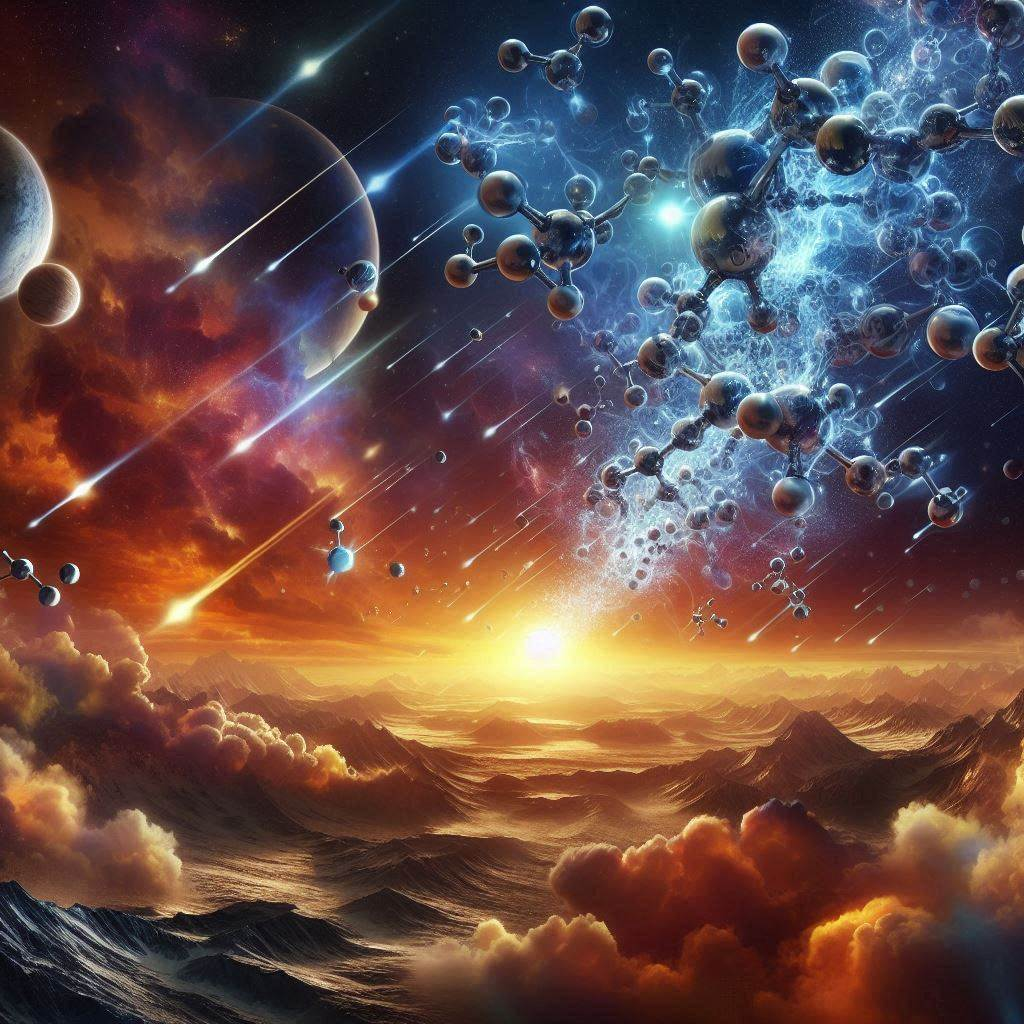
The concept can be taken further with extended xenolife, the beings that can be born in universes with fundamental forces other than gravity, electromagnetism and nuclear. Such beings may be independent of biochemistries, emerging from quantum fluctuations, magnetic fields or higher-dimensional structures. Beings may navigate a tidally locked planet by tasting magnetic fields as vivid textures. Consciousness is merely an attribute of behaviourally sophisticated entities. The Copernical Principle of Consciousness challenges our anthropocentric biases, suggesting that consciousness is a universal potential, not a privileged gift bestowed upon Earthlings. The rich and colourful world that we experience is a limited, narrow outlook compared to the spectrum in which reality can be experienced.
Holographic Metaverse
The Multiverse Hypothesis posits that a panorama of universes exist, each governed by different physical laws. In a multiverse with such diversity, even reality becomes subjective. Algorithmic Idealism suggests that perception is bound to the self-state of an observer, an internal model for the anticipation of future experiences. The Simulation Hypothesis offers a mind-bending twist, that consciousness might be independent of substrate, capable of existing in simulated universes without any underlying biochemistries. Beings with radically different biochemistries could interact in a shared metaverse, with experience dictated by the rules of the simulation rather than the physics of a universe.
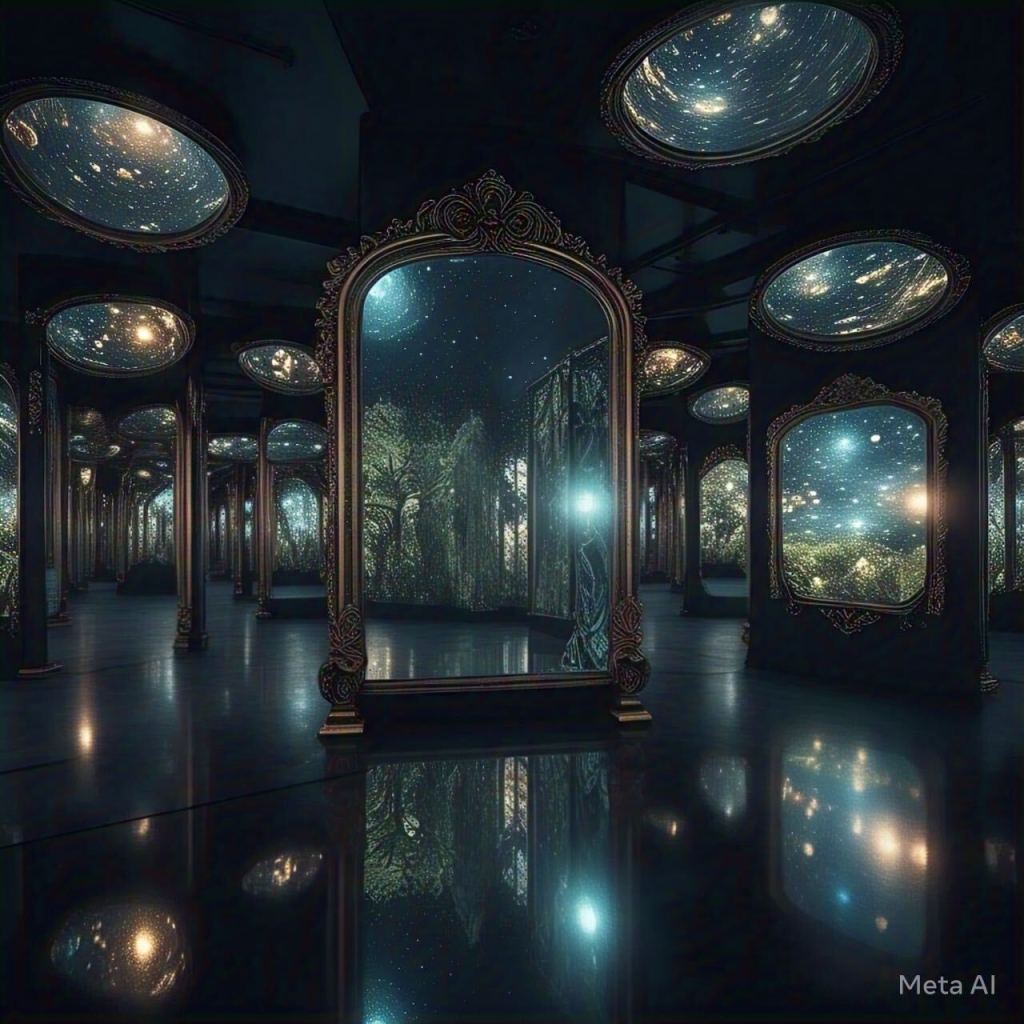
The shared common ground, across the gulfs of chemistry and physics, is a profound connection, a reminder that consciousness is how the universe knows itself. As we simulate xenolife and probe multiverses, we are not exploring space, both outer and inner, we are redefining what it means to be. Reality is a kaleidoscope that we have glanced through a single lens, and the search for alien consciousness is no longer about finding ‘Life as we Know It’. Merely contemplating an utterly alien consciousness is sufficient to realise that the greatest secret of the universe is not where life is, but what life can be.

Leave a comment