After the Big Bang a fog of neutral hydrogen shrouded the universe. The universe was opaque, and there was no light, because the stars were not born yet. As the gas cooled down, dense knots were formed, with gravity drawing in more material, building up the temperatures and pressures to sustain nuclear fusion, marking the birth of the first stars. Entire clusters of massive stars were born in the first stellar nurseries, that burned furiously in energetic light, with the ultraviolet radiation stripping electrons from the surrounding hydrogen, rendering the universe transparent.
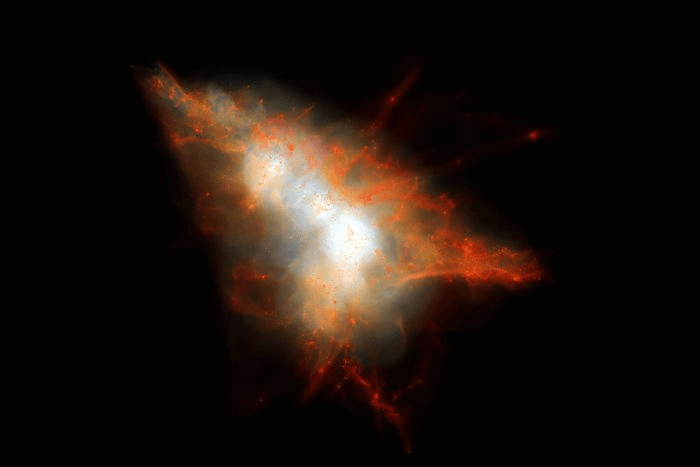
A fingerprint of Hydrogen Lyα emission occurs when hydrogen atoms emit light at a specific wavelength (121.6 nanometers). This signature is a powerful tool for spotting distant galaxies, as it shifts to observable wavelengths due to cosmic expansion.
As the galaxies ignited, the dense, opaque fog was ionized. The first light in the universe marked the start of what is known as the Epoch of Reionization, that lasted between 150 million years and one billion years after the Big Bang. In the early universe, the neutral galactic medium (IGM) should have absorbed any light, yet there are exceptionally luminous galaxies at the dawn of time, known as Lyman-alpha (Lyα) emitters. In the early 20th century, the American Physicist Theodore Lyman identified wavelengths or colours of light when electrons are kicked to higher energy levels in hydrogen atoms. The first of these is called Lyman-alpha with the greek alphabet designating the subsequent spectral lines, used to identify hydrogen over astronomical distances. Lyman-alpha emitters (LAEs) are so bright that the light penetrates the hydrogen fog.
Overdensities and ionizing bubbles
These LAEs are not solitary, they are in the cores of clusters of galaxies. These LAEs are surrounded by what are known as galaxy overdensities, a concentration of galaxies much higher than average, with studies measuring a fourfold increase. The overdensities of galaxies indicate the presence of vast, ionised bubbles of gas, blowing out pockets of transparency within the IGM. These bubbles have been measured at 6.5 million lightyears across, far exceeding theoretical predication. The overdensities would have to emit ionizing radiation over 200 million years. These bubbles are necessary for the light from the LAEs to shine through the cosmos, visible from extreme astronomical distances.
The LAEs are surrounded by simple, primitive galaxies. This was a time before ice and dust existed in the universe, as the elements heavier than hydrogen and helium had not yet been coked up by stars. The simple, compact-star forming knots had high star formation rates.

Cosmic variance reflects the natural fluctuations in galaxy density across the universe’s large-scale structure. It’s a key consideration when interpreting overdensity findings, ensuring they’re not statistical flukes.
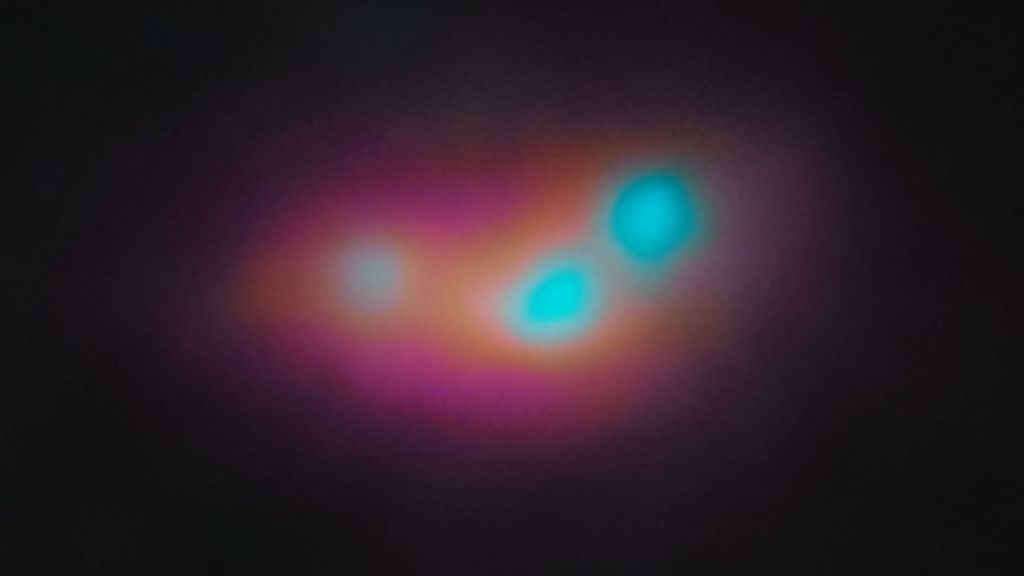
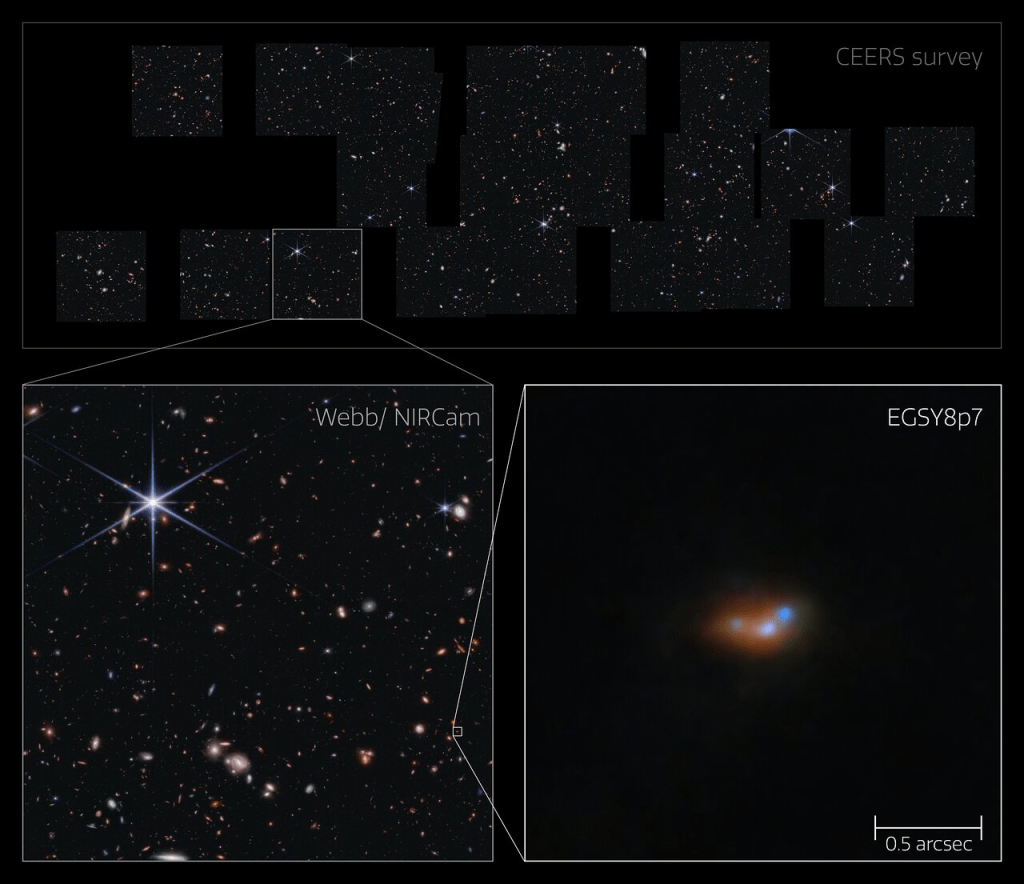
Morphologically, many appear as simple, compact star-forming knots, lacking the complexity of later galaxies. EGSY8p7 is an exceptionally bright LAE from when the universe was 600 million years old. The star formation is dominated by recent births. This youthfulness complicates efforts to pinpoint its exact contribution to ionizing the surrounding bubble, but its vigor underscores the dynamic nature of the first galaxies. It is not known if the bubbles are formed by individual galaxies or the overdensities. The role of actively feeding black holes in the cores of these early galaxies is not clear. We do not understand the mechanisms that rendered the universe transparent.
Sources:
The Bright-end Galaxy Candidates at z ∼ 9 from 79 Independent HST Fields
Image Credits:
EGSY8p7: ESA/Webb, NASA & CSA, S. Finkelstein (UT Austin), M. Bagley (UT Austin), R. Larson (UT Austin), A. Pagan (STScI), C. Witten, M. Zamani (ESA/Webb)
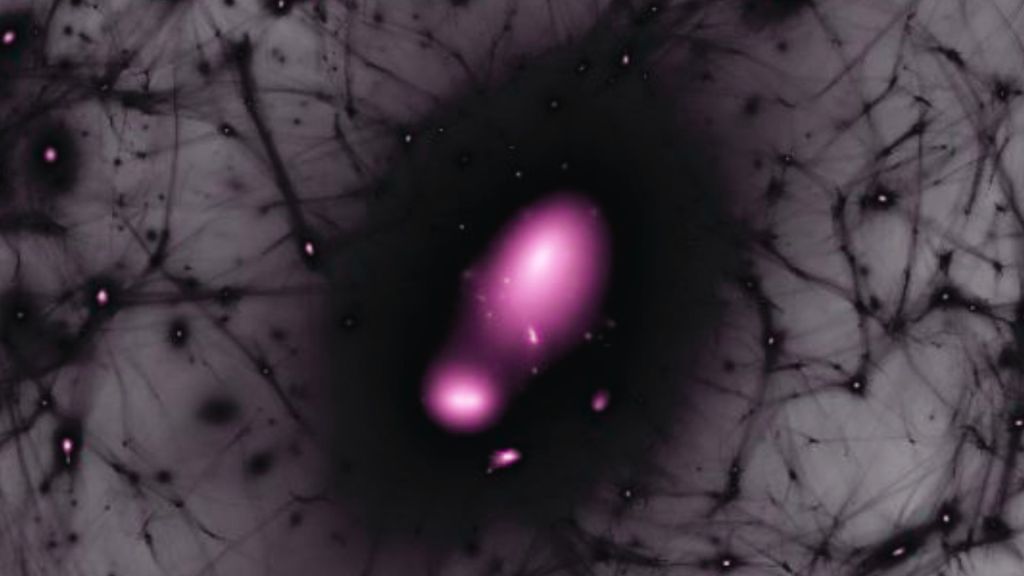
Computer simulation of a Lyman-alpha Blob: J.Geach/ D.Narayanan/ R.Crain
MACS-J0417.5-1154: NASA, ESA, CSA, STScI, V. Estrada-Carpenter (Saint Mary’s University).

Leave a comment