
The Southern Crab Nebula is a pair of gas and dust bubbles nested within another pair, that encapsulate a symbiotic binary star system, and is a natural laboratory for studying stellar interactions, mass loss of stars nearing the ends of their lives, and nebula formation. A massive star close to its death is shedding its outer layers periodically, in a binary system with the dense relic core of a star that has already died a violent death.
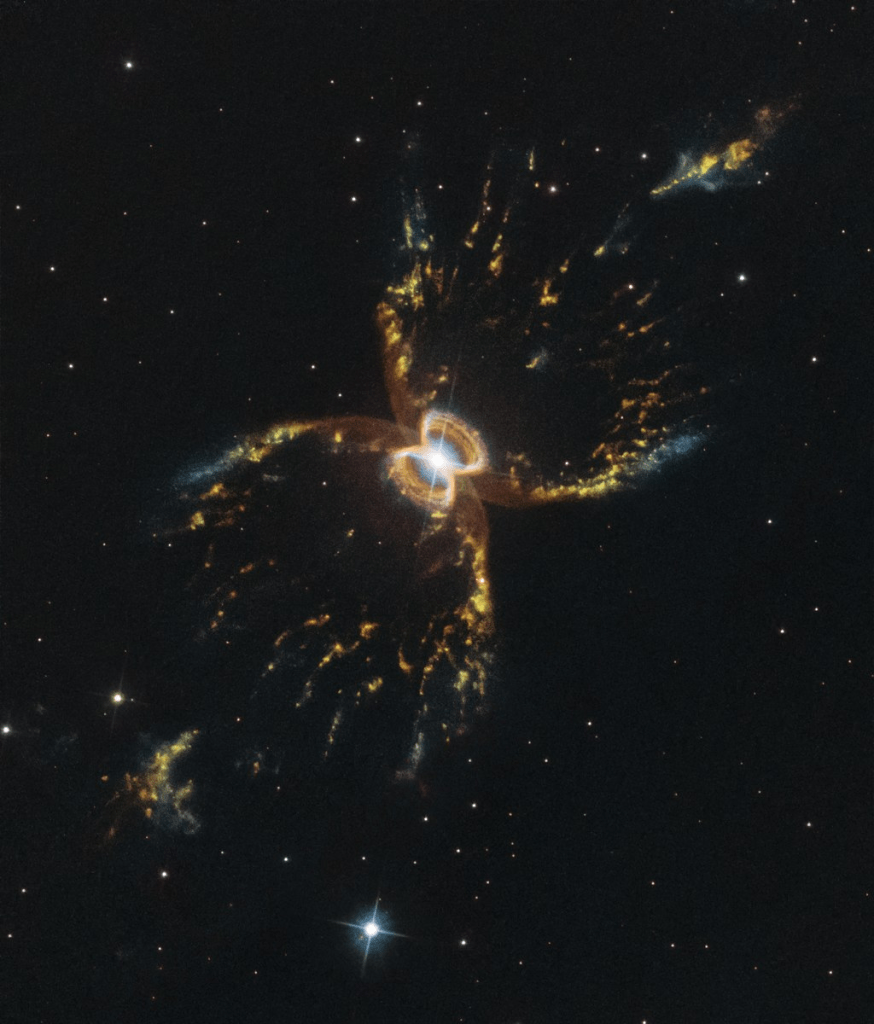
First identified in 1989, the Southern Crab nebula is similar to bipolar planetary nebulae, with symmetrical lobes extending from its core. Its classification as a symbiotic star system emerged after photometric monitoring revealed a Mira variable—a pulsating red giant at its heart, distinguishing it from typical planetary nebulae.
Unveiling the Nebula’s Secrets
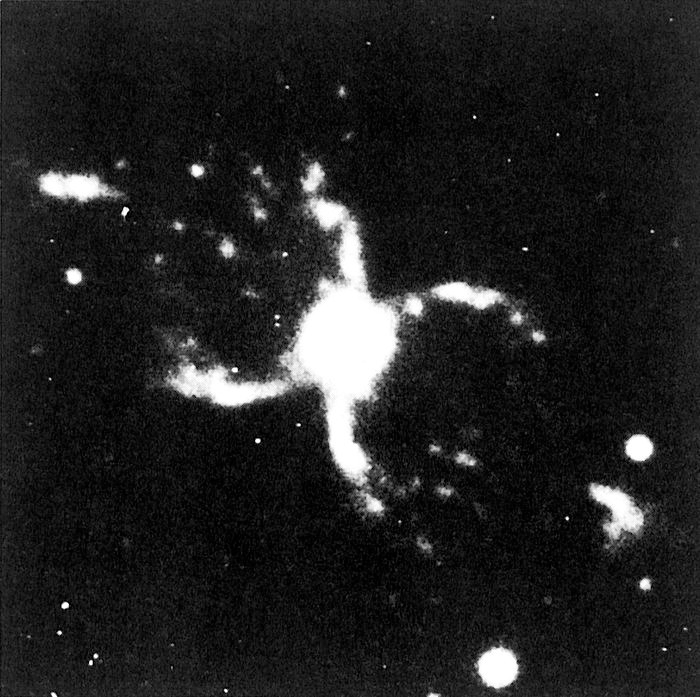
Distance Determination: Estimates of the Southern Crab Nebula’s distance vary widely, between 7.92 kpc and 0.8 kpc. The Mira’s Period-Luminosity relation led to measurements of 4.7 kpc and 4.4 kpc. Recent expansion parallax measurements refine this to 3.3 kpc.
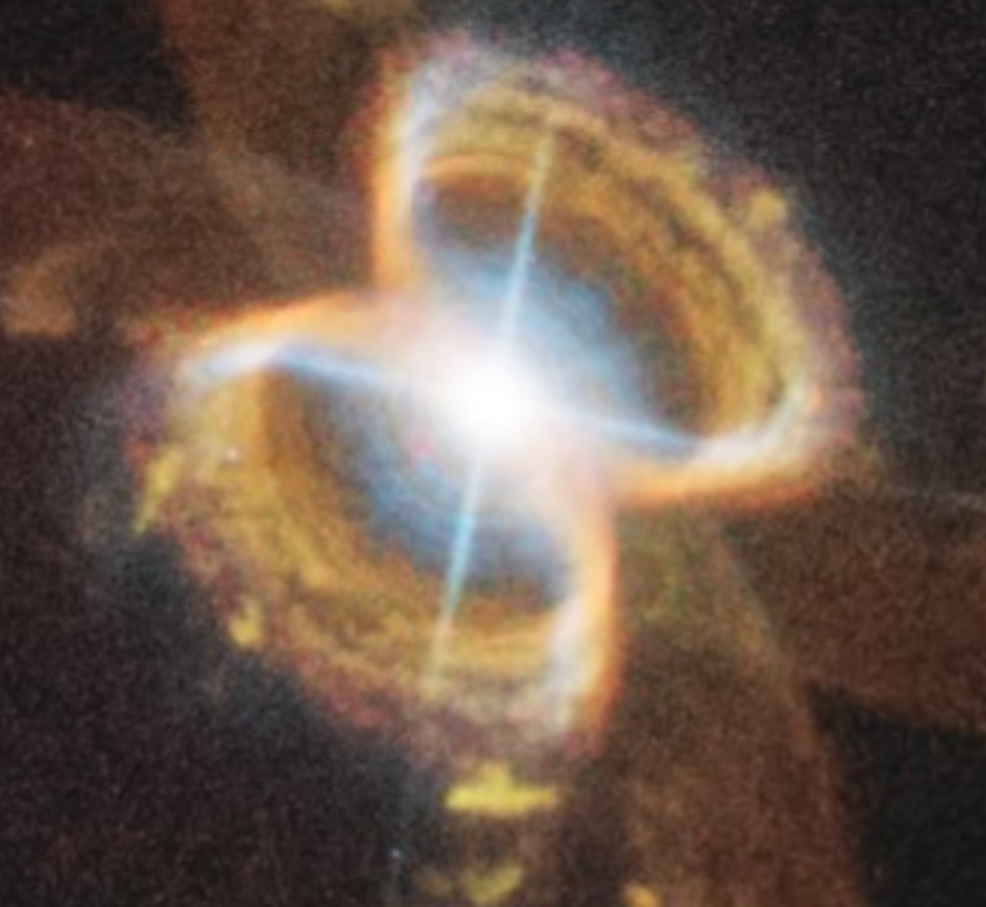
Expansion Parallax: High-resolution observations track the nebula’s expansion. Combined with radial velocity data, this method yields precise distance estimates, critical for mass and scale calculations.
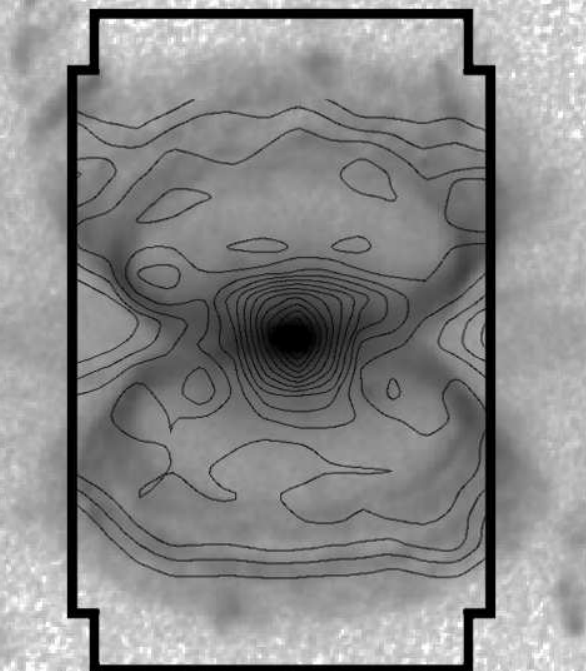
Density and Composition: Spectroscopic analysis of the emission lines reveals variations in electron densities between the the inner and outer lobes, indicating a stratified structure.
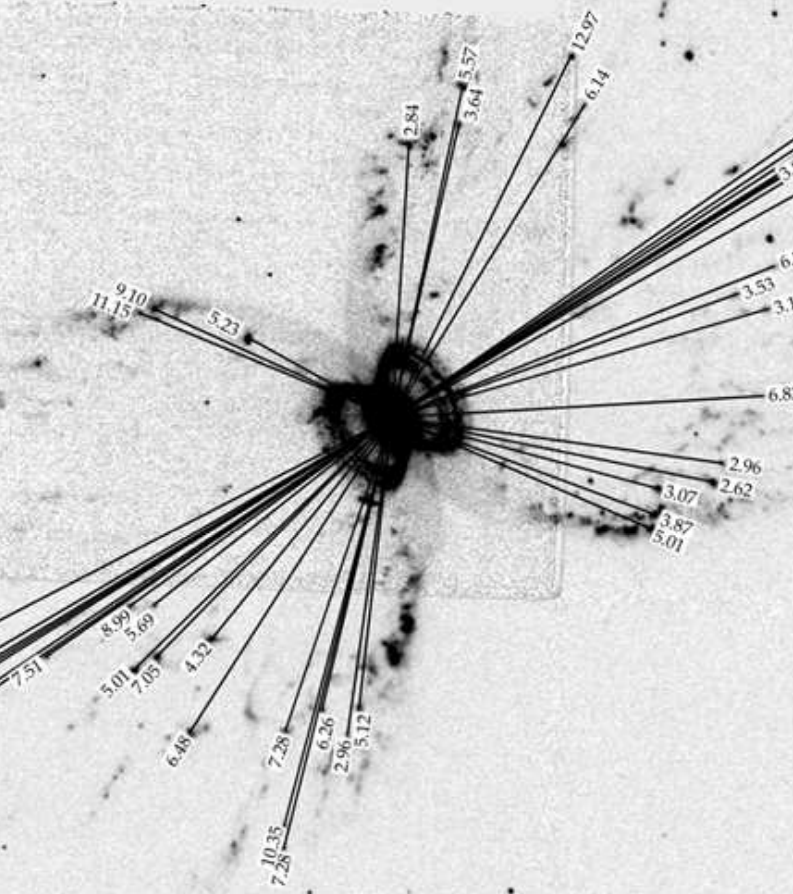
Massive Ejecta: At 3.3 kpc, the nebula’s ionized mass approximates 0.1 solar masses—an unusually large value, suggesting the Mira is nearing the tip of the Asymptotic Giant Branch (AGB), a late evolutionary phase marked by significant mass loss.
Symbiotic stars consist of a white dwarf, the dense, relic core of a dead star, accreting material from a companion, often a Mira variable. In the Southern Crab nebula, the Mira sheds a slow-moving wind, partially captured by the white dwarf. Thermonuclear burning on the dwarf’s surface generates fast outflows, which collide with the Mira’s wind, sculpting the nebula’s elaborate structure. This interplay drives mass transfer and accretion, shaping the nebula’s geometry and providing a model for studying stellar evolution.
The Mira
Near-infrared spectroscopy identifies CO absorption bands in the Southern Crab Nebula’s spectrum, a hallmark of late AGB stars. The strong, featureless continuum deviates from typical symbiotic star profiles, underscoring the Mira’s dominance in the system.
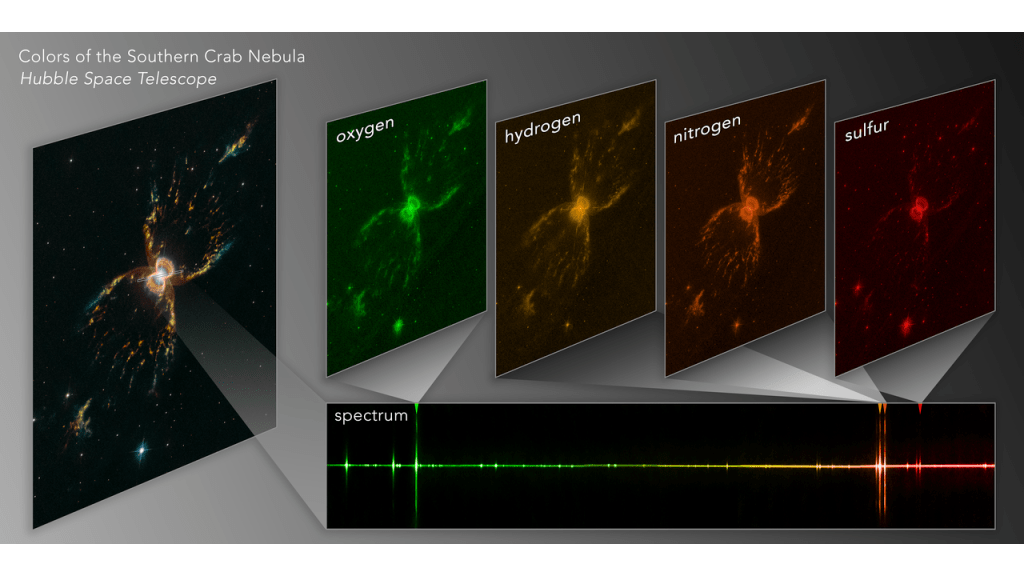
The nebula’s 0.1 solar mass of ionized material far exceeds the dwarf’s accretion capacity, implicating the Mira as the primary mass source. Its slow winds, reshaped by the dwarf’s high-velocity outbursts, form the nebula’s vast structure.
Modeling the Nebula’s Structure
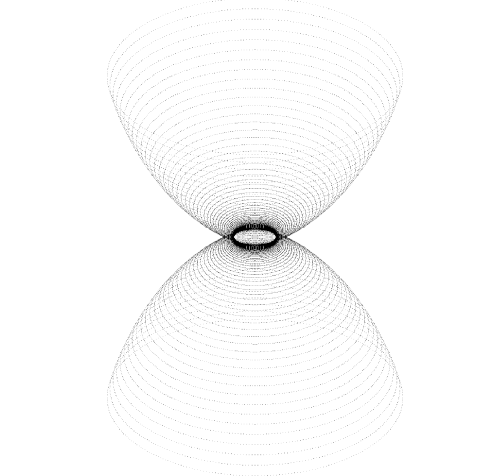
Spatio-Kinematical Models: Integral field spectroscopy helps delineate its dynamics and lobe interactions.
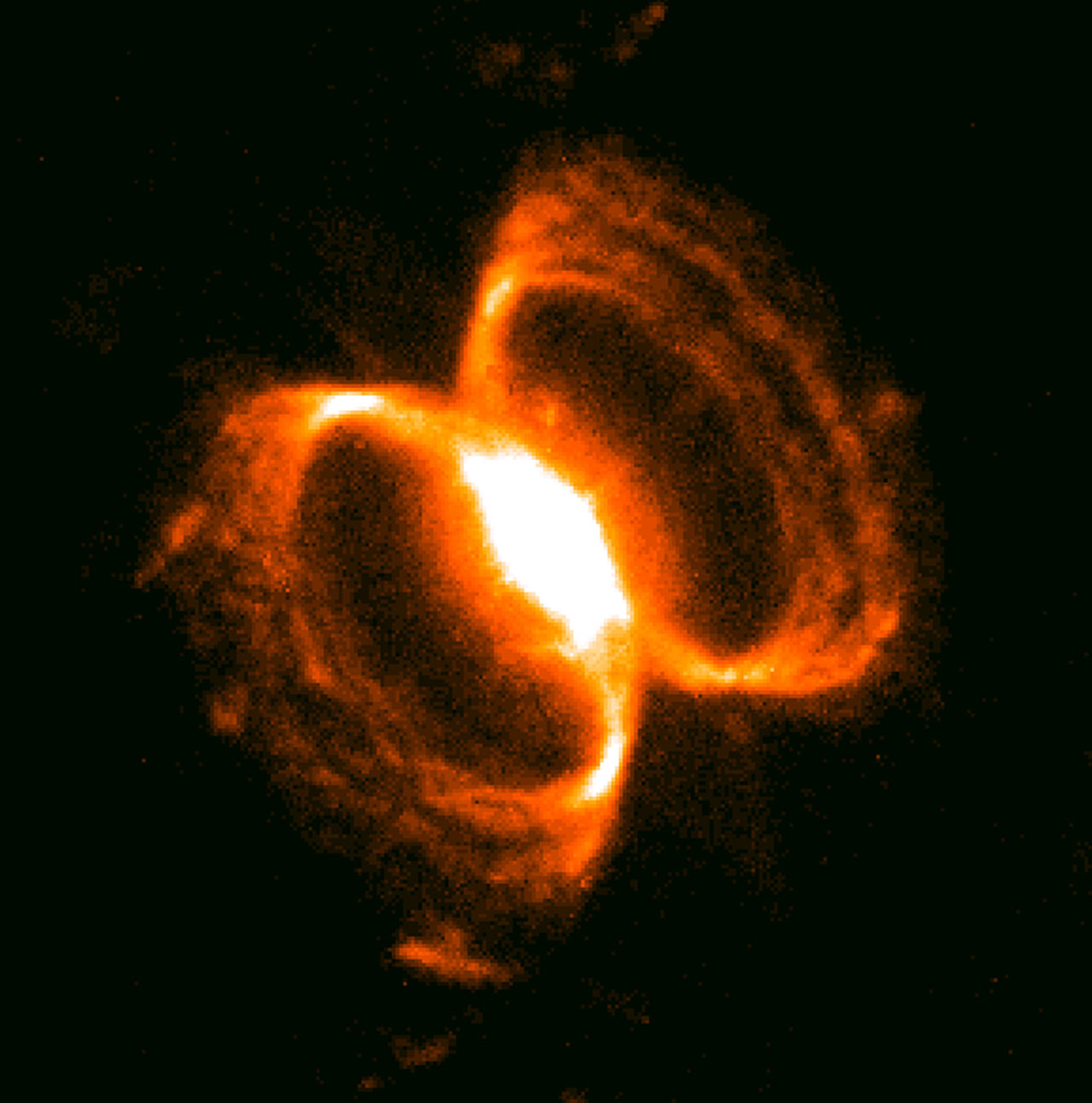
Distinct Lobes: The inner and outer lobes, though coeval, differ in form. Outer lobes fragment via instabilities, while inner lobes display latitude-dependent brightness gradients.
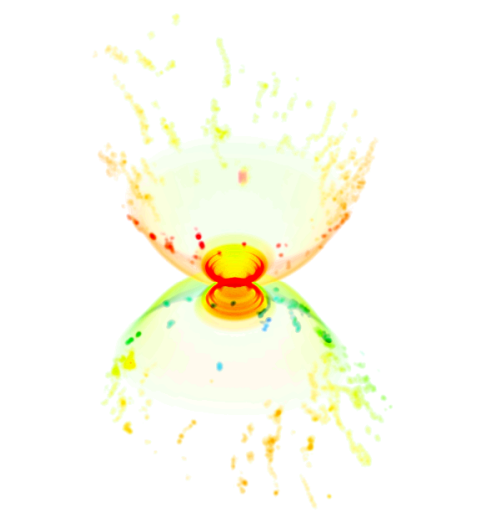
Thin Walls: The lobe walls are disproportionately thin relative to their distance from the central stars, potentially stabilized by external pressure or magnetic fields.
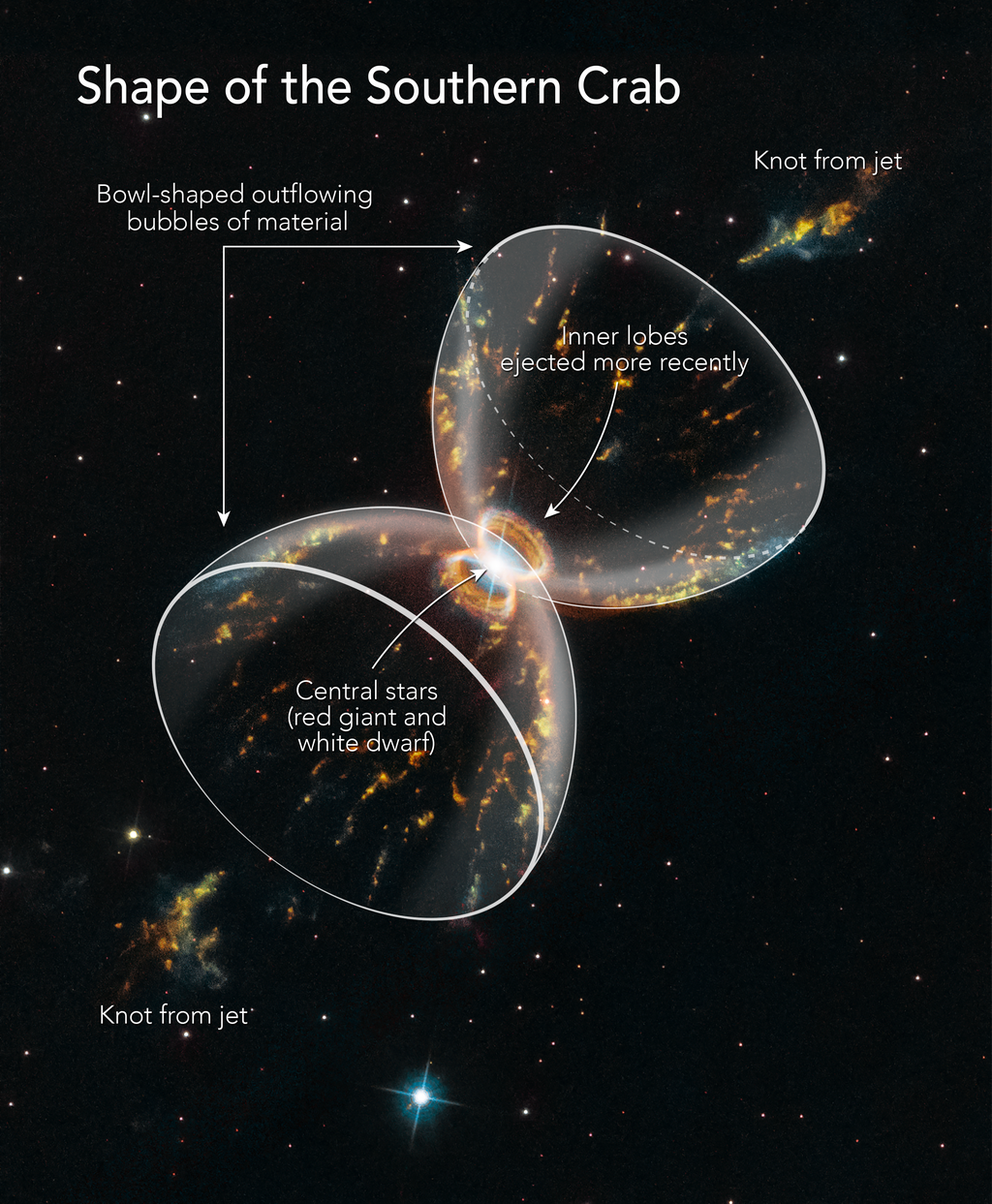
3D Modeling: Computers integrate morphology and kinematics, fitting expansion velocities with vector fields to trace the nebula’s evolutionary trajectory.
Ongoing studies aim to map the 3-D distribution of knots and filaments using advanced photo-ionization models. Kinematic analysis of outer jet features could reveal whether they stem from a brief ejection or sustained outflow, further refining our understanding of the Southern Crab Nebula’s formation and evolution.
The stellar symbiosis illuminates the mechanics of mass loss and nebular dynamics.
Image Credits:
Cover Image: Romano Corradi, Instituto de Astrofisica de Canarias, Tenerife, Spain; Mario Livio, Space Telescope Science Institute, Baltimore, Md.; Ulisse Munari, Osservatorio Astronomico di Padova-Asiago, Italy; HugoSchwarz, Nordic Optical Telescope, Canarias, Spain; and NASA/ESA
The Crab of the Southern Sky: NASA, ESA, and STScI
The “Southern Crab” Nebula (He2-104): ESO
Southern Crab Nebula: NASA, ESA, and STScI
Sources:
A morpho-kinematic and spectroscopic study of the bipolar nebulae: M 2−9, Mz 3, and Hen 2−104
Hen 2–104: a close-up look at the Southern Crab*
The Discovery of Infrared Rings in the Planetary Nebula NGC 1514 During the WISE All-sky Survey

Leave a comment