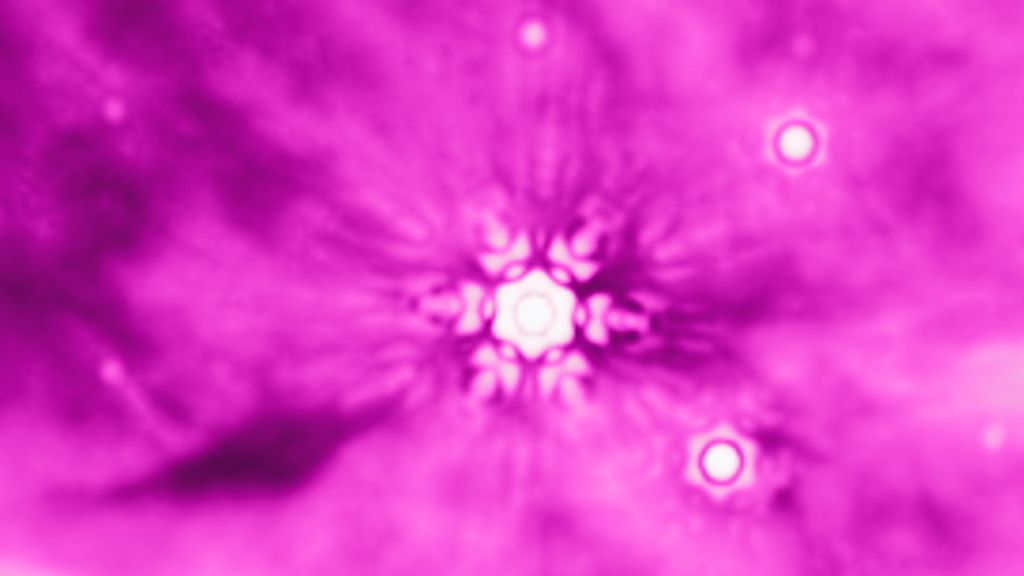
A molecular cloud drifts through the vast emptiness, a diffuse sea of hydrogen gas laced with traces of carbon monoxide and scattered dust. It is a frigid expanse, and as the temperature drops, the molecules of gas become increasingly comfortable with proximity. Gravity, relentless and patient, draws pockets of the cloud inward, compressing the material into a well with immense potential. Here begins the tale of a low-mass protostar.
This cloud is mostly hydrogen gas, a monotonous density stretching across light-years. The tendrils of carbon monoxide are a minor presence, while other compounds lingering in negligible quantities. As the cloud densifies, the carbon monoxide starts clinging to the icy grains, freezing into a solid layer that coats the dust. At this point, water ice emerges next, crystallizing in the subzero void. The stage is set.

Deuterium Fractionation
The deuterium-to-hydrogen ratio in protostellar environments is similar to cometary and planetary water.
Compression continues. The core grows denser, colder—conditions ripe for subtle shifts. Water ice plays a dominant role in mediating interactions, trapping molecules and forming them into new ones. Deuterium, a heavier cousin of hydrogen, asserts itself, and is incorporated into molecules more efficiently in cold, dense regions. On the grains, water ice reacts, swapping atoms to form deuterated water variants that stack in the outer icy mantles. Isotopes of carbon monoxide responds with preferential treatment, initiating chemistry in the coldest corners of the cosmos. Reactions occur between the solid forms of chemicals that would otherwise be gases.
Heat starts to build up as the dense knot collapses further. The ices begin to fracture as the grains of dust warm up. Sublimating molecules revert to their gaseous forms. Chain reactions begin even before the star born. Hydrogen atoms bombard carbon monoxide, forging methanol. Other molecules lengthen: acetaldehyde and ethanol emerge from this silent alchemy. These complex organic molecules (COMs) mark a transition.

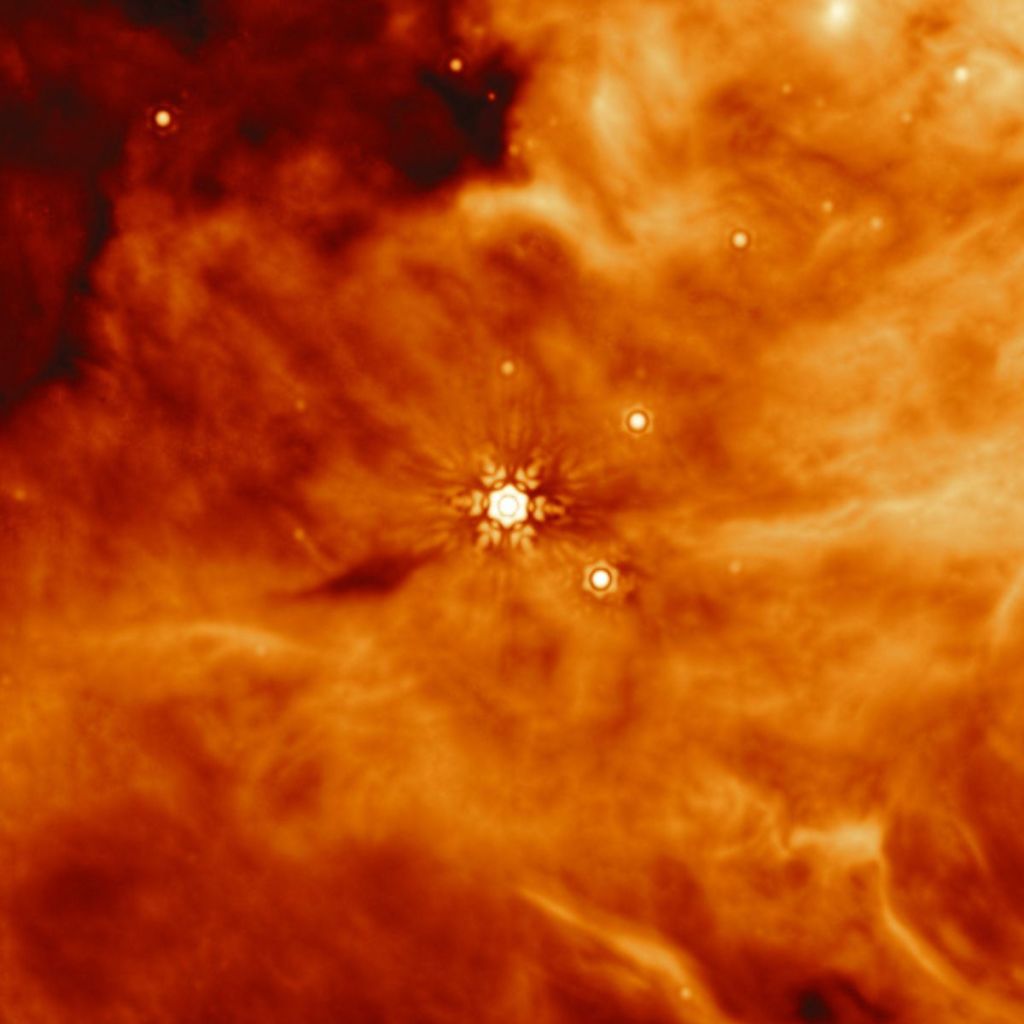
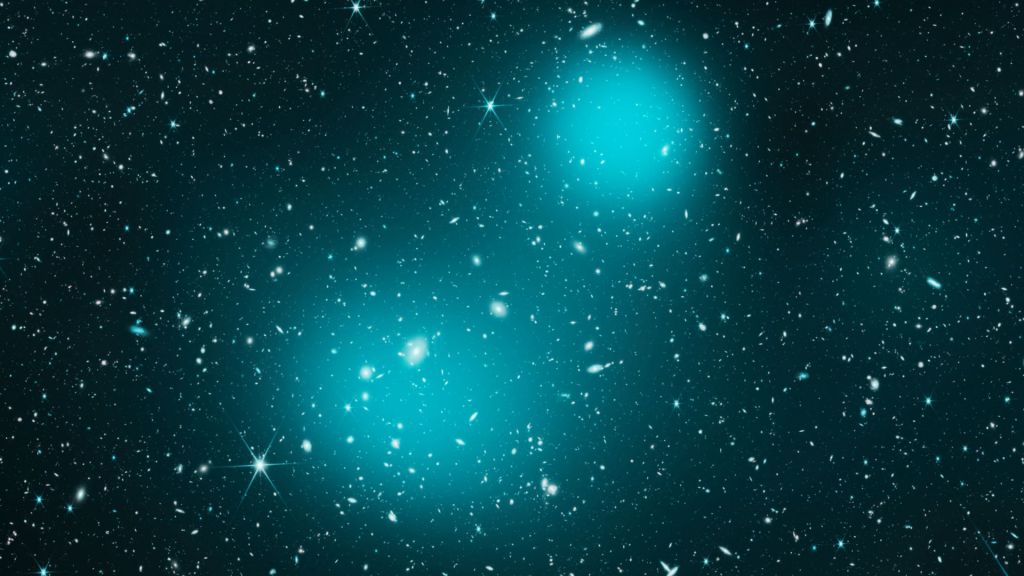
The COMs in the environment around a pair of protostars. (Image Credit: ESA/Webb, NASA, CSA, W. Rocha et al., Leiden University).
Temperature climbs past 100 K. Ices vanish entirely, turning into gas. The deuterated water persists however. The ratios of acetaldehyde and ethanol hold steady. The core of the protostar is now a crucible of vaporized chemistry, a prelude to greater structures.
Material spirals inward, as the protostar begins accreting and feeding on the surrounding gas and dust, flattening into a circumstellar disk. Dust and gas coalesce, a reservoir for future worlds. Water, once locked in ice, now flows within this nascent structure, poised to seed terrestrial worlds and ice moons.
Complex Organic Molecules
COMs form on icy grains through hydrogenation and radical recombination. Their presence around protostars indicate prebiotic chemistry begins before planet formation.
This is no singular event but a cycle repeated across the cosmos. Chemical evolution unfolds—deuterium fractionation, gas-ice interplay, and the rise of complex molecules—each step governed by precise physics. From cloud to disk, the protostar’s journey lays bare the mechanisms of creation, a process indifferent to its products, vast in scope, eternal in recurrence.
Methanol, acetaldehyde, ethanol, formic acid, acetic acid (likely), methyl formate, formate ions, cyanate ions, methane, and formaldehyde ices are found around protostars. These can make their way into comets, that can then strike any worlds being assembled around newborn stars.
This particular low mass protostar is yet to accrete enough material to sustain nuclear fusion, the point at which it becomes a star. It is not going to grow as large as its giant blue and white cousins, that live fast and die young, nor is it a tiny tempestuous red dwarf. This star is yellow, and can burn steadily for about 10 billion years.
Cover Image: IRAS2A in parallel field to protostar IRAS23385, ESA/Webb, NASA, CSA, W. Rocha et al. (Leiden University)
Halley’s Nucleus: Credit: NASA/ESA/Giotto Project
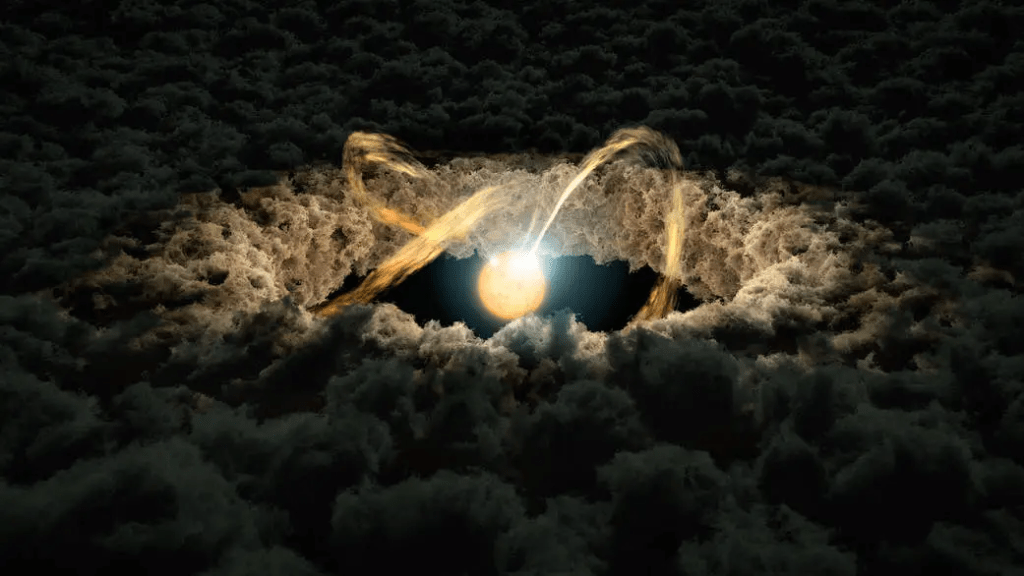
Protoplanetary Disc: NASA/JPL-Caltech

Leave a comment