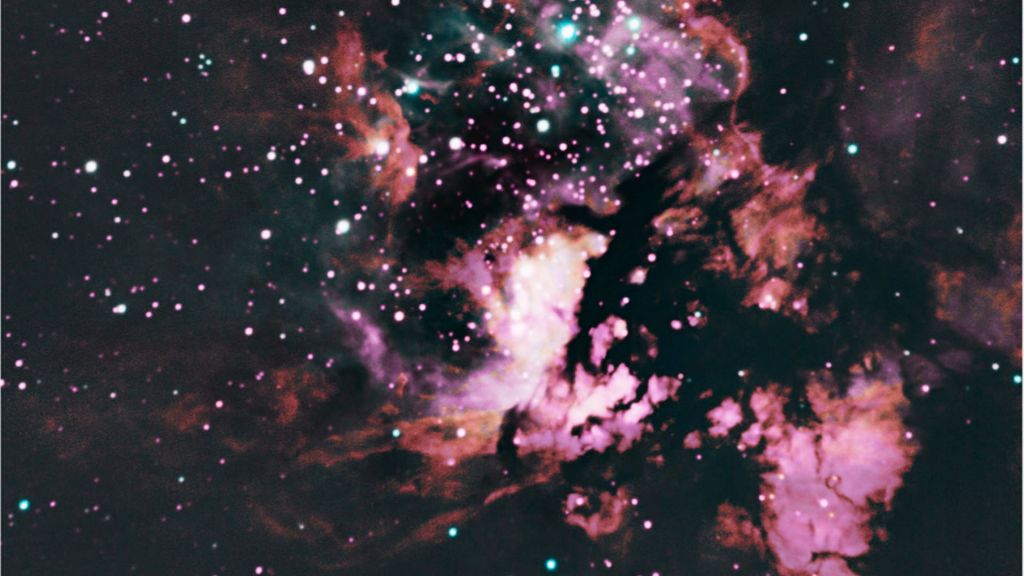
The Carina Nebula is a tapestry of creation and destruction, sprawling across 300 light-years.

This molecular cloud was once dark and silent, but gravity introduced dynamism, transforming the region into a stellar nursery that is roaring with the fury of many clusters of massive, newborn stars.
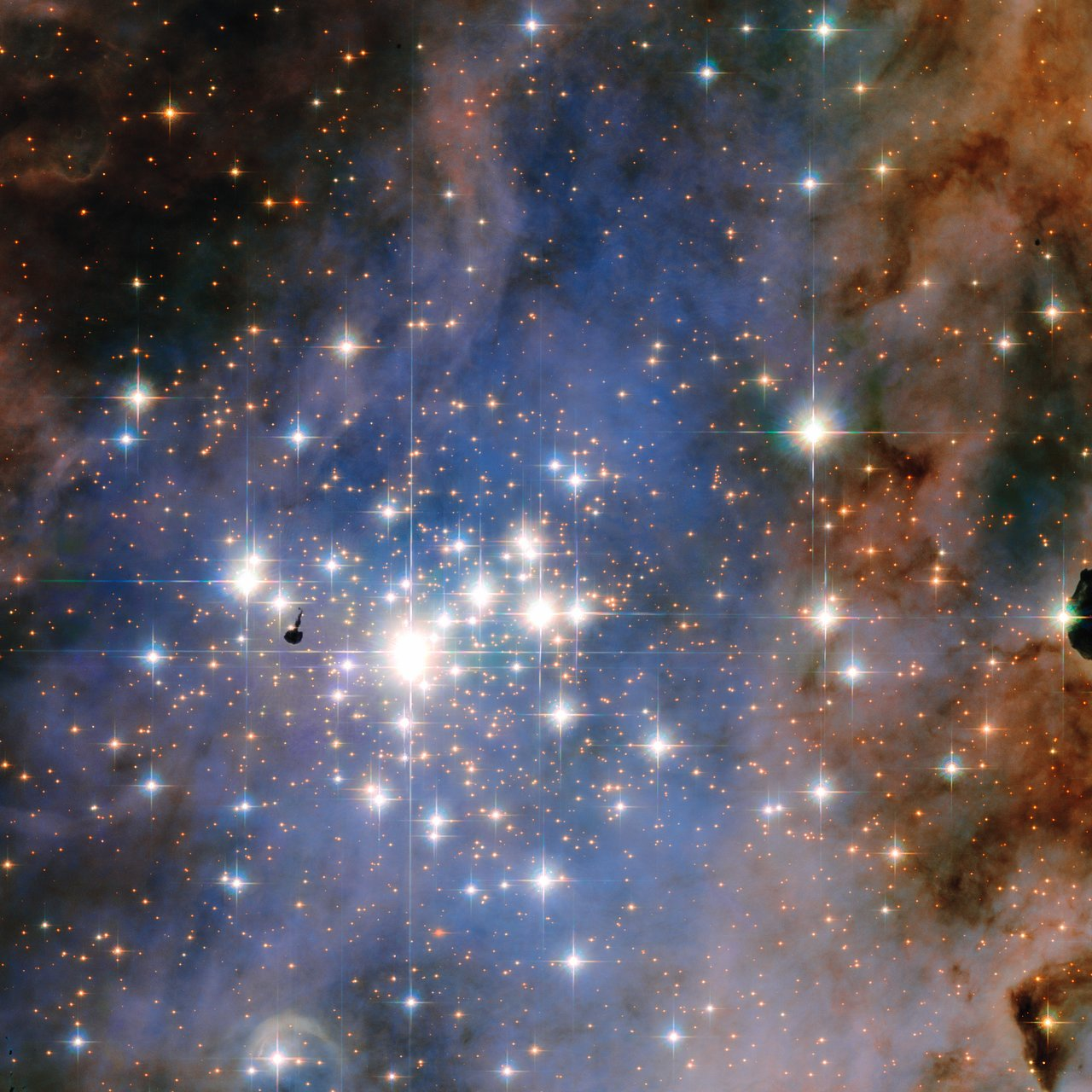


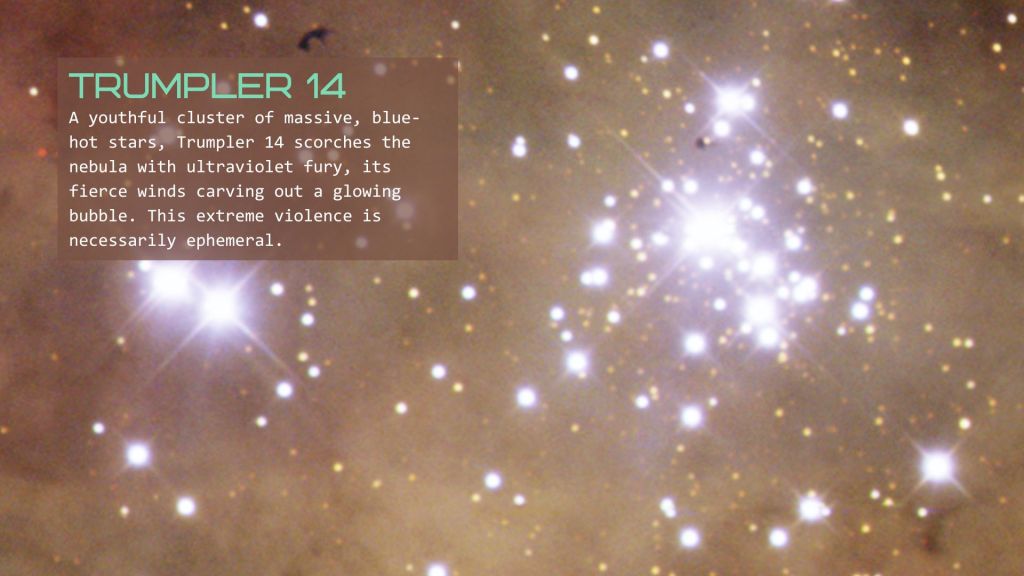
The energetic stellar winds from the hot, giant stars are shaping the surrounding clouds of gas and dust, encouraging the birth of more stars, that live fast and die young in this realm of chaos and beauty.
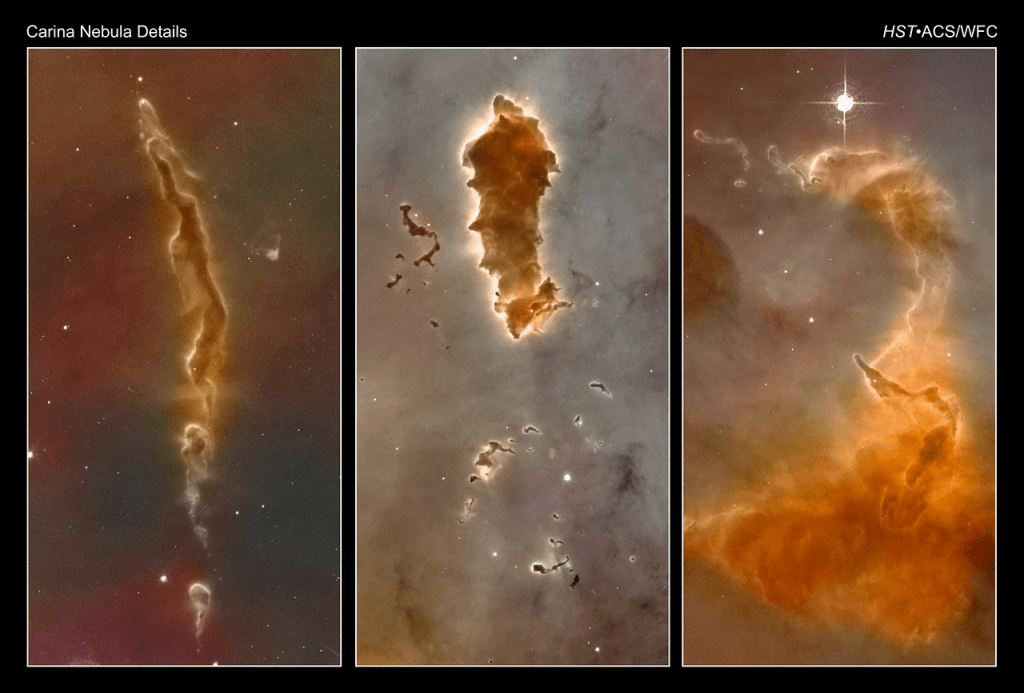
Ultraviolet winds erode clouds of gas and dust, pushing the material to collapse into new baby stars.


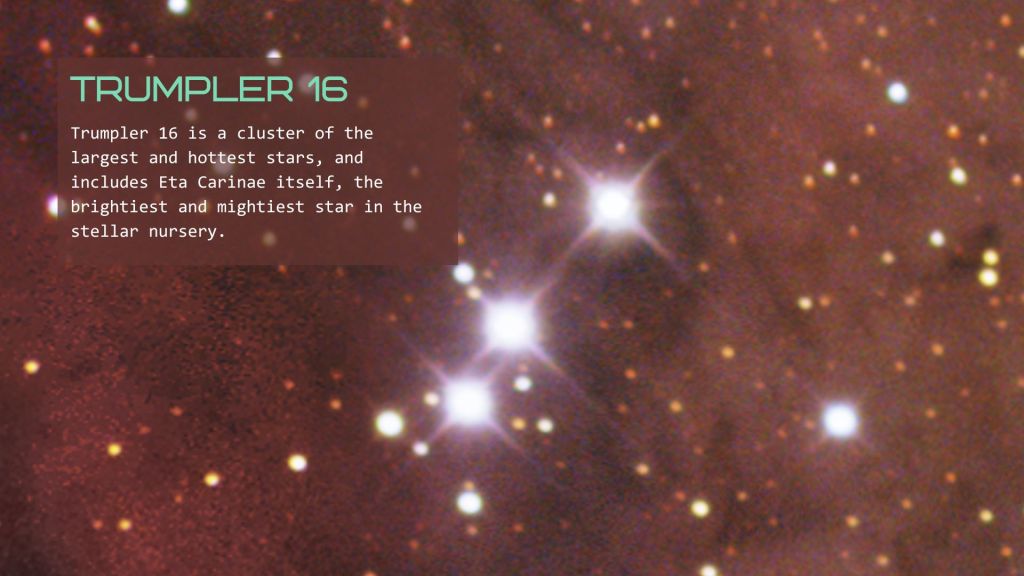



The formation of the Homunculus Nebula in the 1840s as Eta Carinae erupted is known as the ‘Great Eruption’. The nebula continues to expand to this day. The outburst was fuelled by the unstable burning of nuclear fuel and fierce stellar winds, hinting at the fate of a star too massive to go gently into that good night.

The Carina Nebula, now a radiant crucible, will not blaze forever. As its massive stars exhaust their fuel, they’ll detonate as supernovae, seeding the void with heavy elements and scattering the many clusters into the galaxy’s spiral arms.


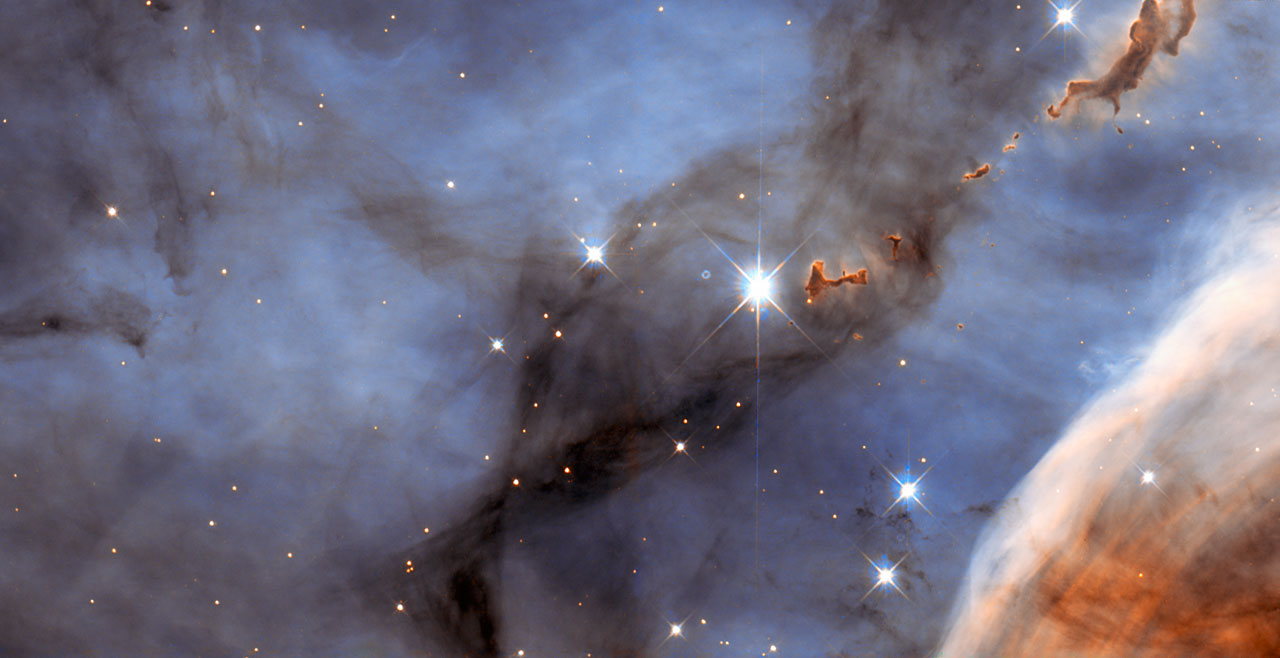
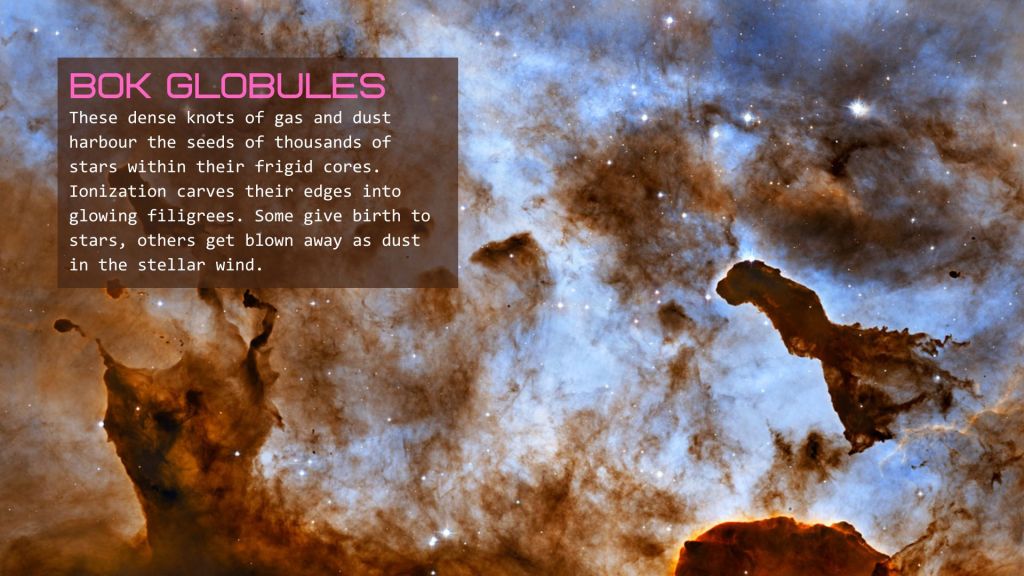
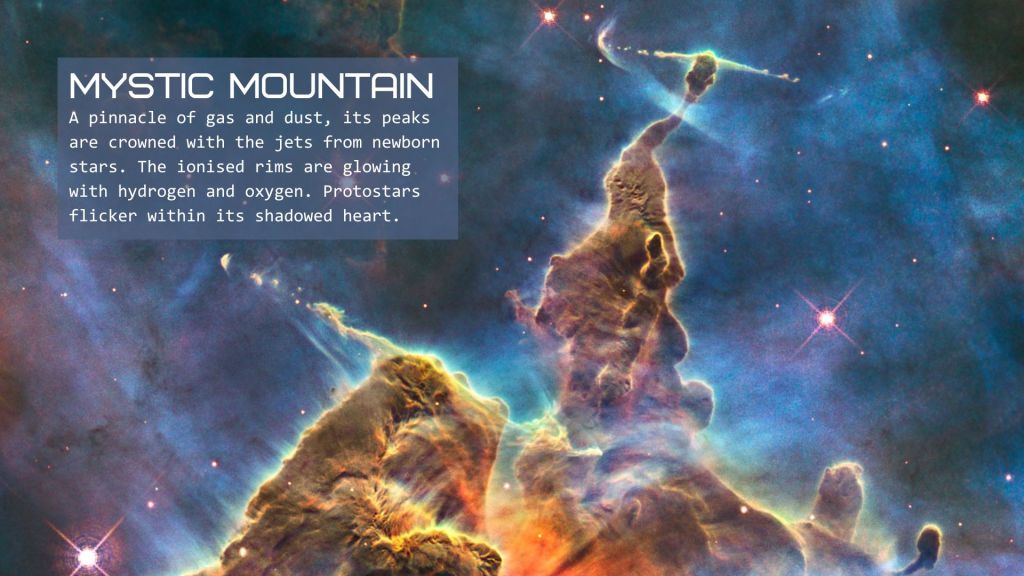
The nebula’s glowing gas will dissipate under these explosive winds, while Bok globules and Mystic Mountain’s remnants collapse into new suns, birthing a quieter generation. In time, even this stellar nursery will fade into a ghostly haze.
Image Credits:
ESA/Hubble & NASA
Eta Carinae: NASA, ESA, N. Smith (University of Arizona, Tucson), and J. Morse (BoldlyGo Institute, New York)
Mystic Mountain: NASA, ESA and M. Livio and the Hubble 20th Anniversary Team (STScI)
WFC3: NASA, ESA and the Hubble SM4 ERO Team
The Carina Nebula: ESO/IDA/Danish 1.5 m/R.Gendler, J-E. Ovaldsen, C. Thöne, and C. Feron.
Carina Nebula, NGC 3372, Trumpler 14: ESO
Carina Nebula Details: NASA, ESA, N. Smith (University of California, Berkeley), and The Hubble Heritage Team (STScI/AURA)
Carina Nebula, HH 901, HH 902: NASA, ESA, M. Livio and the Hubble 20th Anniversary Team (STScI)
Cosmic Fireworks in Ultraviolet: NASA, ESA, N. Smith (University of Arizona, Tucson), and J. Morse (BoldlyGo Institute, New York)
Cosmic Ice Sculptures: NASA, ESA, and the Hubble Heritage Project (STScI/AURA). Acknowledgment: M. Livio (STScI) and N. Smith (University of California, Berkeley, USA)
Wide-field image showing the region of WR 25 and Tr16-244: NASA, ESA and Jesús Maíz Apellániz (Instituto de Astrofísica de Andalucía, Spain)
Mammoth stars seen by Hubble: NASA, ESA and Jesús Maíz Apellániz (Instituto de Astrofísica de Andalucía, Spain)
Dazzling diamonds of Trumpler 14: NASA & ESA, Jesús Maíz Apellániz (Centro de Astrobiología, CSIC-INTA, Spain)
NGC 3576: ESO

Leave a comment