
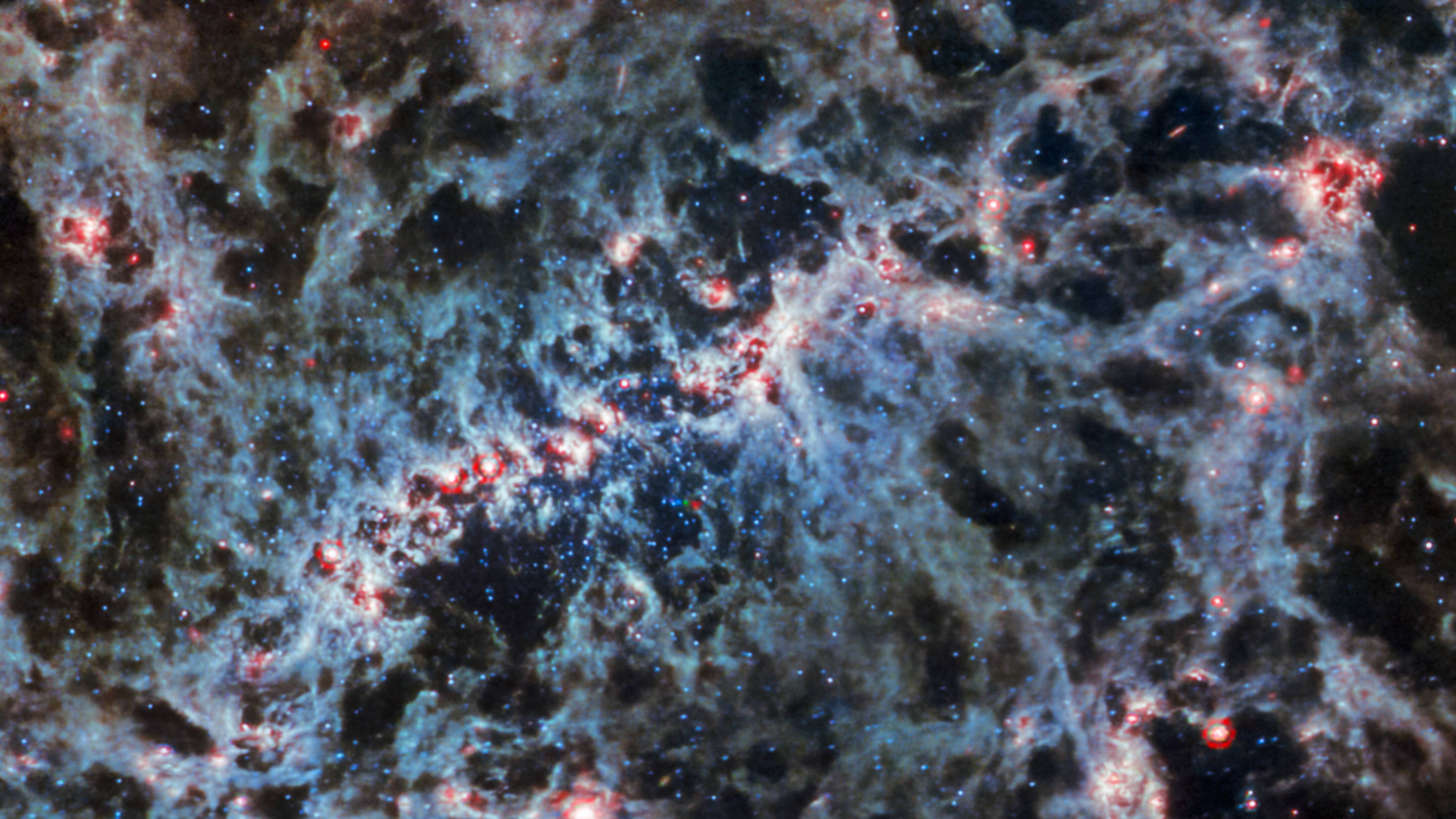
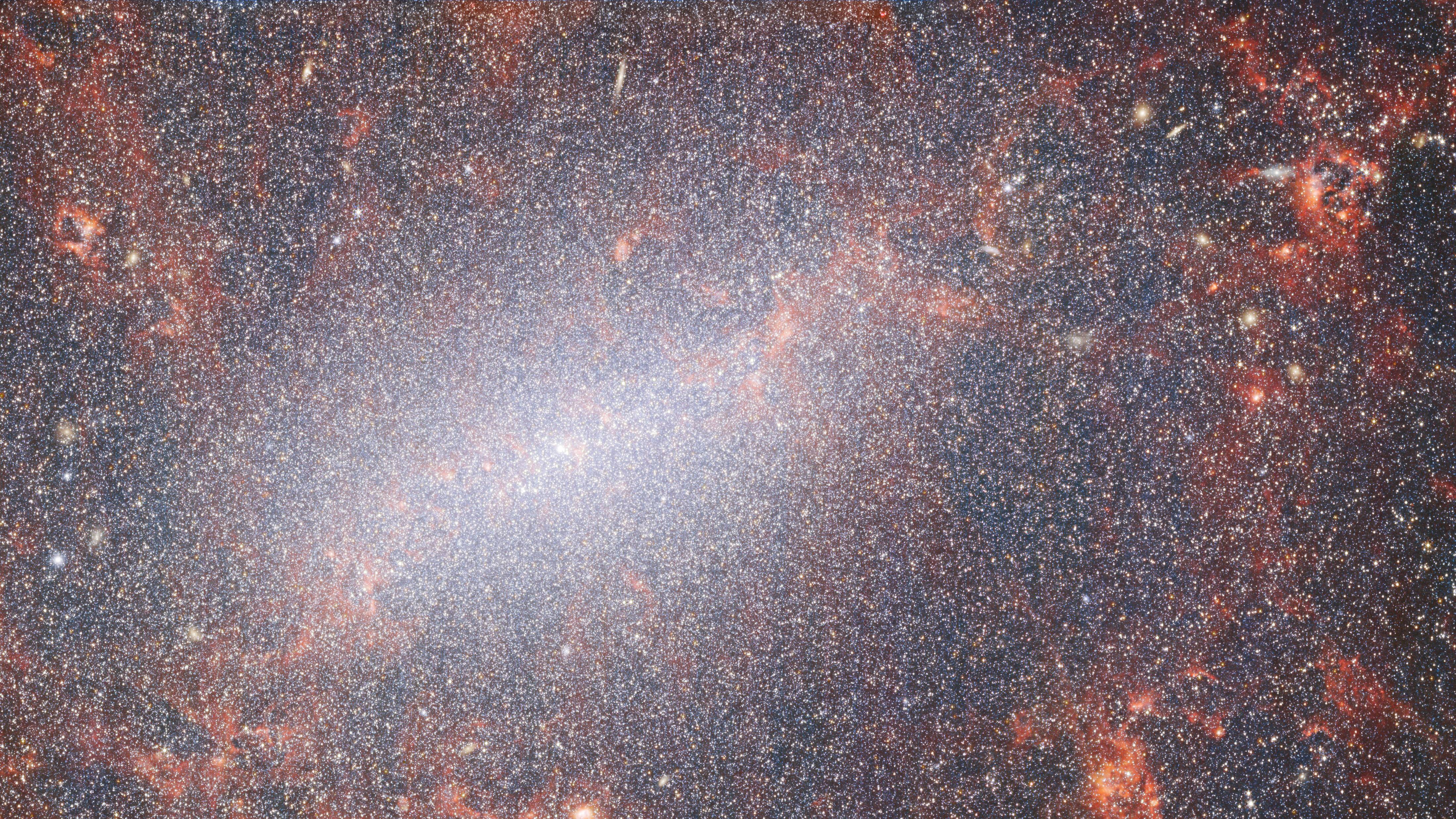
The combined energies pouring out of the stars in galaxies shape their environment, blowing out bubbles in some regions, and pushing matter into clumpy tendrils in others. Infrared astronomy is improving the understanding of how stars sculpt the galaxies they occupy and shape their evolution, by peering through obscuring clouds of gas and dust.
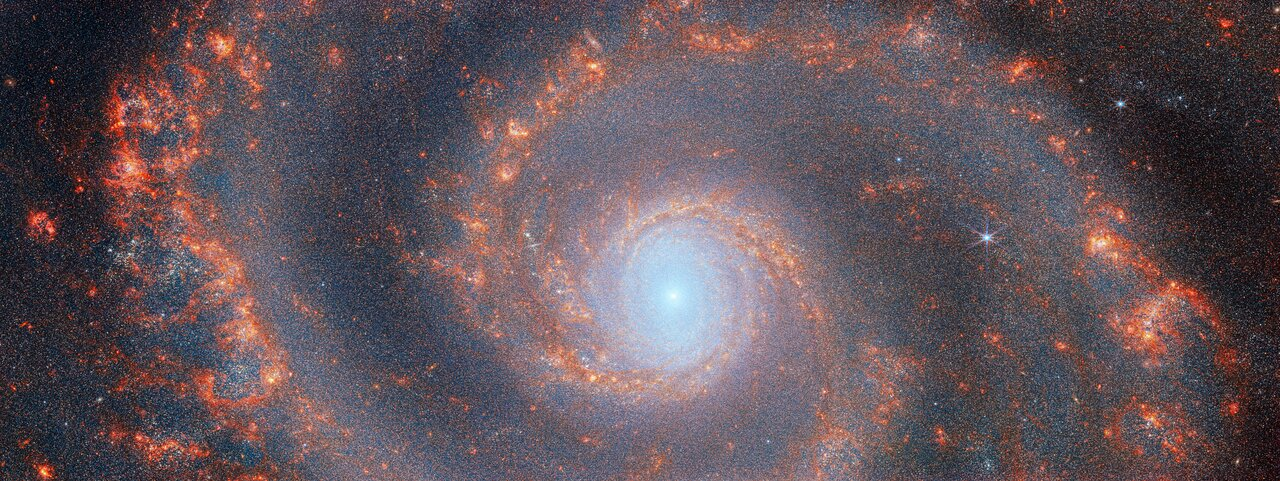
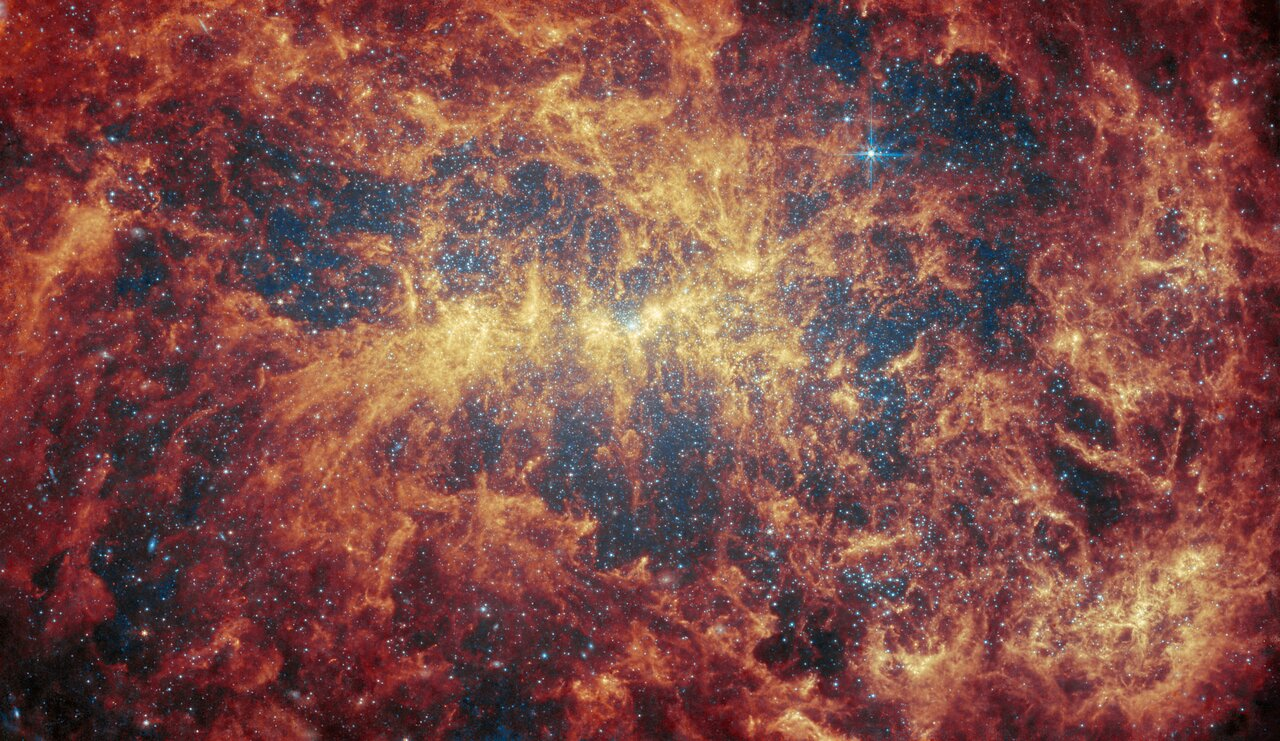
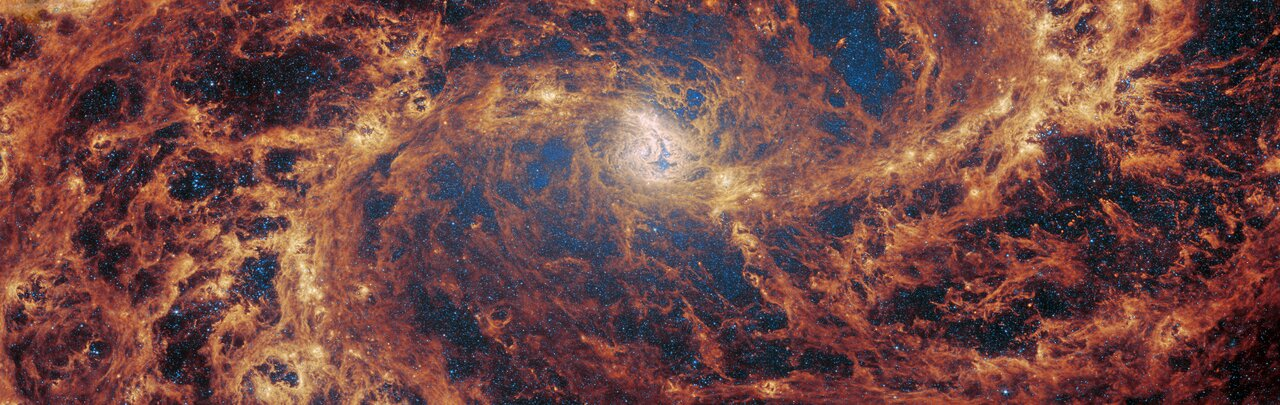
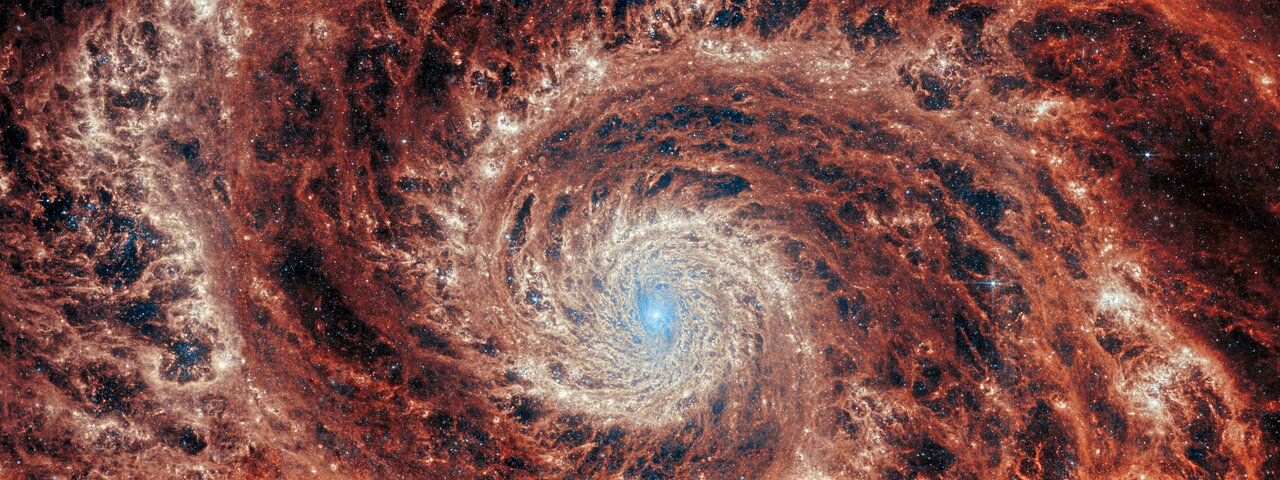
Studying the process of Stellar Feedback is crucial for estimating the rates of star formation, modelling the universe and better understand the destiny of the cosmos.
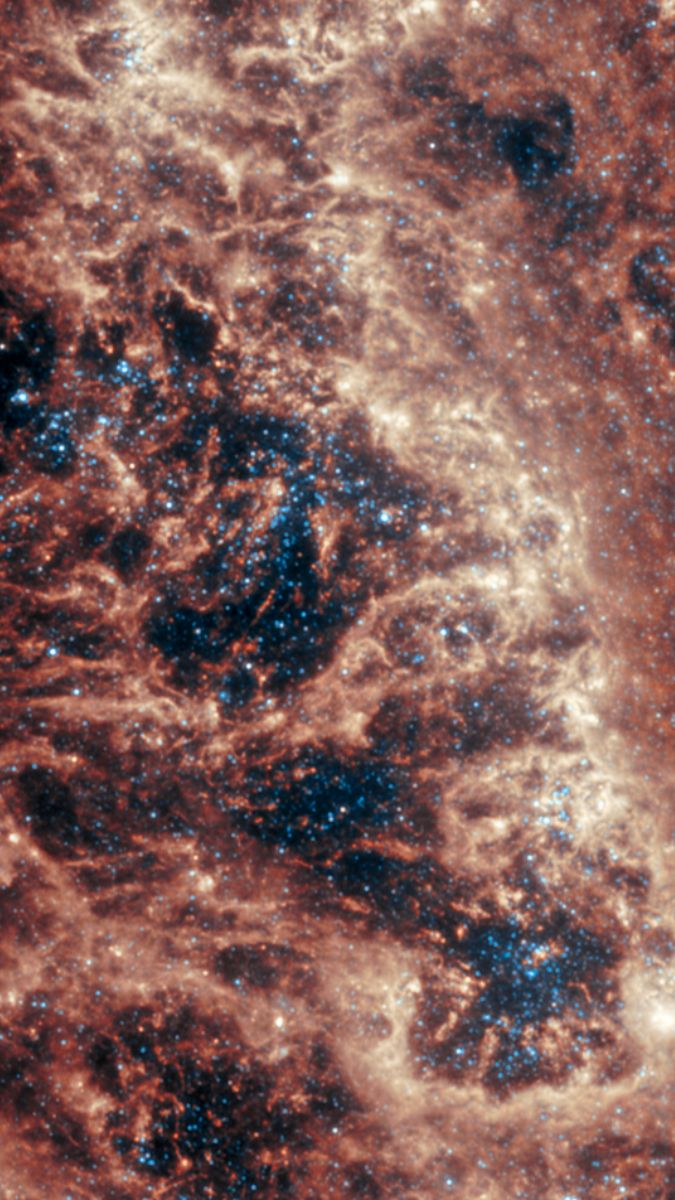
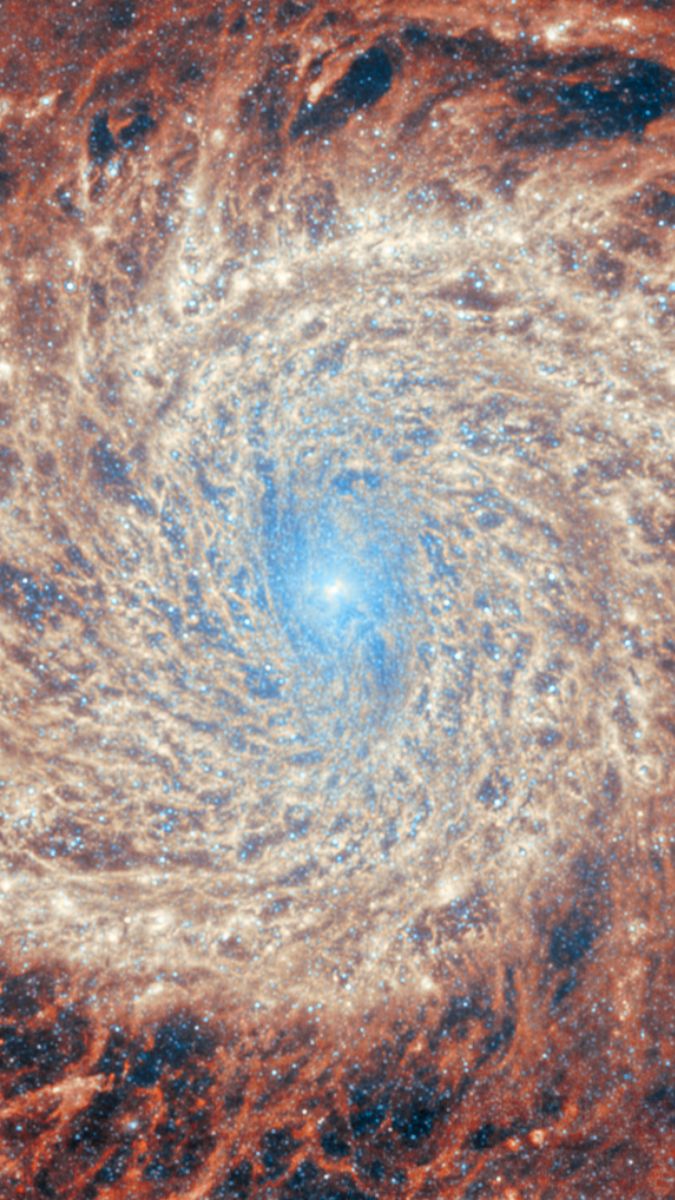
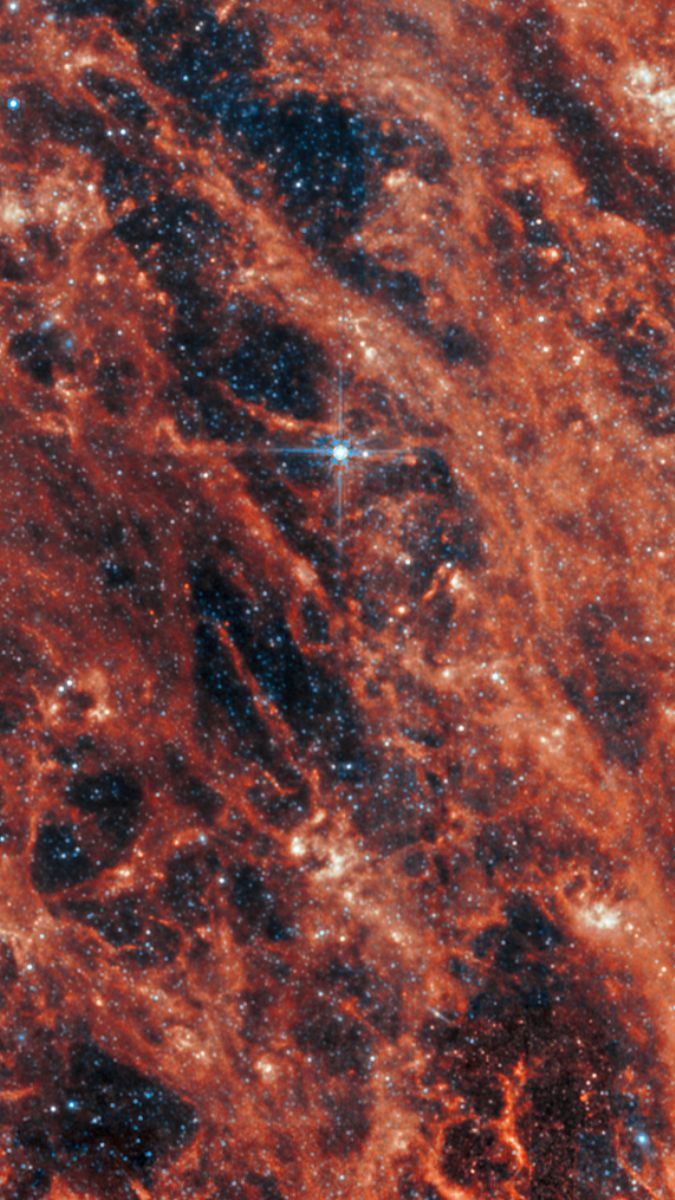
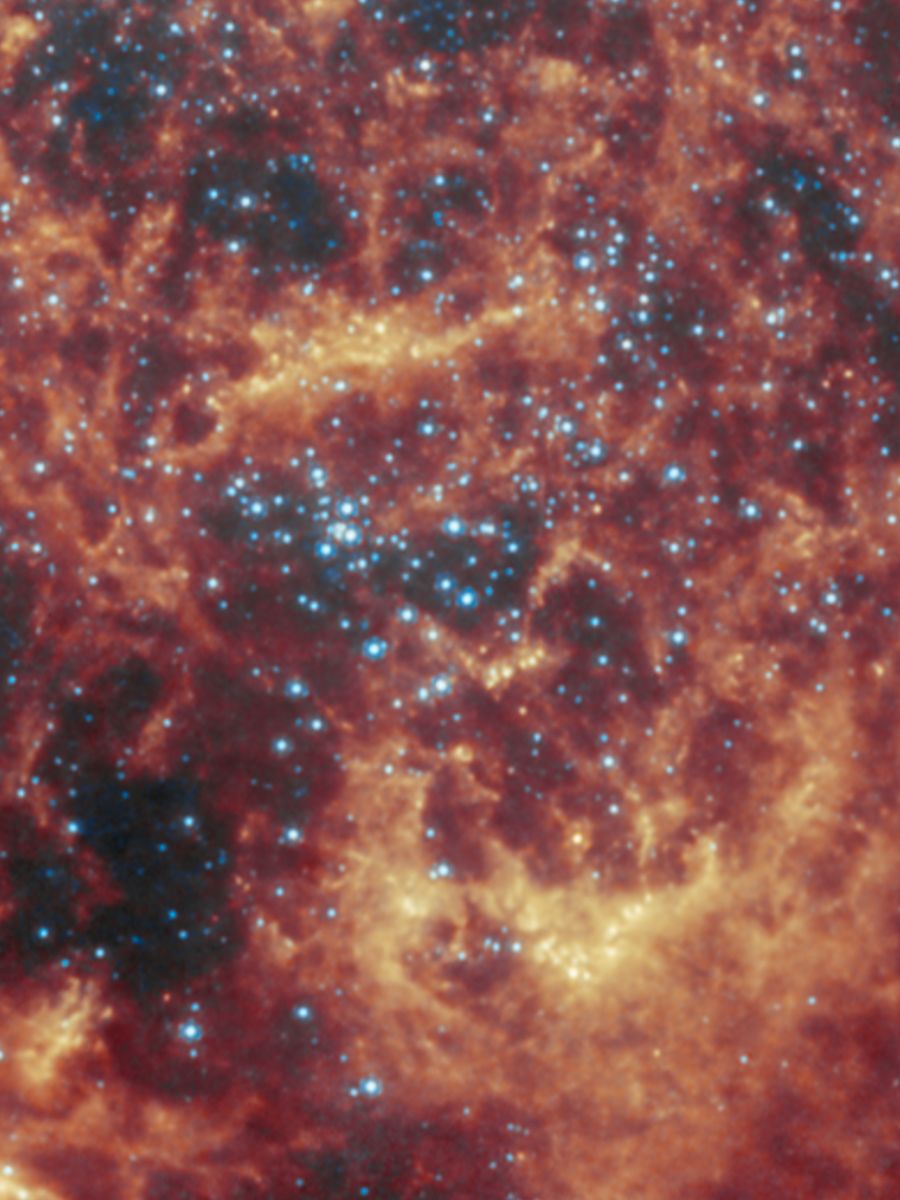
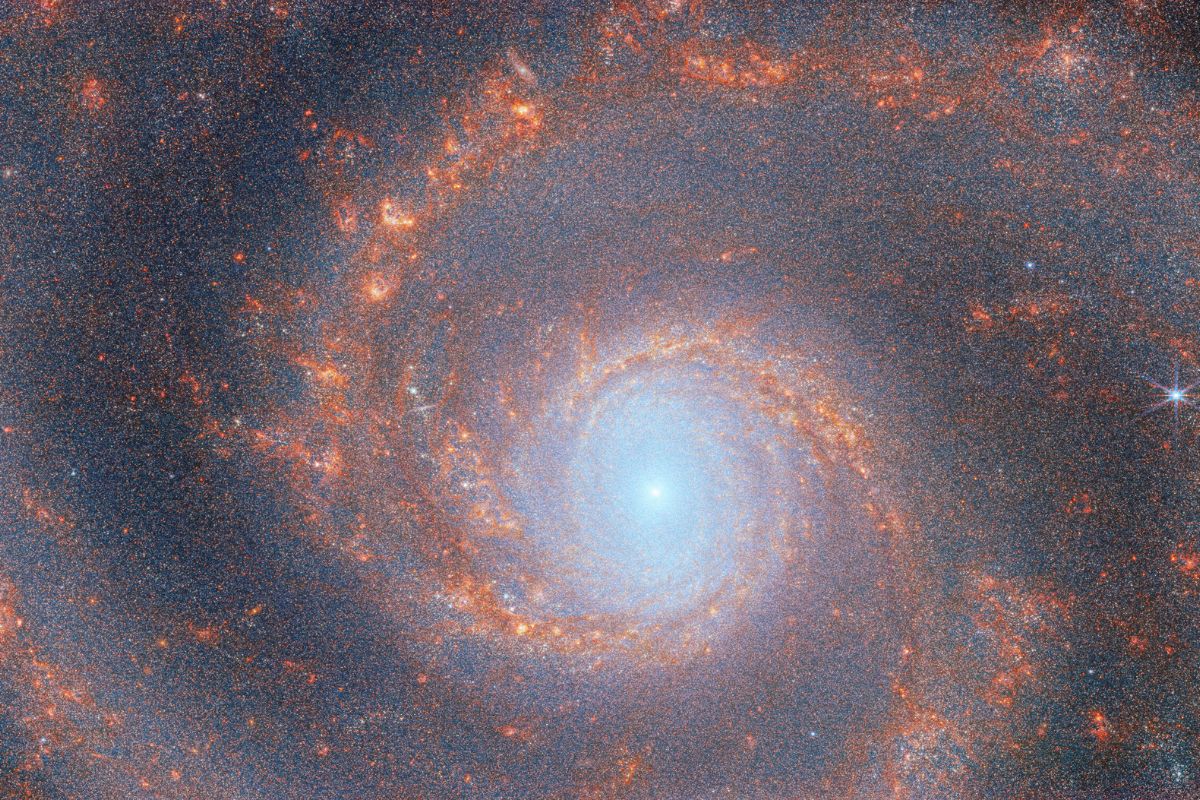
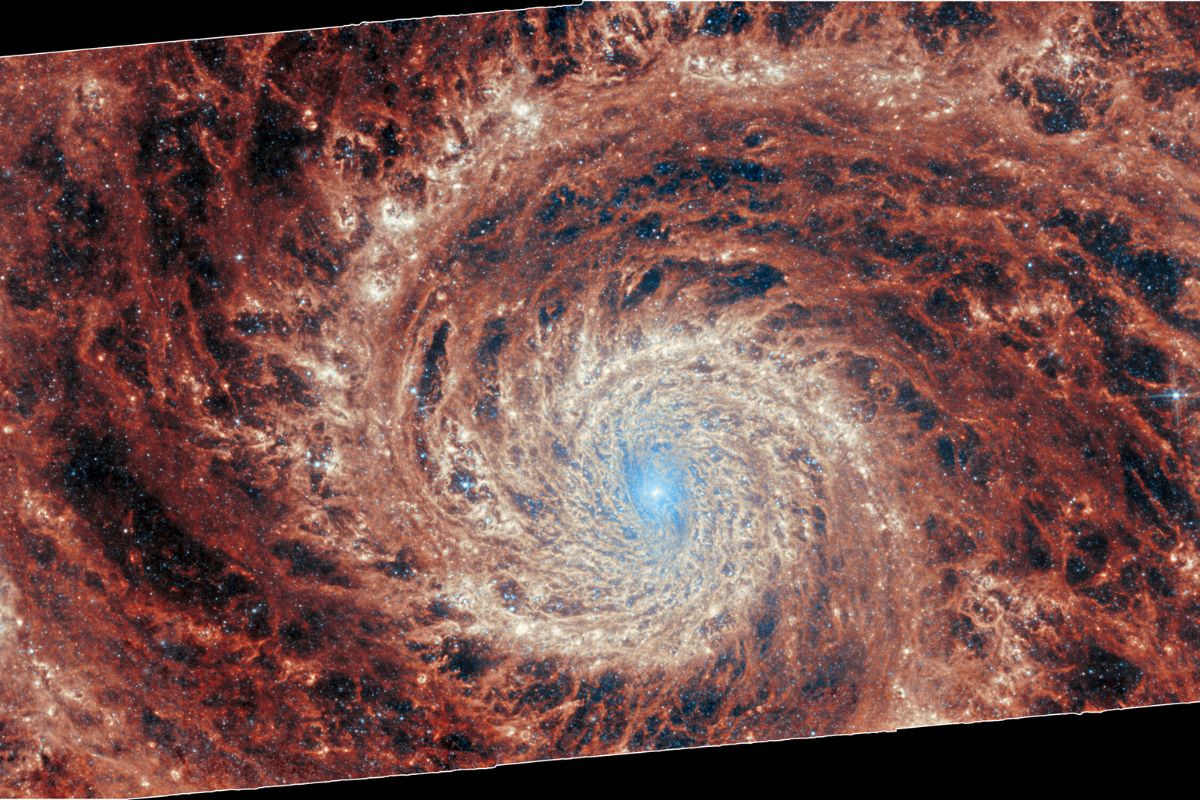
M51 (MIRI)
The dense, yellow clumps are star clusters. The filamentary structures are illuminated by reprocessed light. Molecules and dust in the intragalactic medium absorb the energies pouring out from the stars, then glow in infrared frequencies as they re-emit the light, mostly as heat.
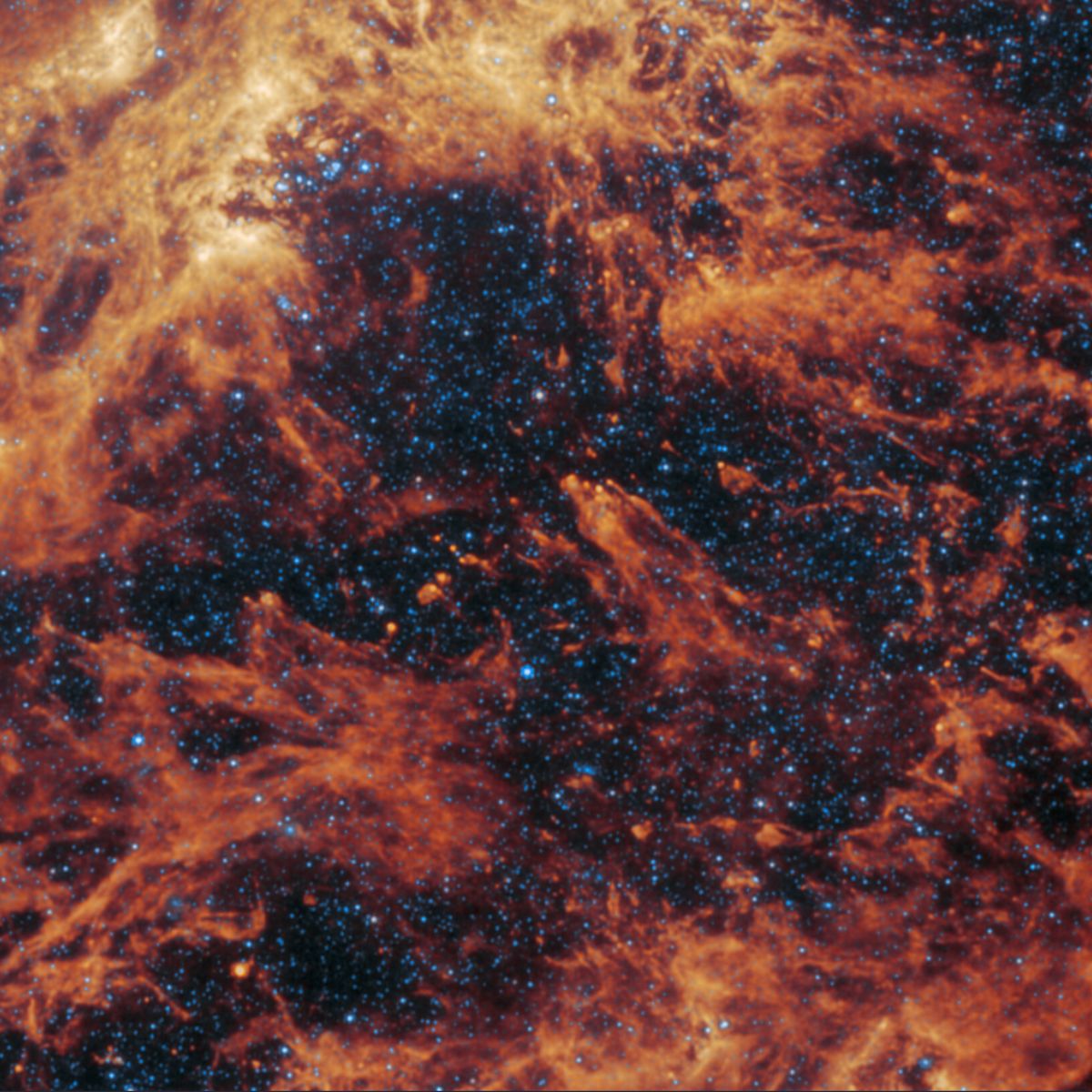
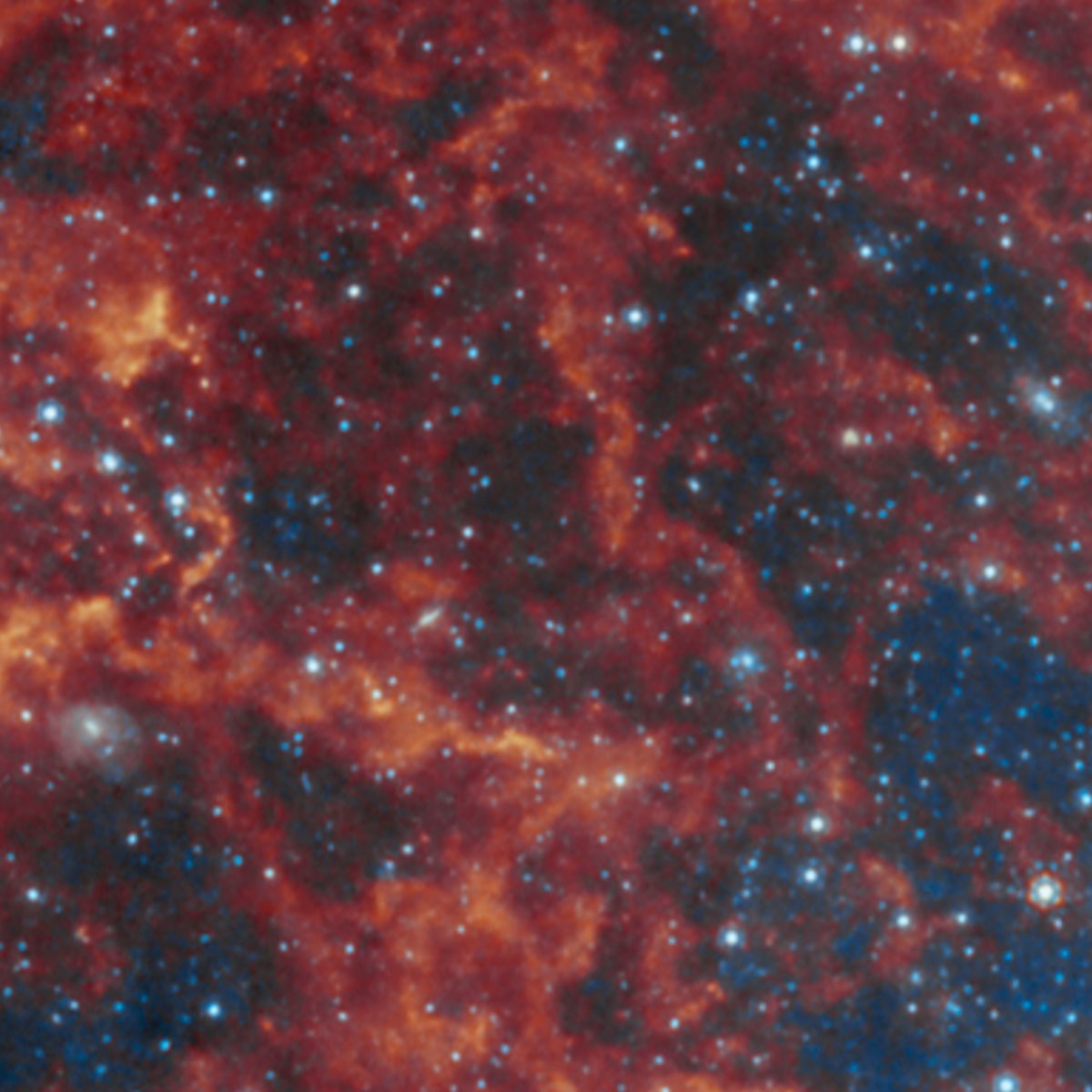
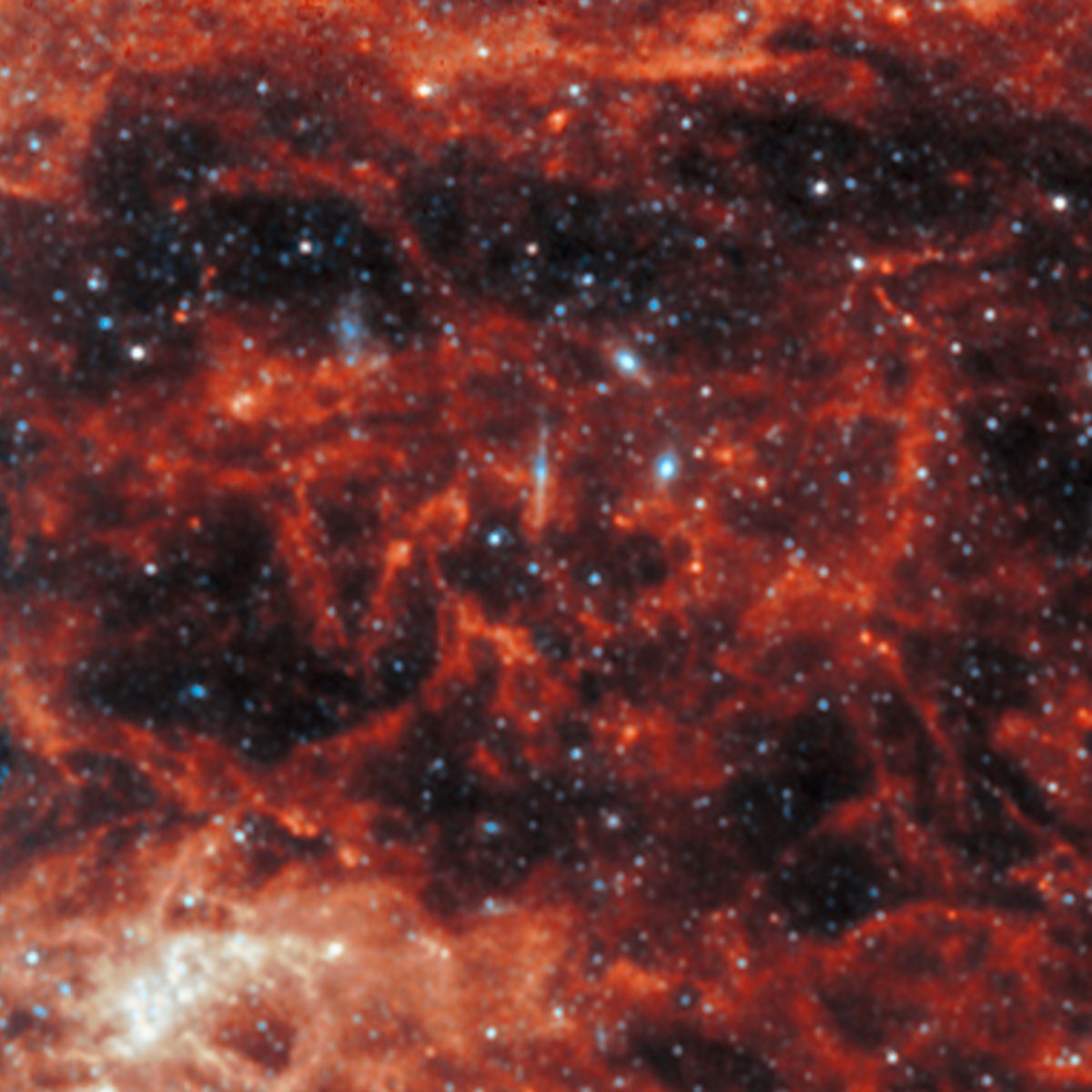
The orange-red glow reveals polycyclic aromatic hydrocarbons (PAHs), carbon-based compounds tracing the galaxy’s chemistry. These molecules trace the histories of galaxies, and reveal the immense potential for life that they hold. Webb uses a specific filter called F770W, to image the PAHs.
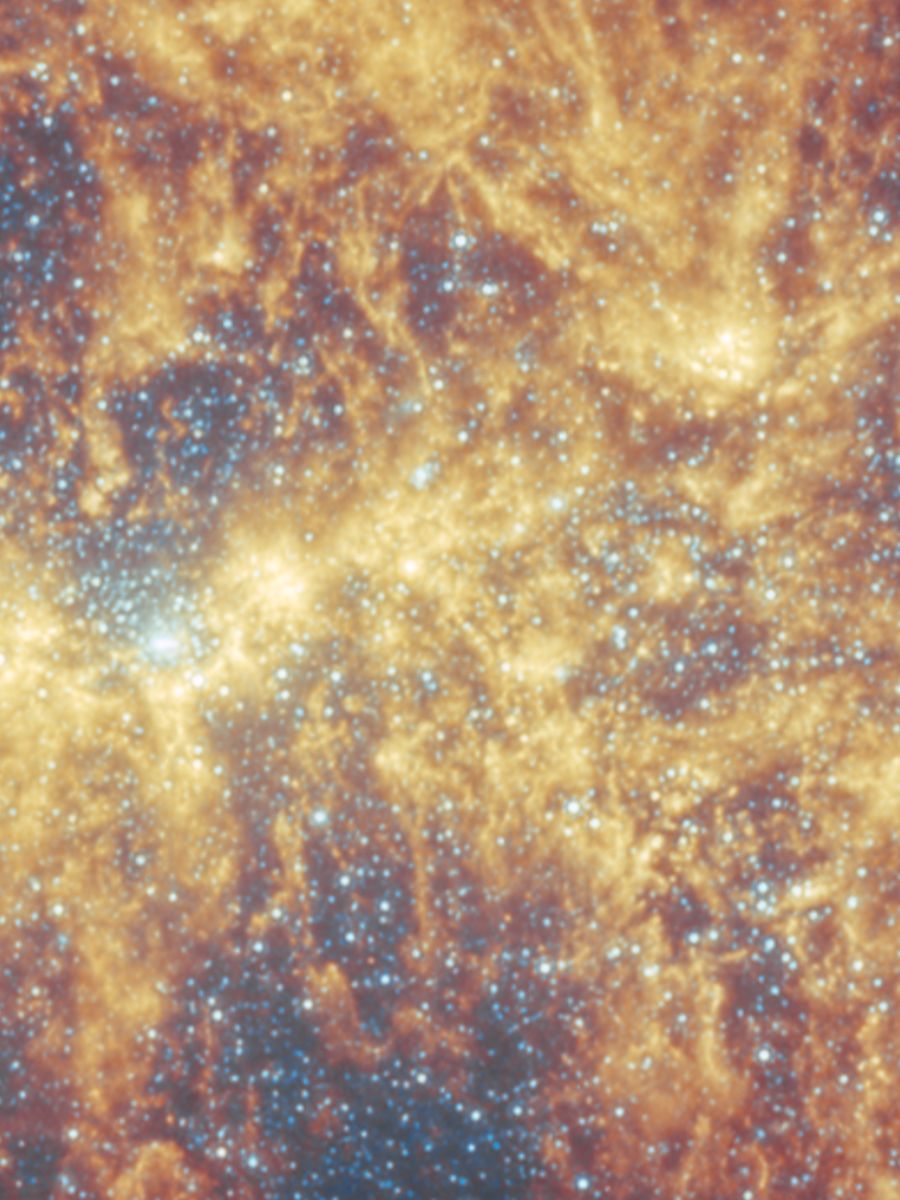
Starburst Galaxies
NGC 4449, a starburst galaxy, is undergoing intense star formation, far exceeding its past rates. At this pace, its gas reserves will deplete in a billion years. Unlike typical starbursts centered in galactic cores, NGC 4449’s activity spans widely, with young stars in its nucleus and streams. This surge likely stems from a merger with a smaller companion, shaped by interactions with nearby galaxies.
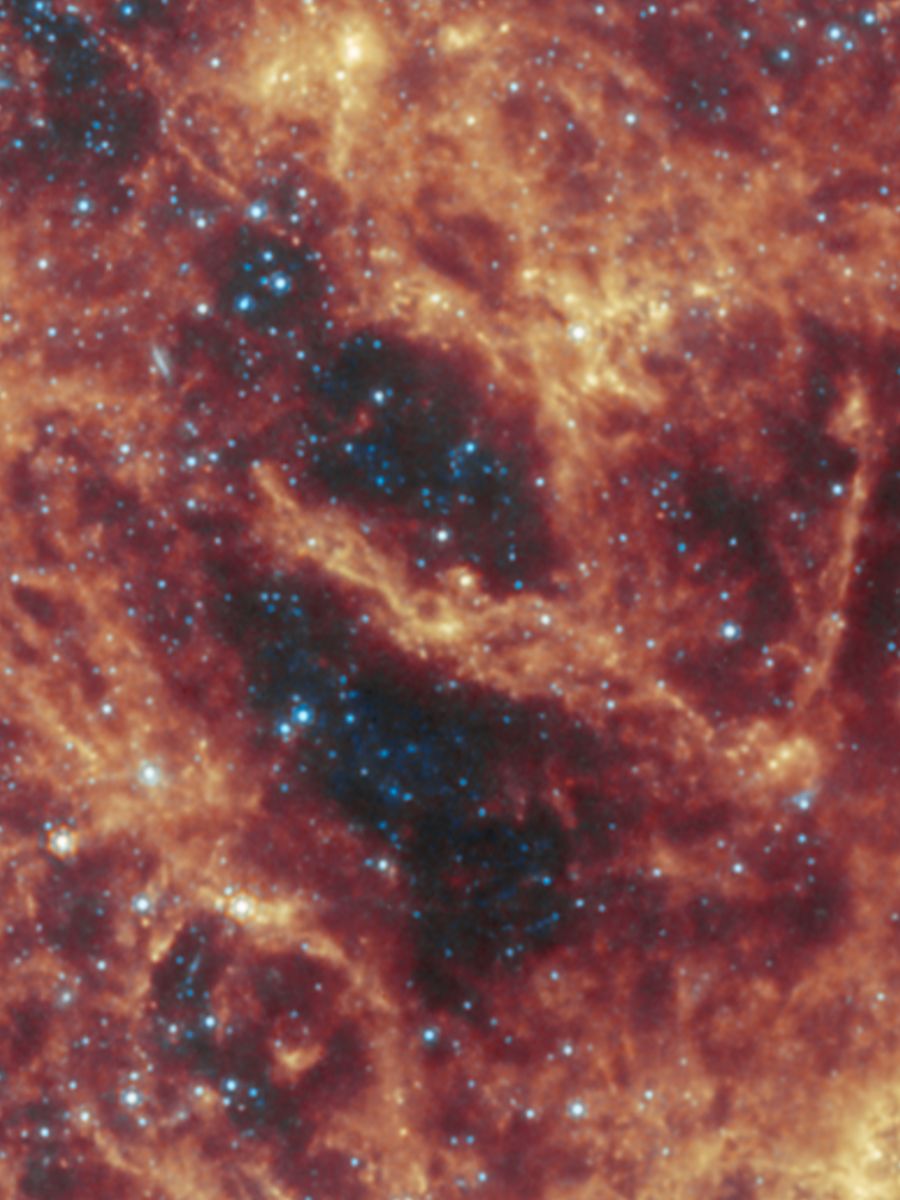
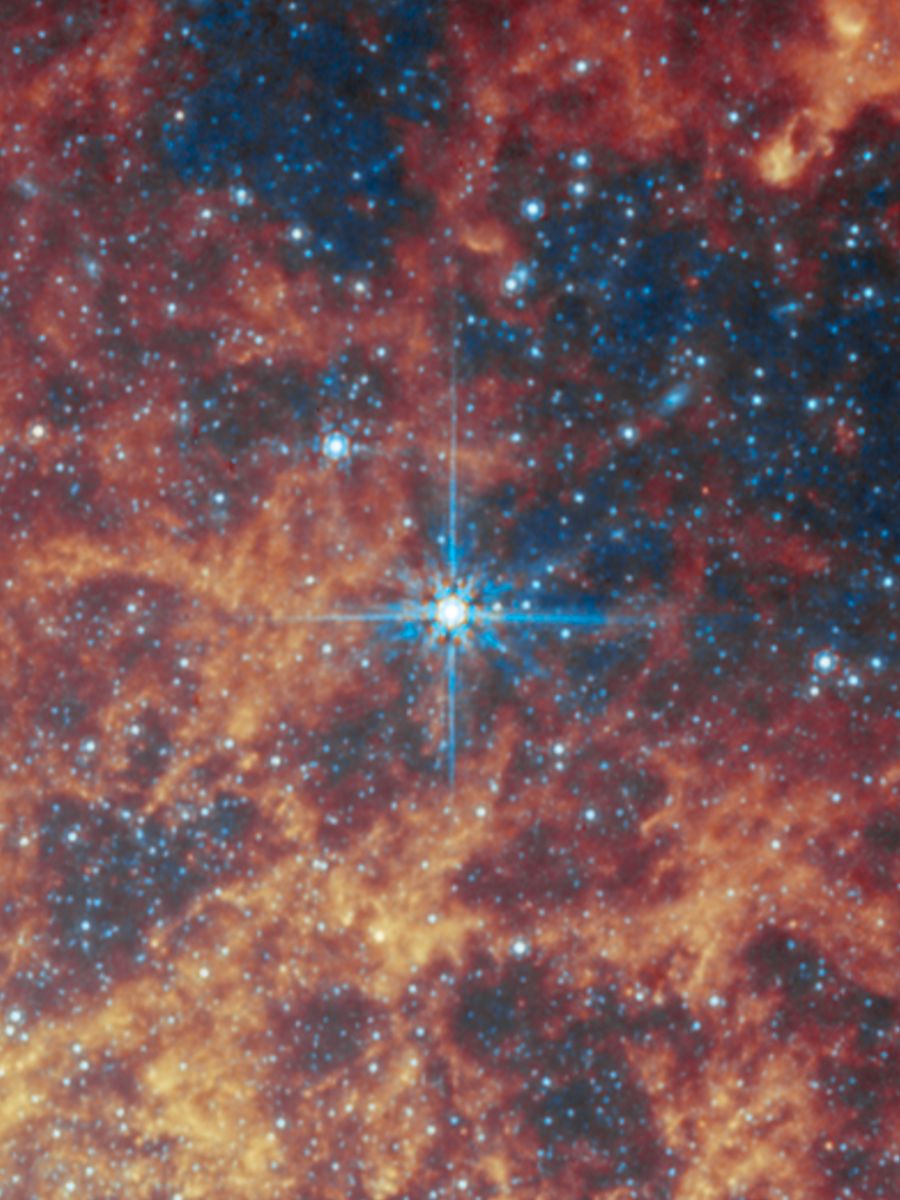
Star are violent children, with clusters tearing apart their natal clouds. Over eons, the stars cook up progressively heavier elements in their cores, while sweeping away any lingering gas. The speed at which the process takes place varies across galaxies. The progression of the cycle of starbirth and elemental enrichment dictates the tempos at which exoplanets and brown dwarfs are assembled from the waste material of star formation. The stellar forges fall silent as the gas and dust dissipate. The galaxy then becomes a relic, a necropolis of dense stellar remnants slowly burning away, unable to birth new stars.
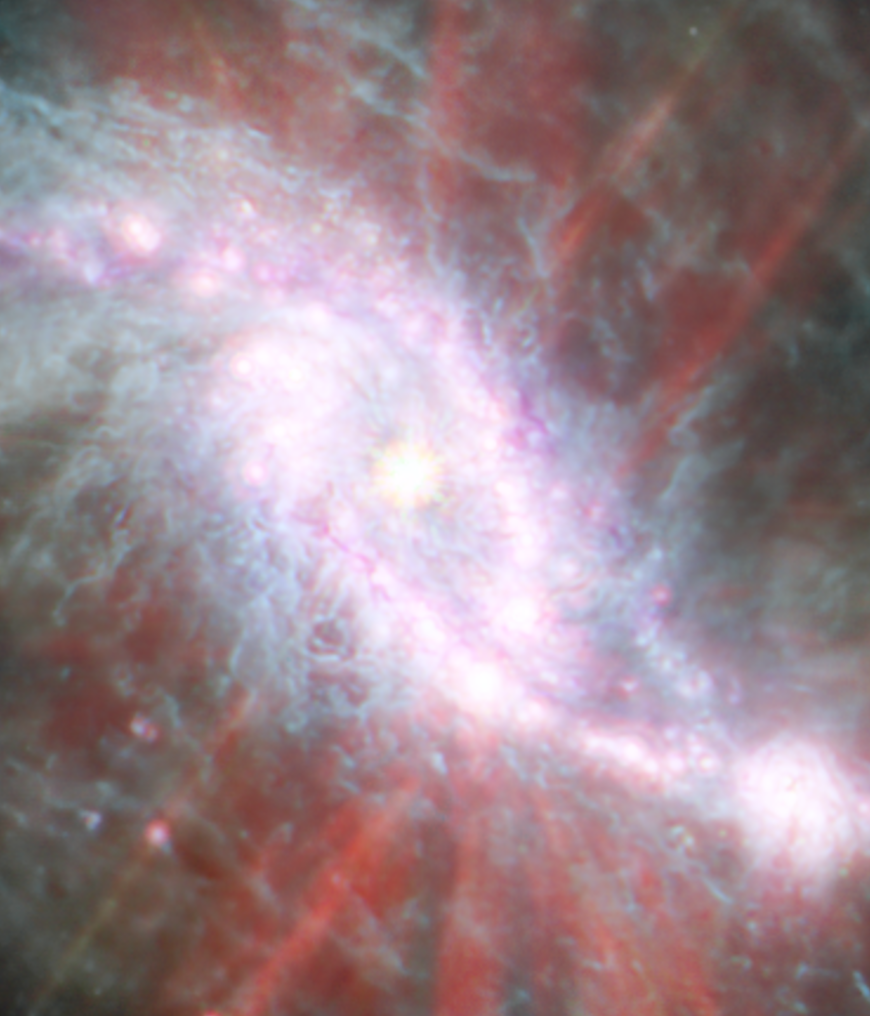
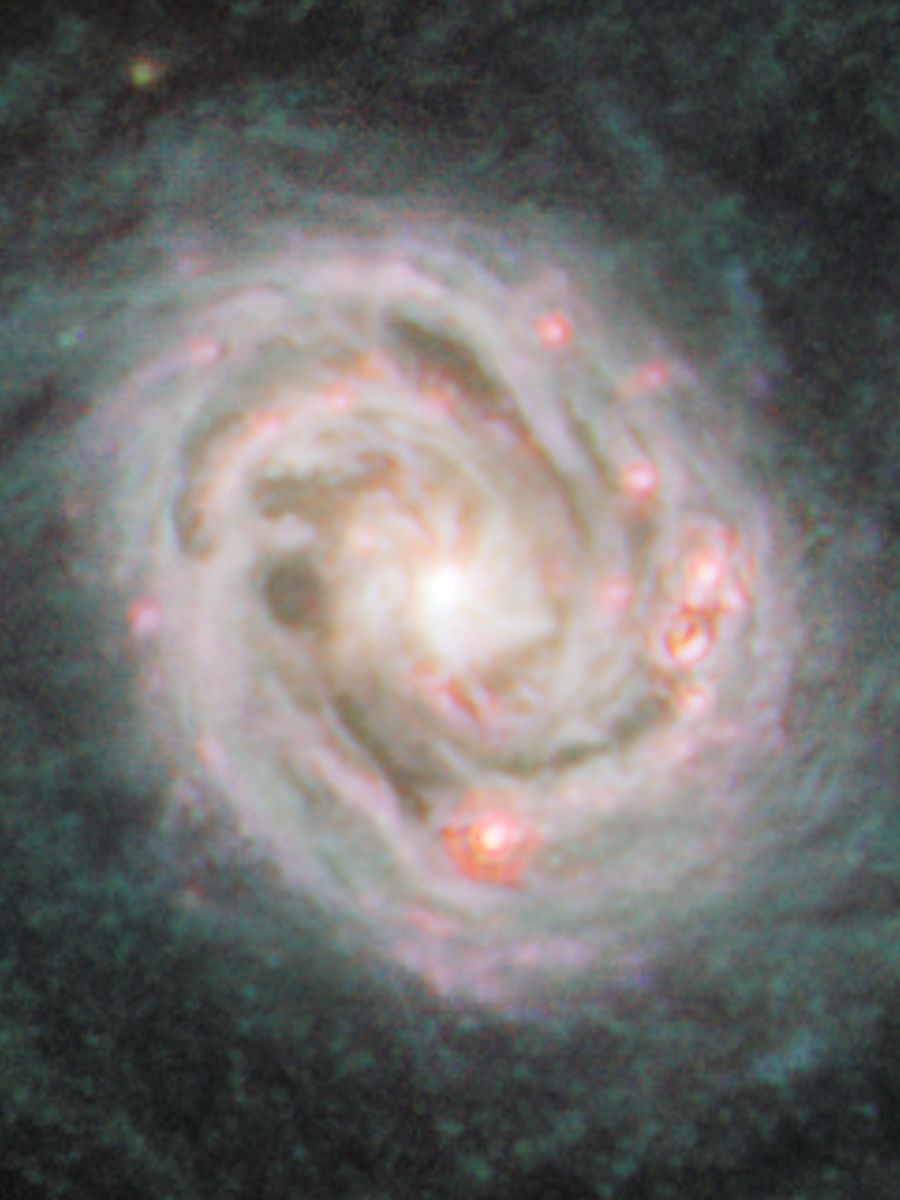
Some galaxies have blazing hearts that can outshine all the stars they contain. These Active Galactic Nuclei (AGN) are formed by ‘bright’ black holes feeding voraciously on the surrounding gas and dust. The extreme friction causes the material falling into the black hole to glow in frequencies across the electromagnetic spectrum.
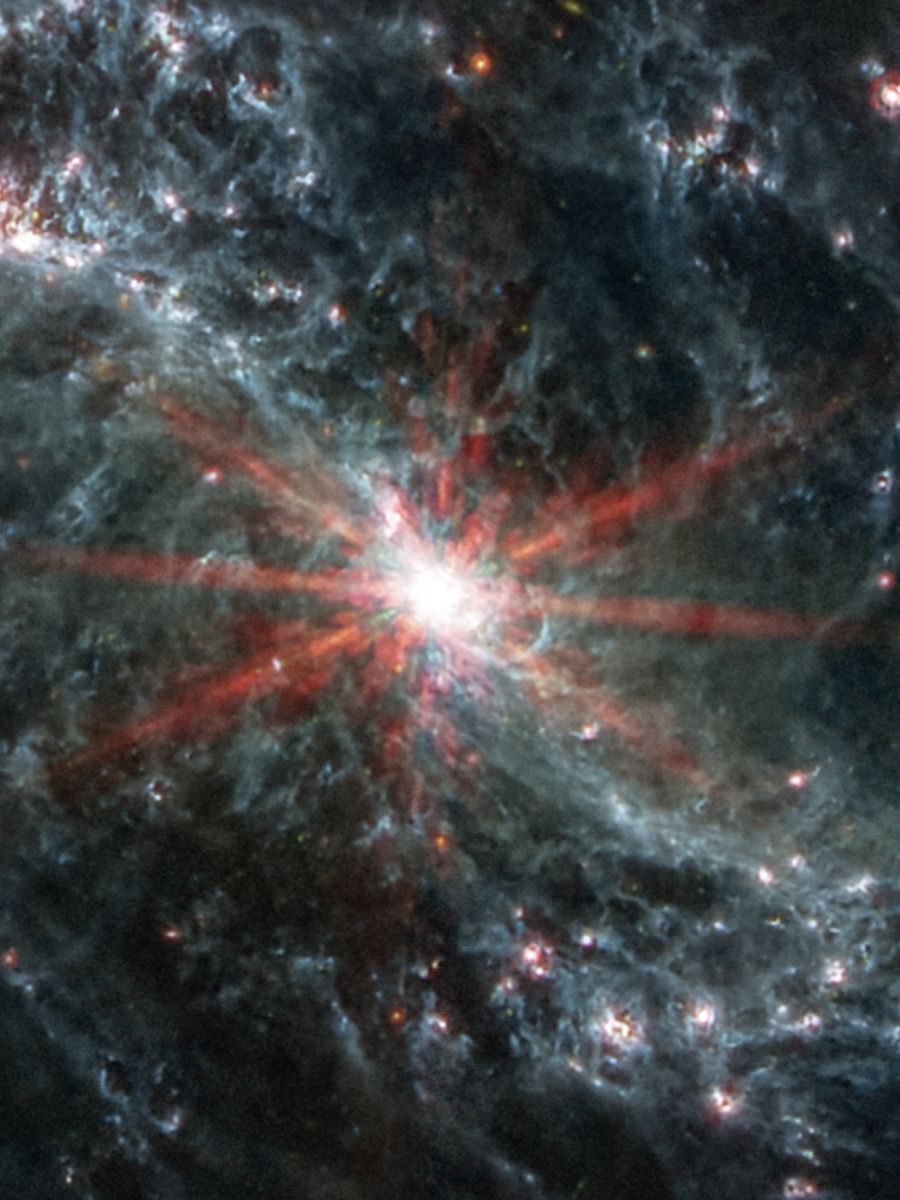
A star starts in a nebula, lives as a main-sequence star, balloons to a read giant towards the end of its life, then—depending on its mass—either sheds its outer layers to end as a white dwarf or explodes as a supernova, leaving behind a neutron star or black hole.
The Fabric of Reality
NGC 4321
56Mly
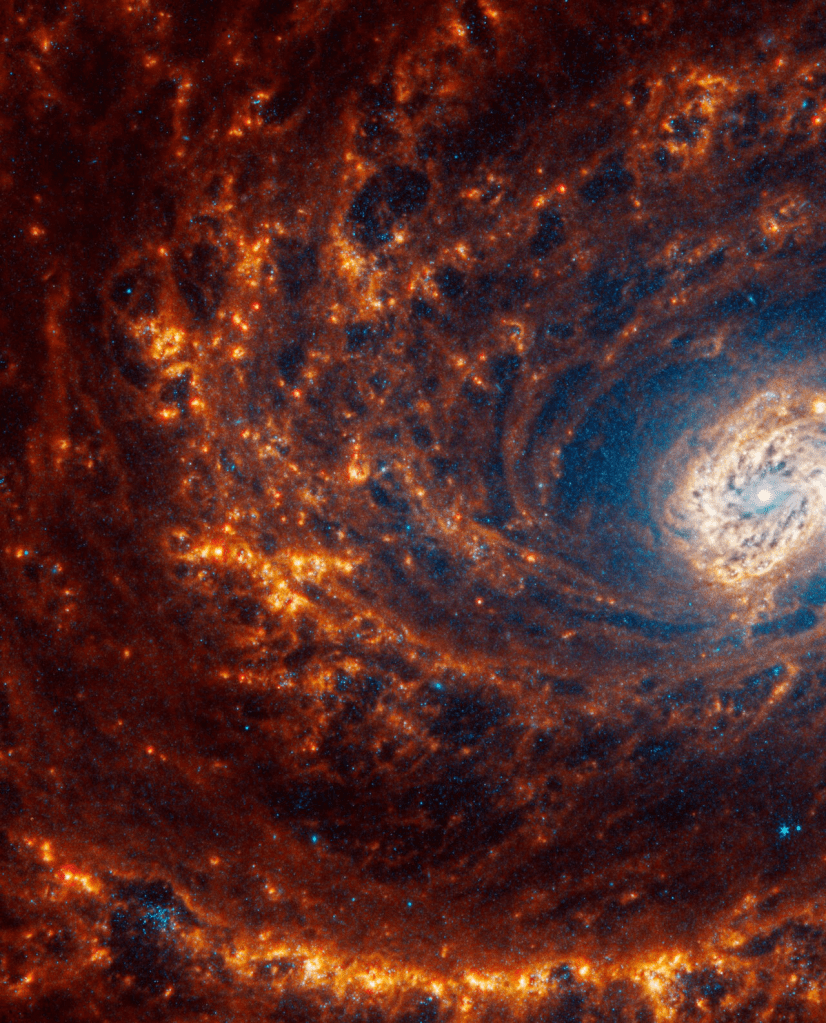
NGC 1300
69Mly
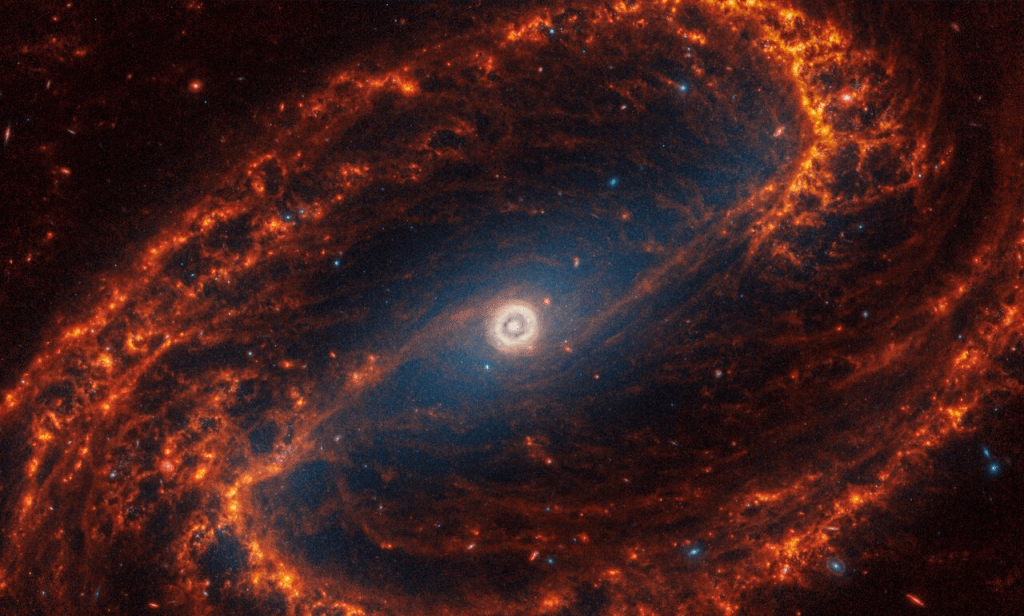
IC 5332
30Mly
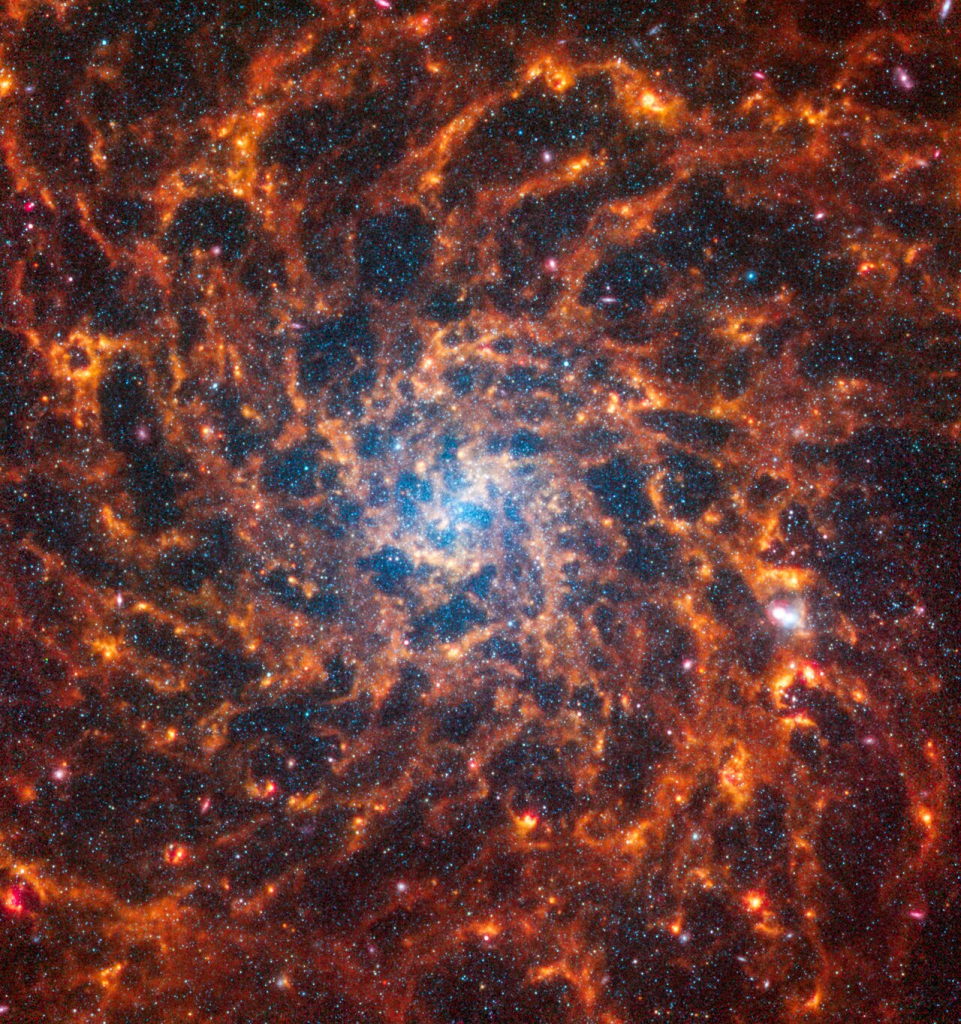
NGC 2835
35Mly
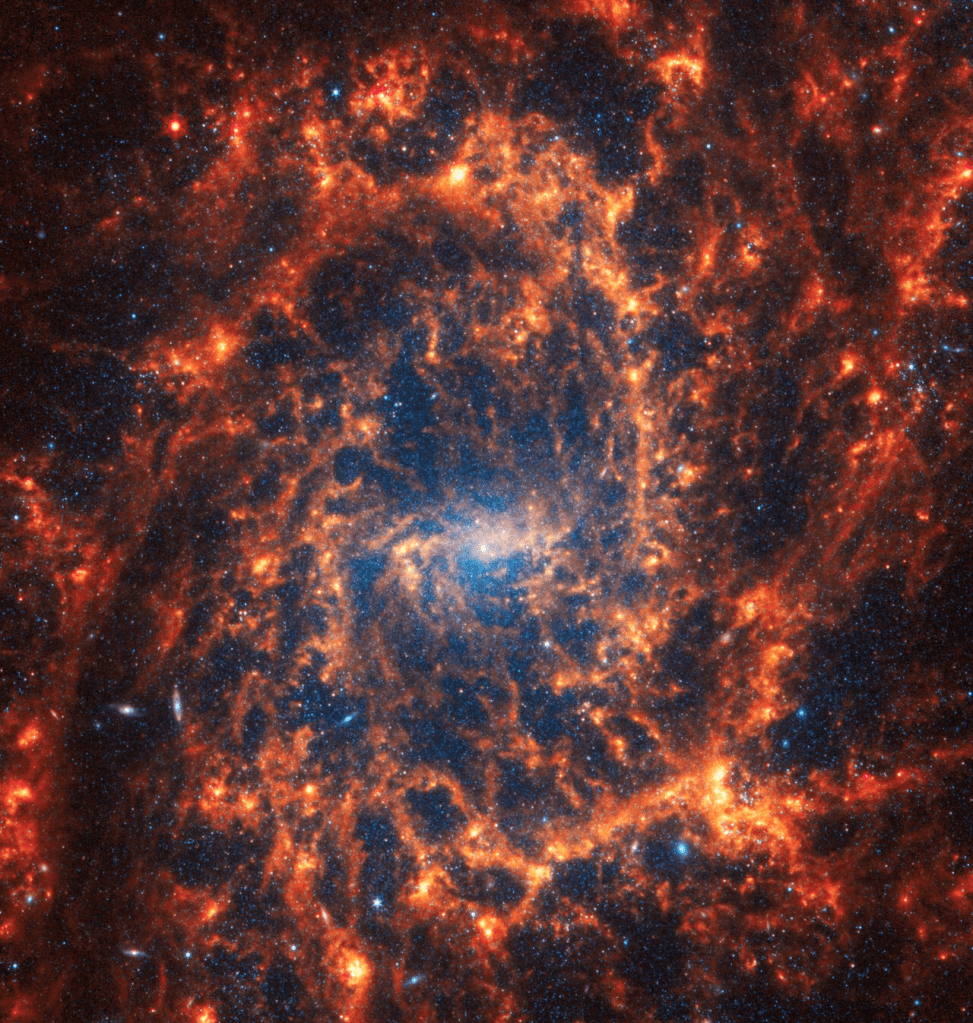
NGC 1512
30Mly
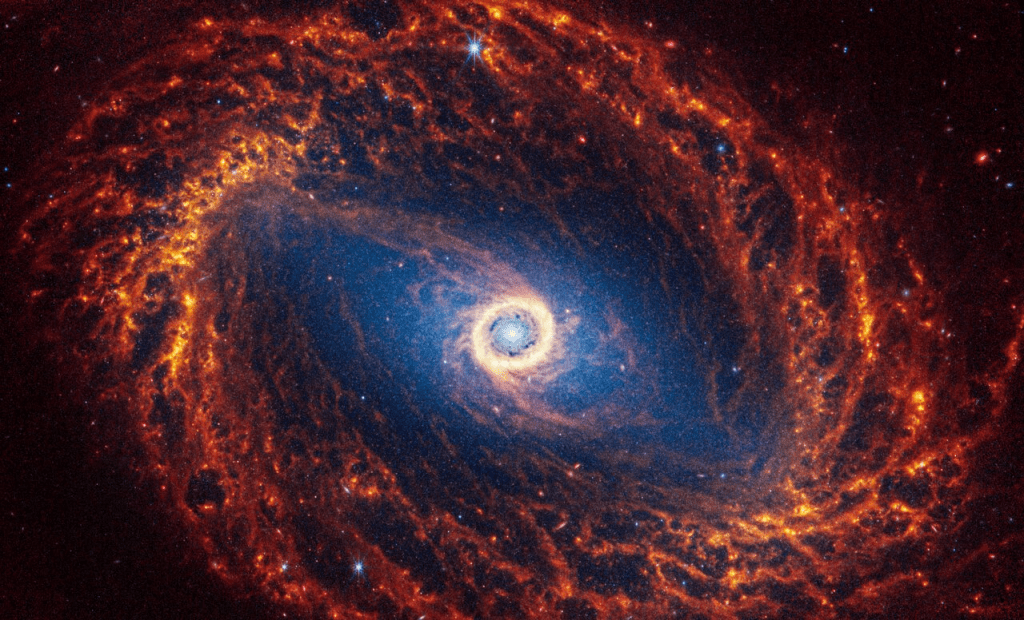
NGC 5068
20Mly
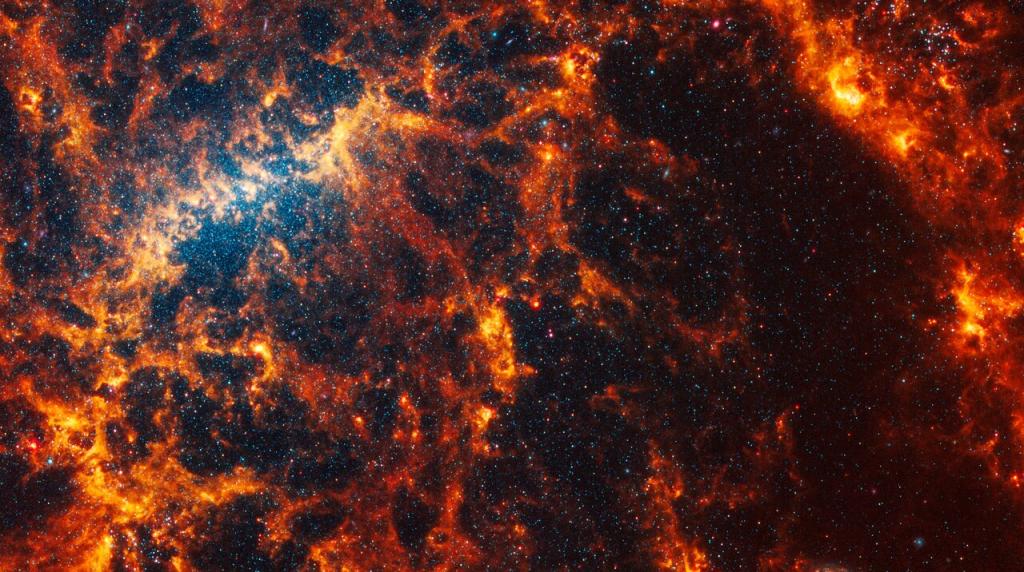
NGC 4535
60Mly
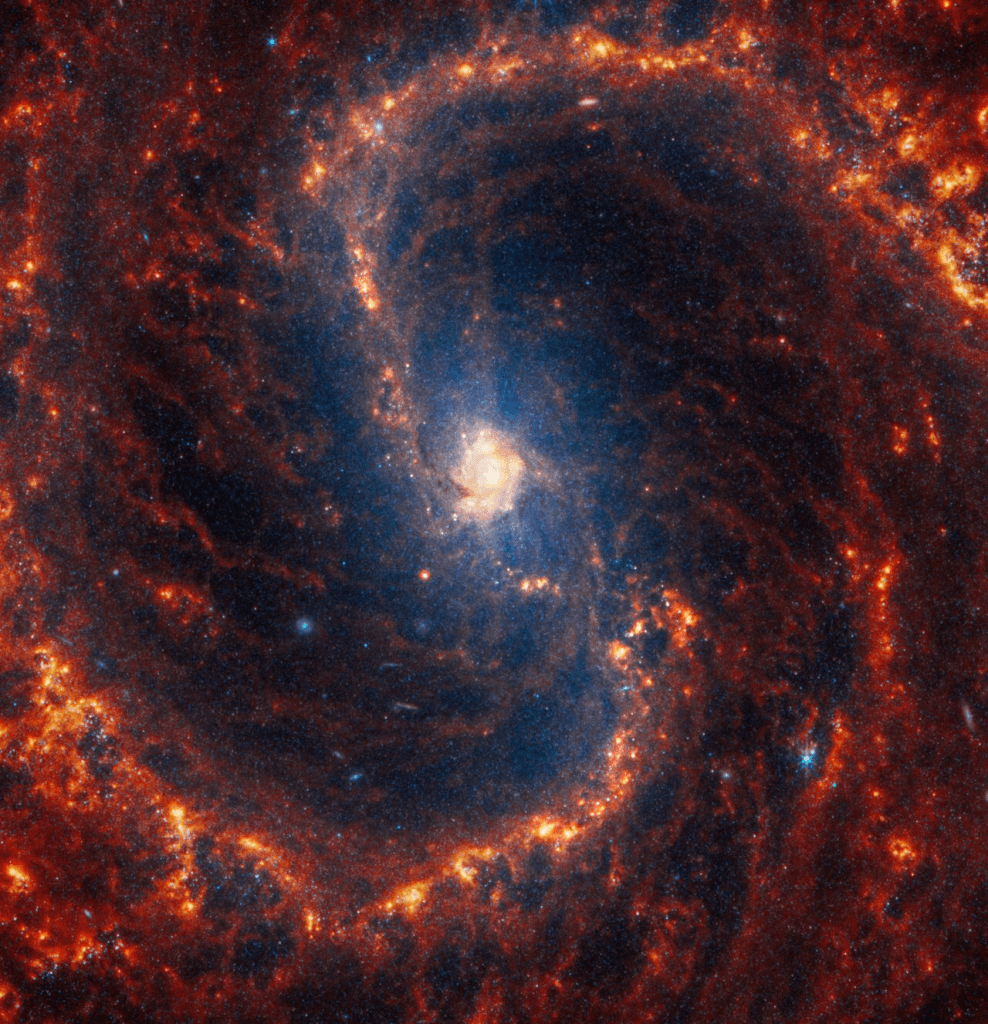
NGC 4303
55 Mly
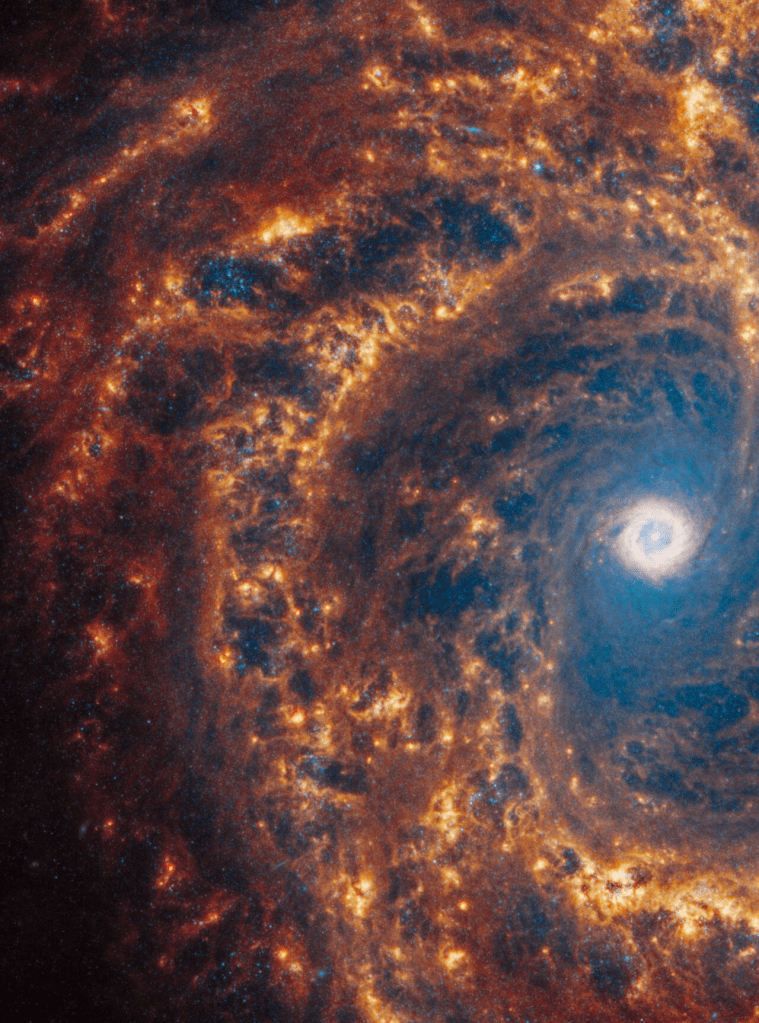
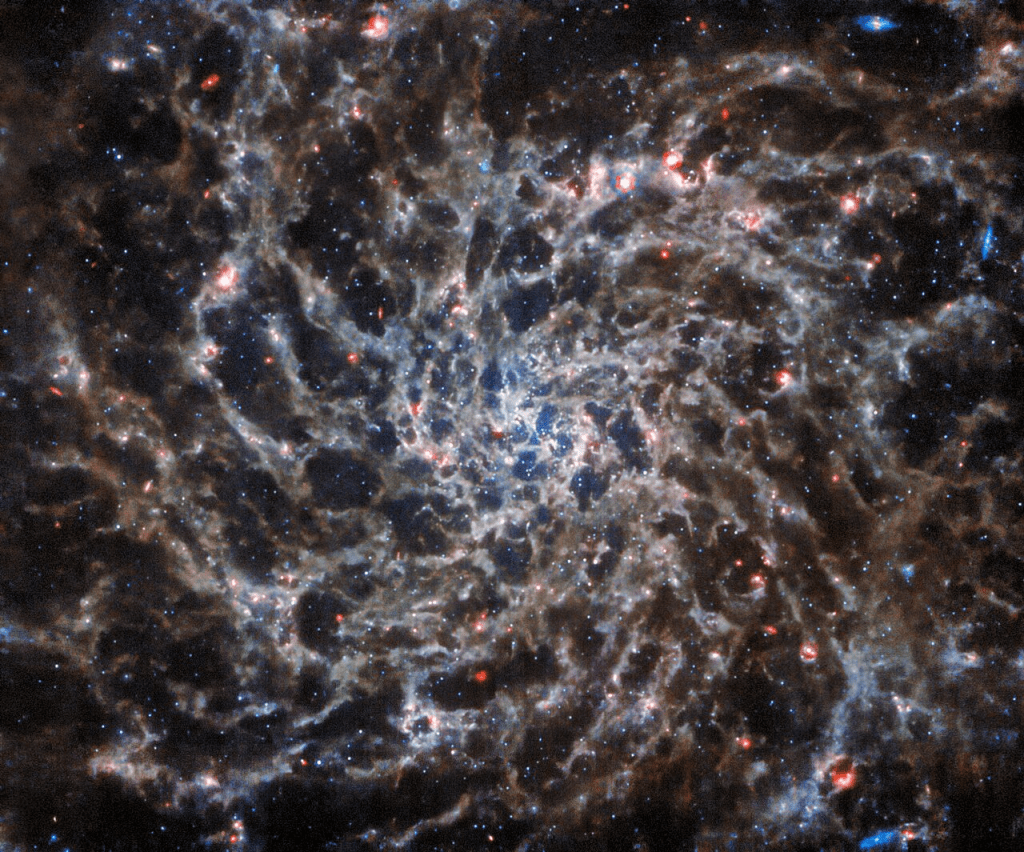
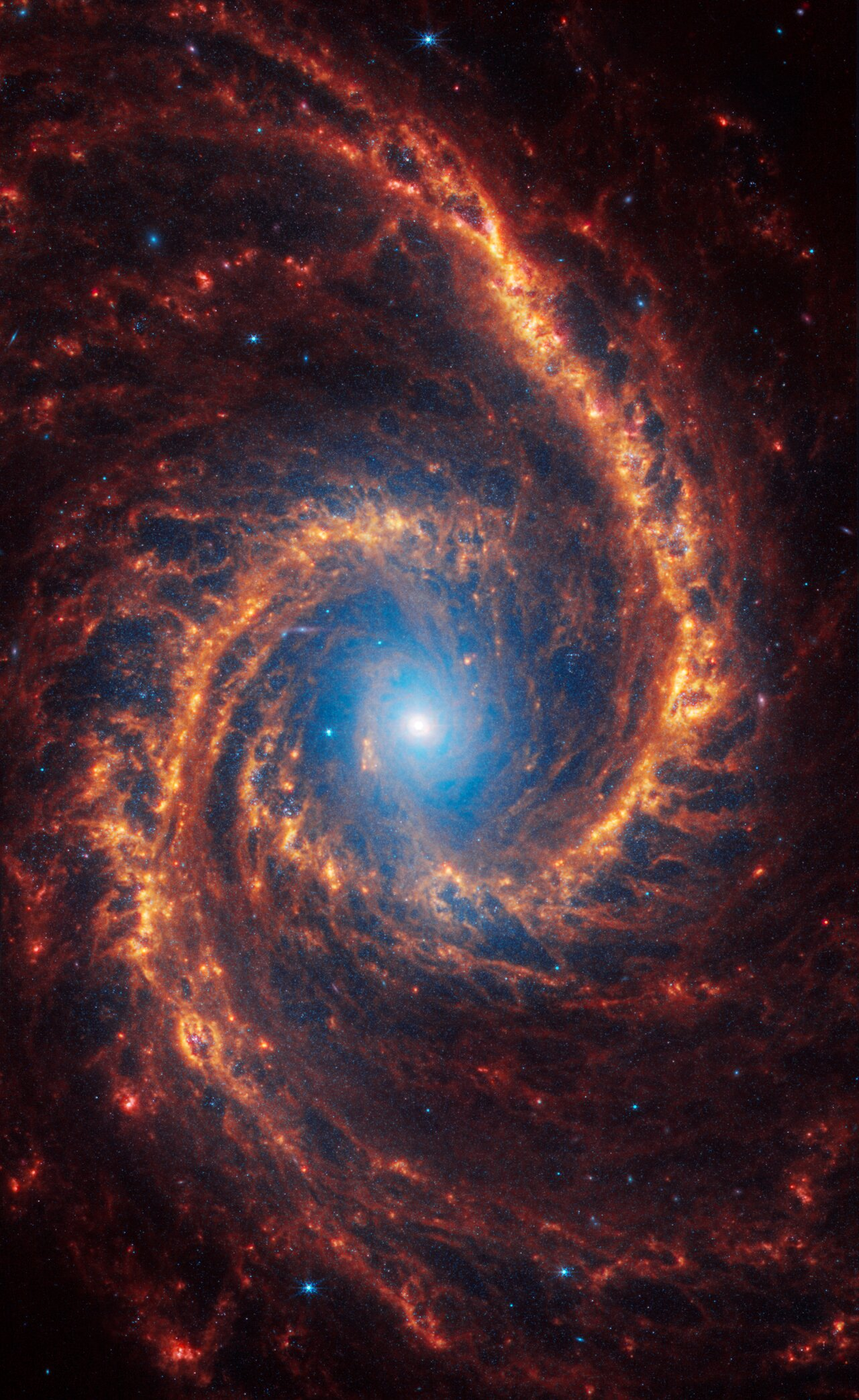
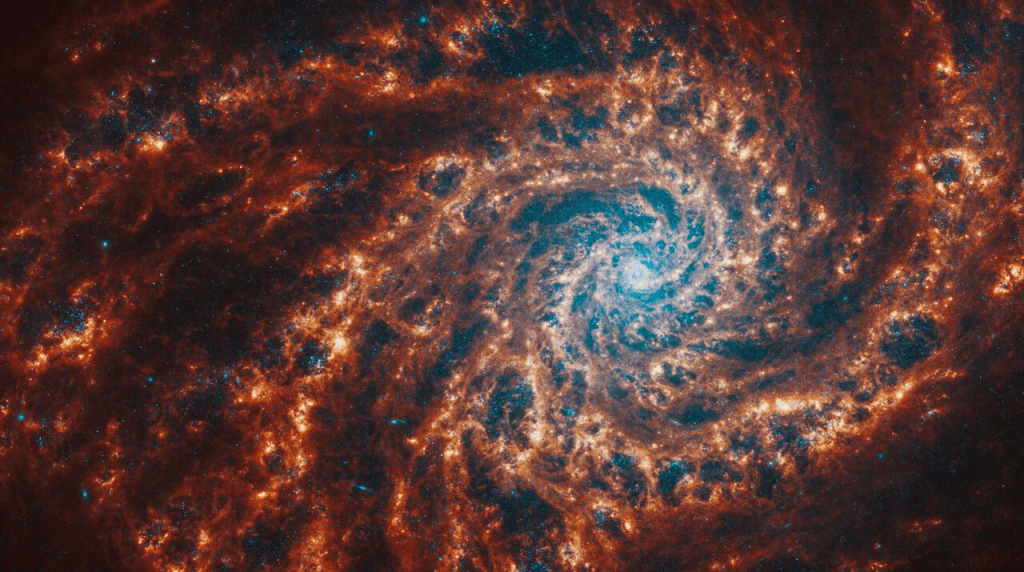
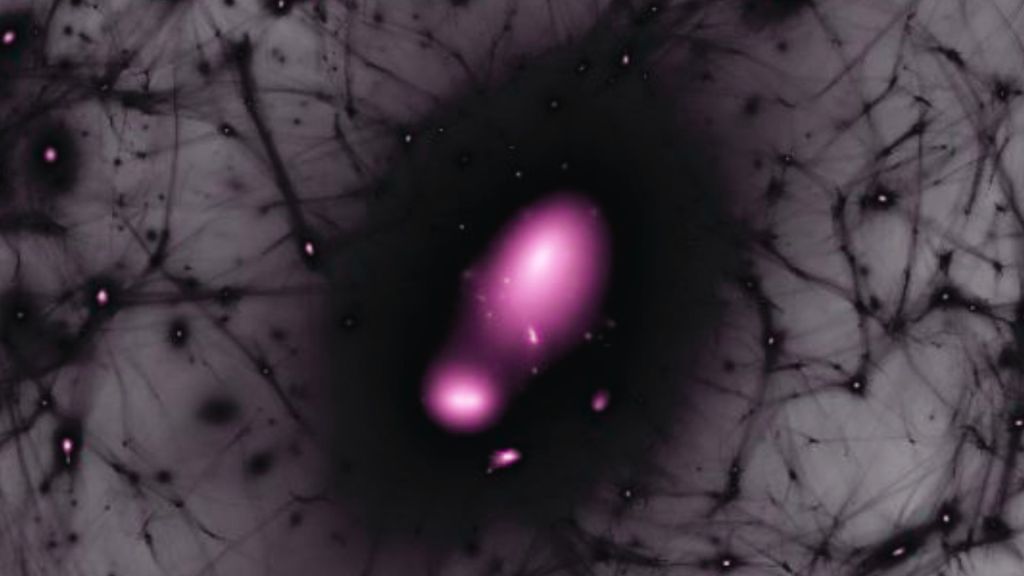
The intricate patterns caused by alternating filaments and voids in the galaxies mirror much larger patterns in the cosmic web itself, the distribution of matter across the cosmos with increasing densities around galaxy clusters. Each galaxy has unique characteristics, and consequently, environmental conditions.
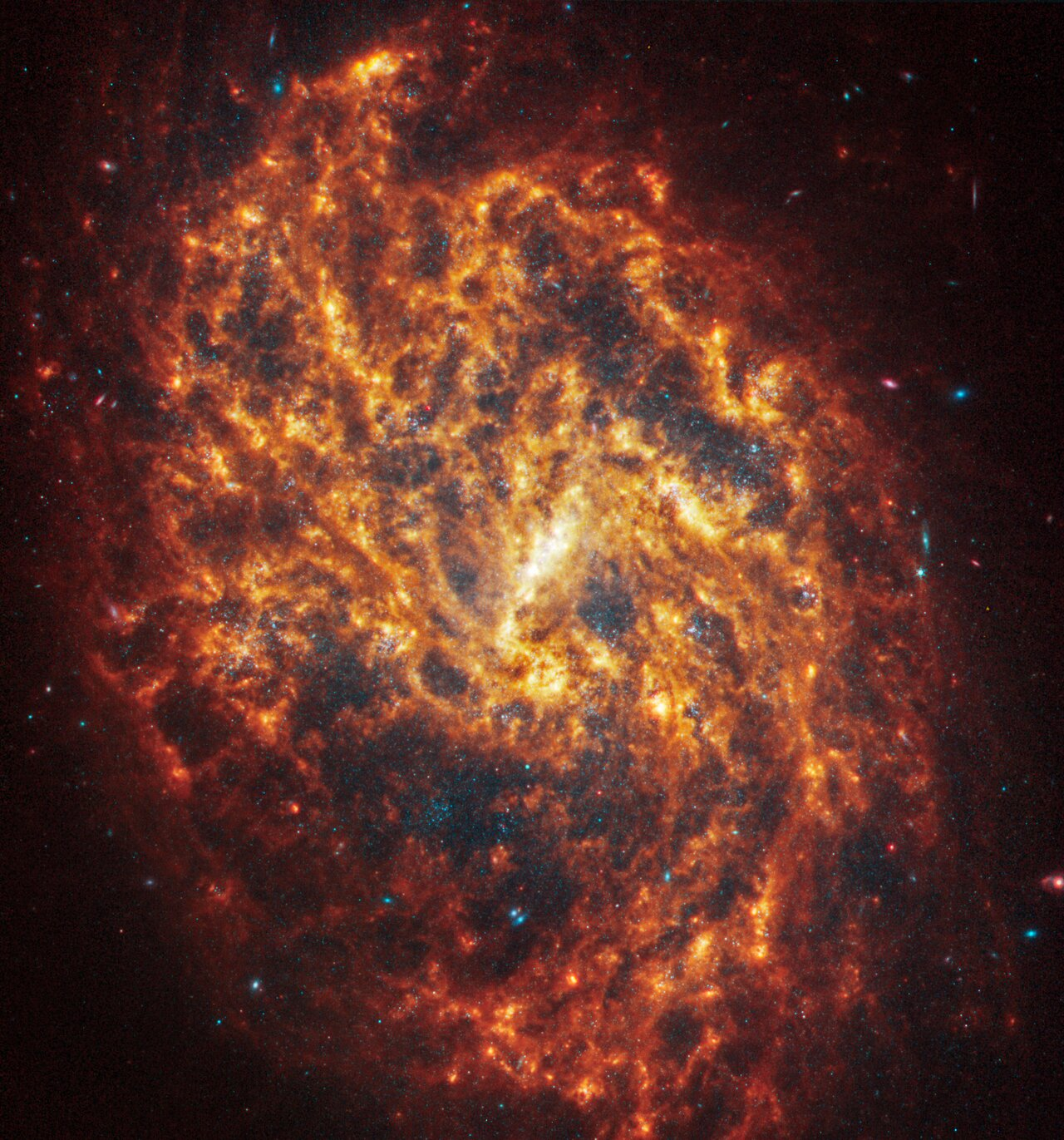
NGC 1087 at a distance of 80 million lightyears has a well-defined central bar, but lacks well-defined spiral arms. Stars are believed to play a role in the formation of galactic arms.
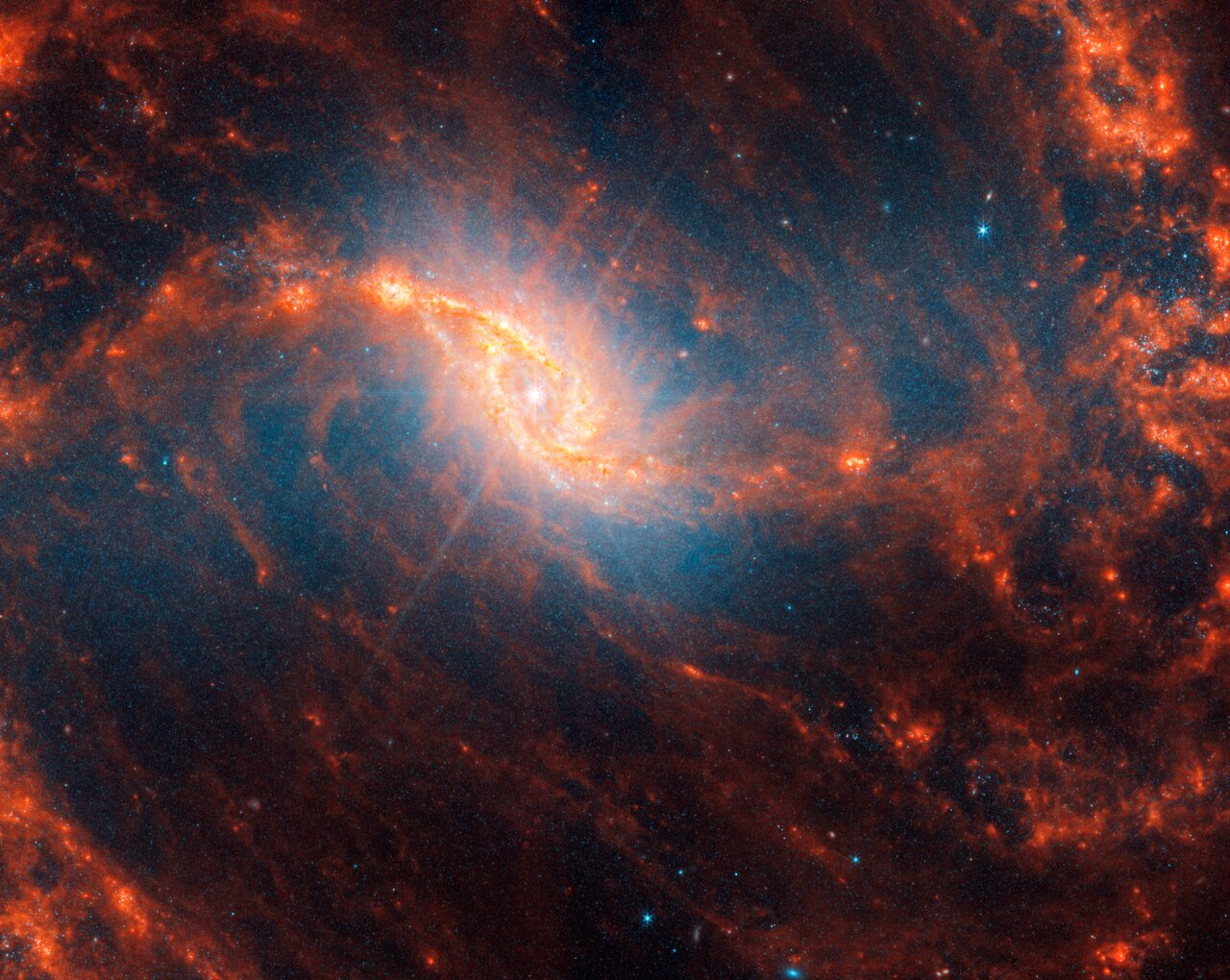
NGC 1365 at a distance of 56 million lightyears has a core that is shaped like a distorted oval. The central bar funnels gas and dust from the galaxy, towards the central supermassive black hole.
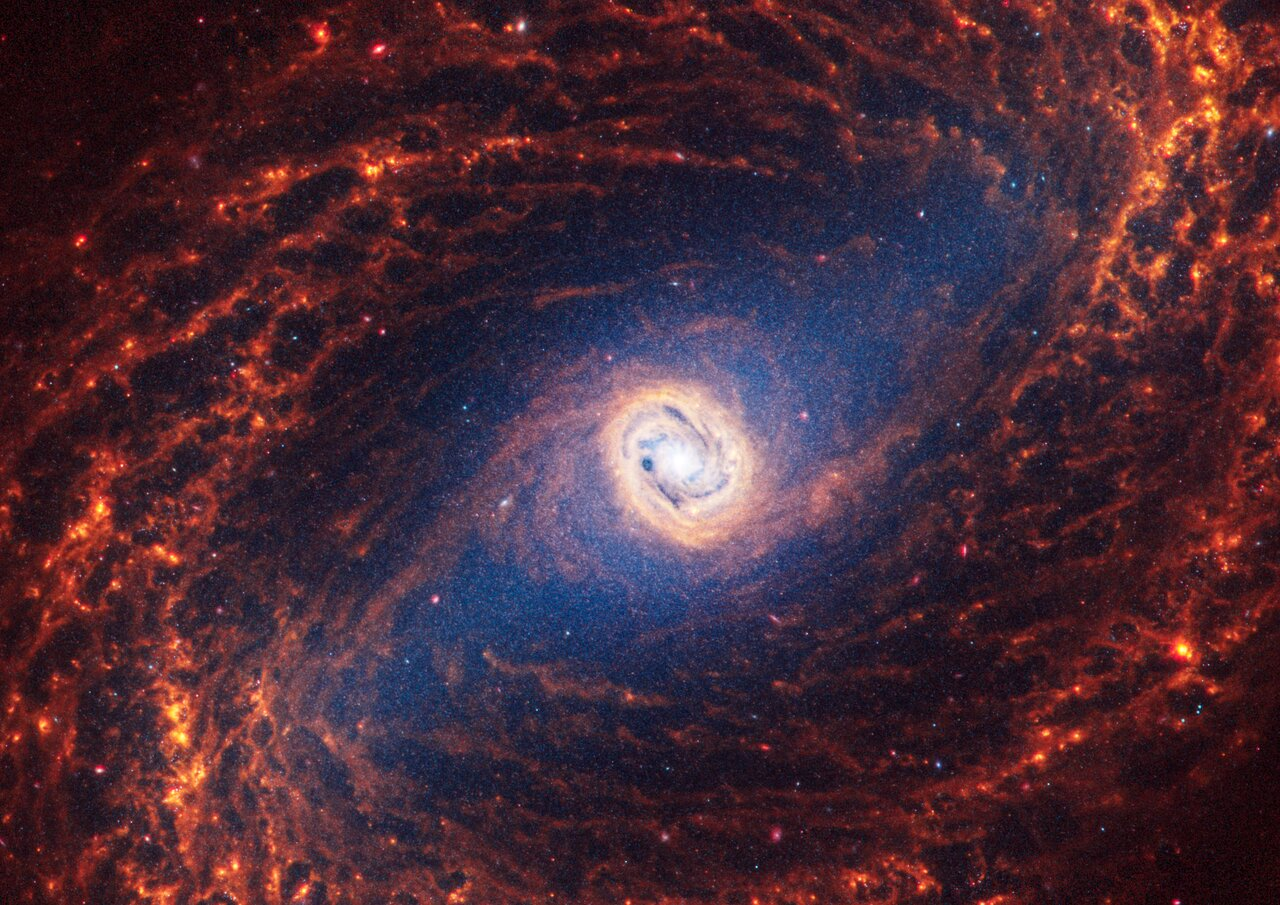
NGC 1433 is 46 million lightyears away, and has a prominent central bar connecting to the spiral arms, that rotate counterclockwise. There are hints of a double-ringed structure at the core.
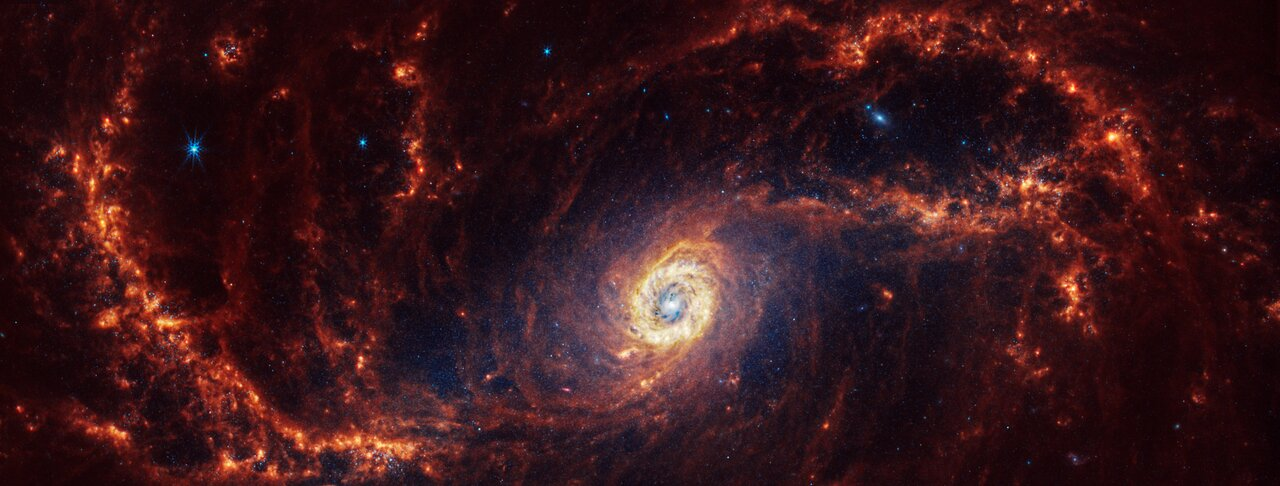
NGC 1672 at a distance of 60 million lightyears away, is akin to a cosmic T-Rex, sporting a pair of tiny spiral arms, anchored by its bright core. The central region is glowing blue in the light of baby stars.
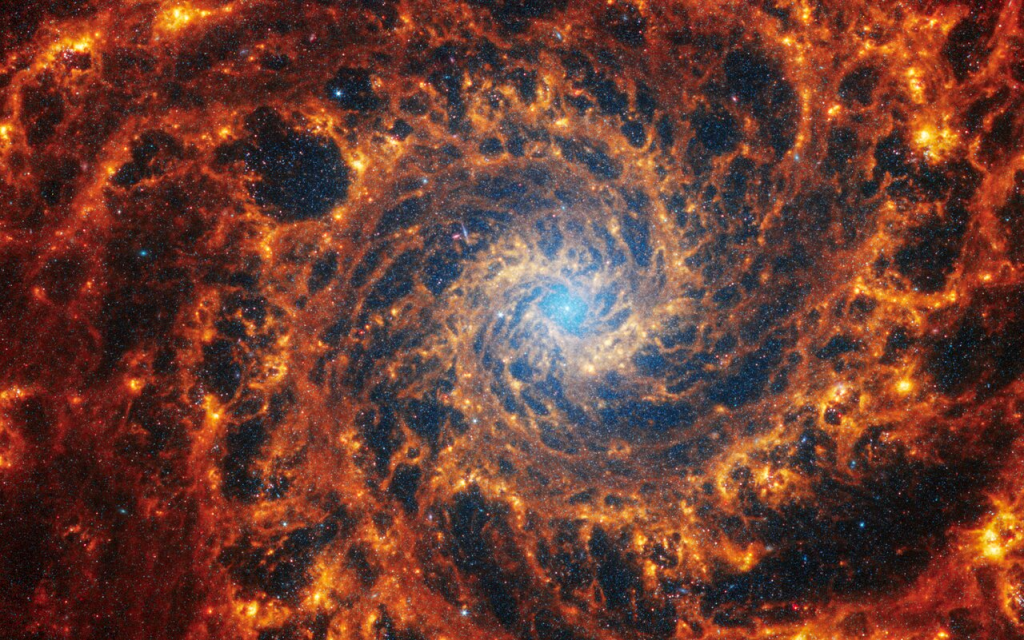
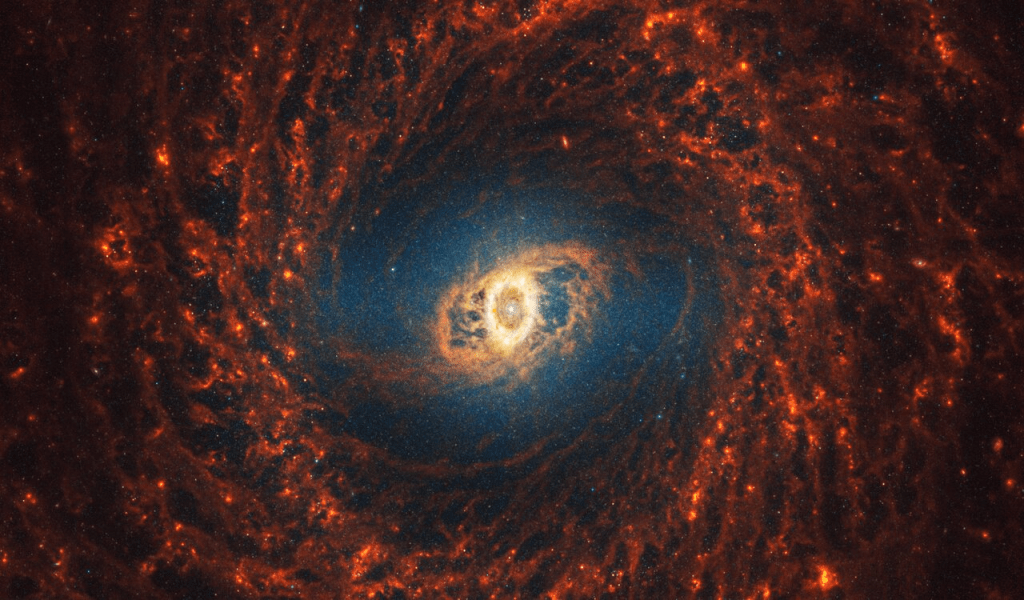
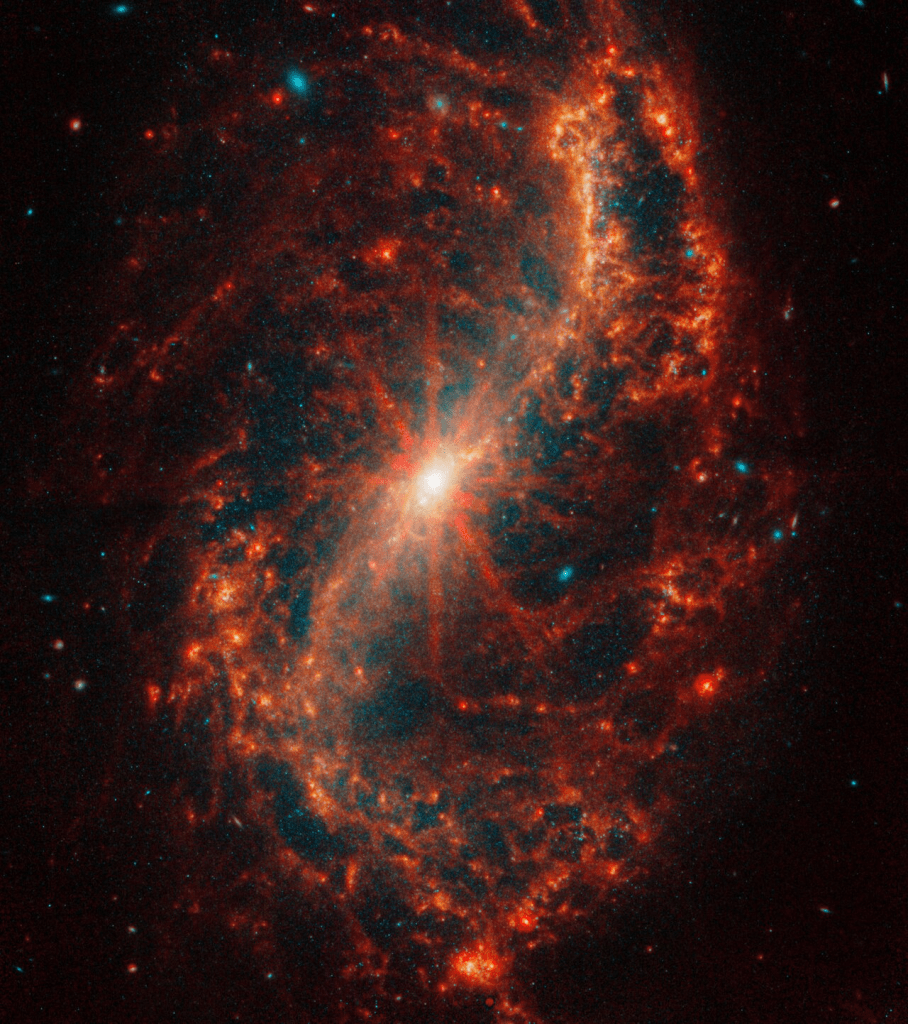
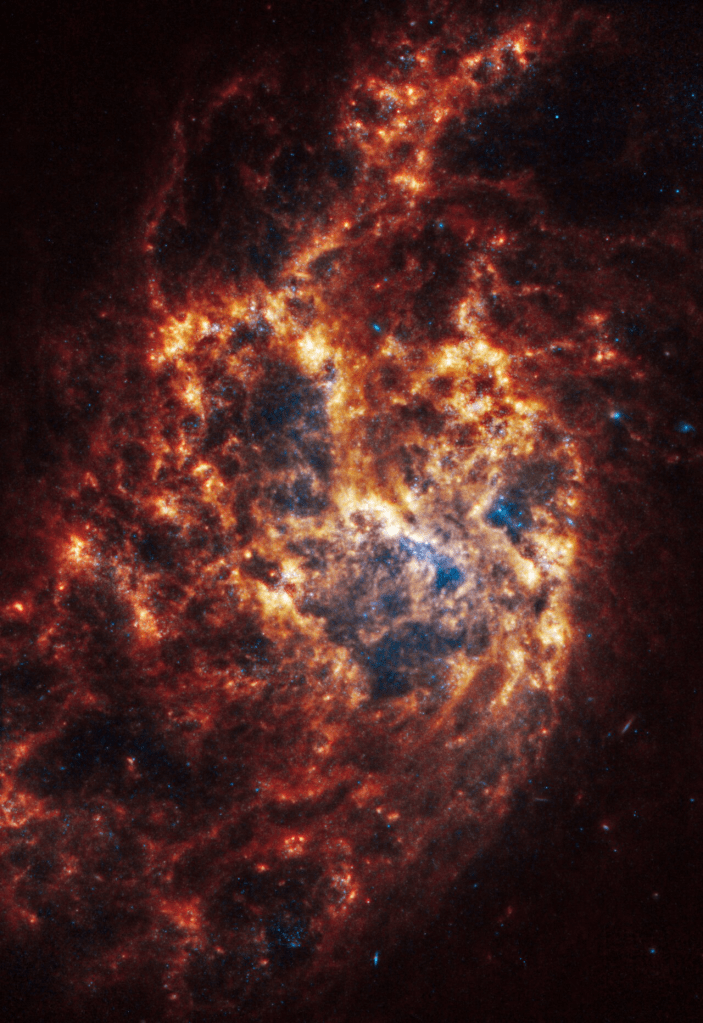
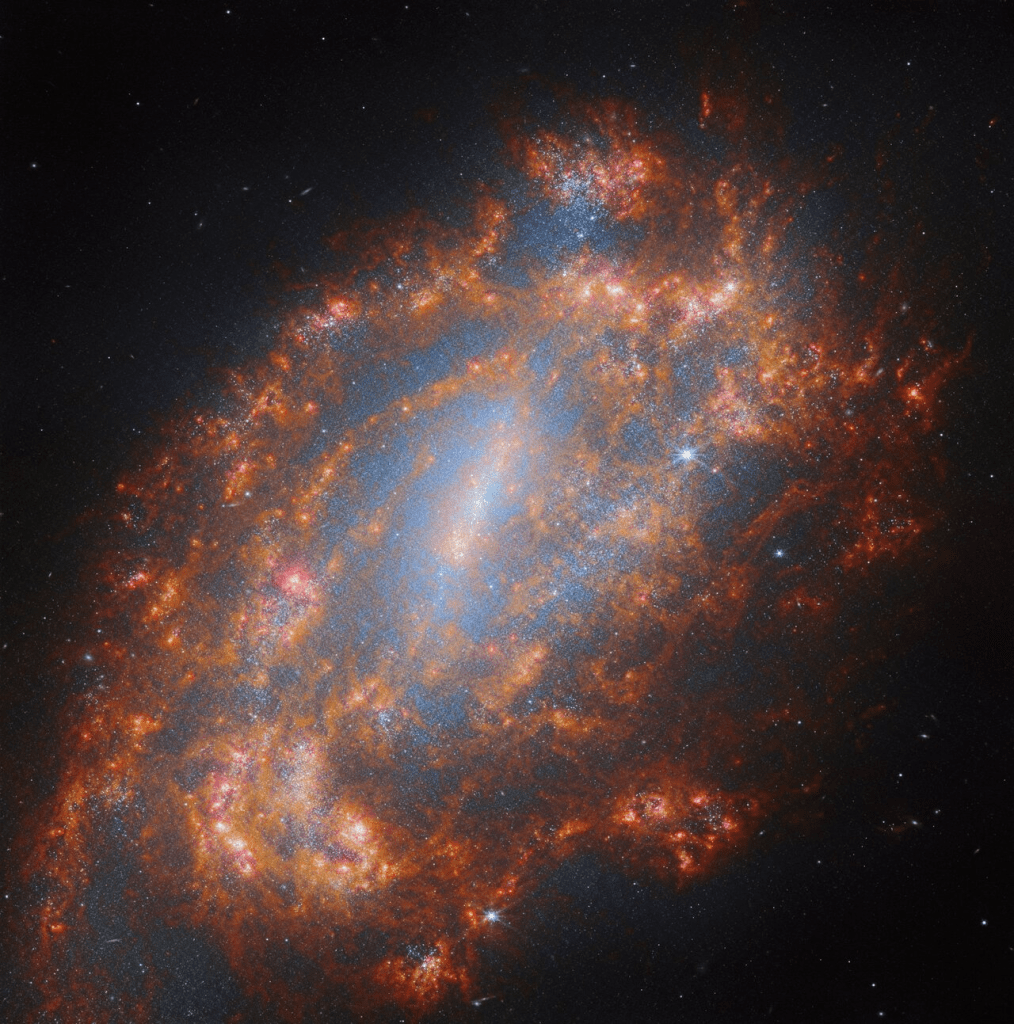
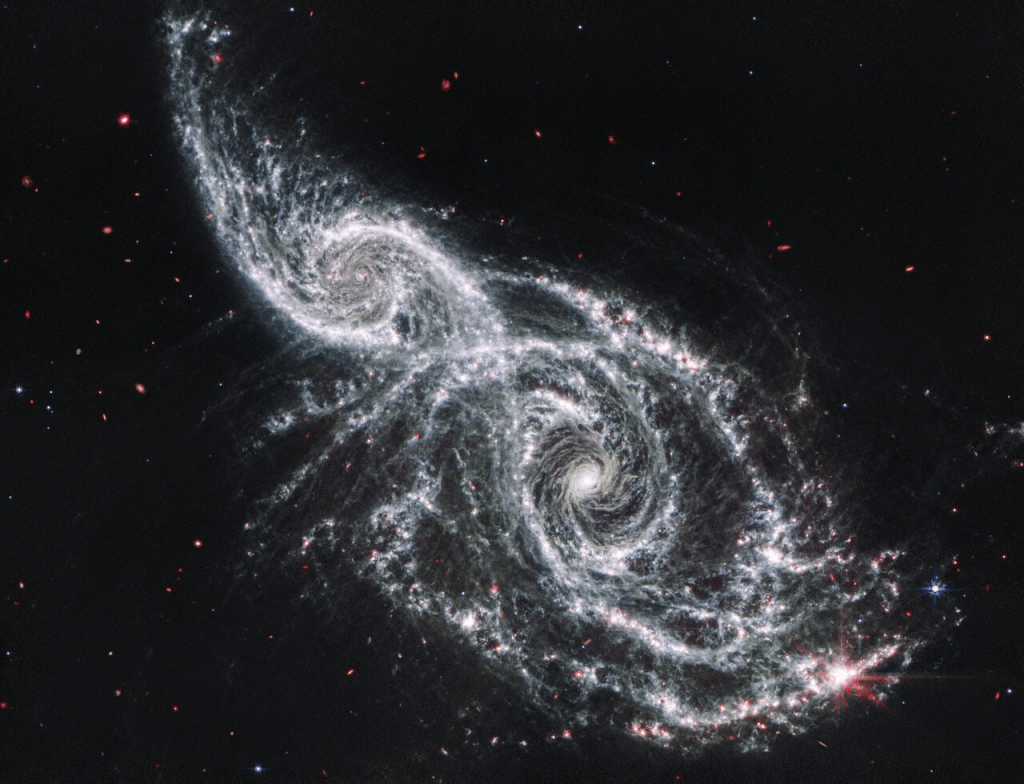
The universe, boundless and indifferent, expands outwards—its processes eternal, its scale unfathomable, its essence defined not by observers but by the ceaseless mechanics of physics.
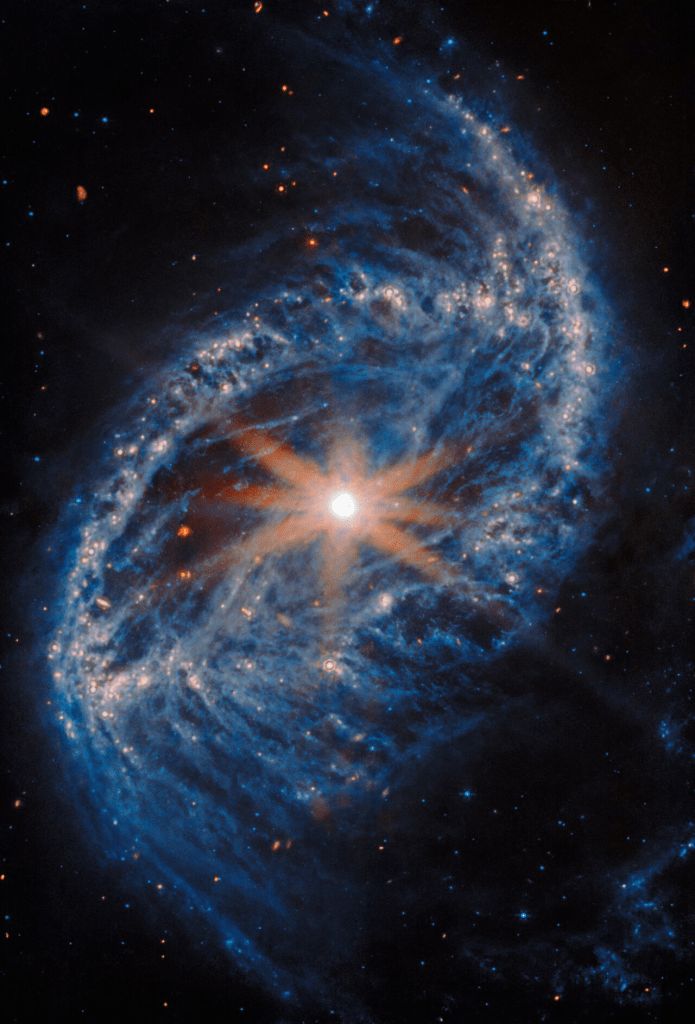
Image Credits:
NGC 5068: ESA/Webb, NASA & CSA, J. Lee and the PHANGS-JWST Team
Cover Image – M51 (MIRI image – cropped): ESA/Webb, NASA & CSA, A. Adamo (Stockholm University) and the FEAST JWST team
NGC 4449 (MIRI): ESA/Webb, NASA & CSA, A. Adamo (Stockholm University) and the FEAST JWST team
M83: ESA/Webb, NASA & CSA, A. Adamo (Stockholm University) and the FEAST JWST team
NGC 1433 (MIRI Image): NASA, ESA, CSA, and J. Lee (NOIRLab), A. Pagan (STScI)
NGC 7496 (MIRI Image): NASA, ESA, CSA, and J. Lee (NOIRLab), A. Pagan (STScI)
NGC 1433 (MIRI Image – Annotated): NASA, ESA, CSA, and J. Lee (NOIRLab), A. Pagan (STScI)
NGC 1365 (MIRI Image): NASA, ESA, CSA, and J. Lee (NOIRLab), A. Pagan (STScI)
NGC 7496 (MIRI Image – Annotated): NASA, ESA, CSA, and J. Lee (NOIRLab), A. Pagan (STScI)
Webb Reveals IC 5332 (scaled): ESA/Webb, NASA & CSA, J. Lee and the PHANGS-JWST and PHANGS-HST Teams
Webb Reveals Complex Galactic Structures: ESA/Webb, NASA & CSA, J. Lee and the PHANGS-JWST and PHANGS-HST Teams
Webb Inspects the Heart of the Phantom Galaxy: ESA/Webb, NASA & CSA, J. Lee and the PHANGS-JWST Team. Acknowledgement: J. Schmidt
NGC 4254: NASA, ESA, CSA, STScI, J. Lee (STScI), T. Williams (Oxford), PHANGS Team
A galactic treasury: ESA/Webb, NASA & CSA, A. Leroy, J. Lee and the PHANGS Team
NGC 4321: NASA, ESA, CSA, STScI, J. Lee (STScI), T. Williams (Oxford), PHANGS Team
NGC 1300: NASA, ESA, CSA, STScI, J. Lee (STScI), T. Williams (Oxford), PHANGS Team
IC 5332: NASA, ESA, CSA, STScI, J. Lee (STScI), T. Williams (Oxford), R. Chandar (UToledo), PHANGS Team
NGC 2835: NASA, ESA, CSA, STScI, J. Lee (STScI), T. Williams (Oxford), PHANGS Team
NGC 1512: NASA, ESA, CSA, STScI, J. Lee (STScI), T. Williams (Oxford), PHANGS Team
NGC 5068: NASA, ESA, CSA, STScI, J. Lee (STScI), T. Williams (Oxford), PHANGS Team
NGC 4535: NASA, ESA, CSA, STScI, J. Lee (STScI), T. Williams (Oxford), PHANGS Team
NGC 4303: NASA, ESA, CSA, STScI, J. Lee (STScI), T. Williams (Oxford), PHANGS Team
NGC 1087: NASA, ESA, CSA, STScI, J. Lee (STScI), T. Williams (Oxford), R. Chandar (UToledo), PHANGS Team
NGC 1365: NASA, ESA, CSA, STScI, J. Lee (STScI), T. Williams (Oxford), PHANGS Team
NGC 1433: NASA, ESA, CSA, STScI, J. Lee (STScI), T. Williams (Oxford), PHANGS Team
NGC 1672: NASA, ESA, CSA, STScI, J. Lee (STScI), T. Williams (Oxford), PHANGS Team
NGC 1385: NASA, ESA, CSA, STScI, J. Lee (STScI), T. Williams (Oxford), PHANGS Team
NGC 3351: NASA, ESA, CSA, STScI, J. Lee (STScI), T. Williams (Oxford), PHANGS Team
NGC 1566: NASA, ESA, CSA, STScI, J. Lee (STScI), T. Williams (Oxford), R. Chandar (UToledo), D. Calzetti (UMass), PHANGS Team
NGC 628: NASA, ESA, CSA, STScI, J. Lee (STScI), T. Williams (Oxford), PHANGS Team
NGC 7496: NASA, ESA, CSA, STScI, J. Lee (STScI), T. Williams (Oxford), PHANGS Team
NGC 2566 (MIRI image): ESA/Webb, NASA & CSA, A. Leroy
Galaxies IC 2163 and NGC 2207 (Webb MIRI image): NASA, ESA, CSA, STScI
M51 (NIRCam image): ESA/Webb, NASA & CSA, A. Adamo (Stockholm University) and the FEAST JWST team

Leave a comment