
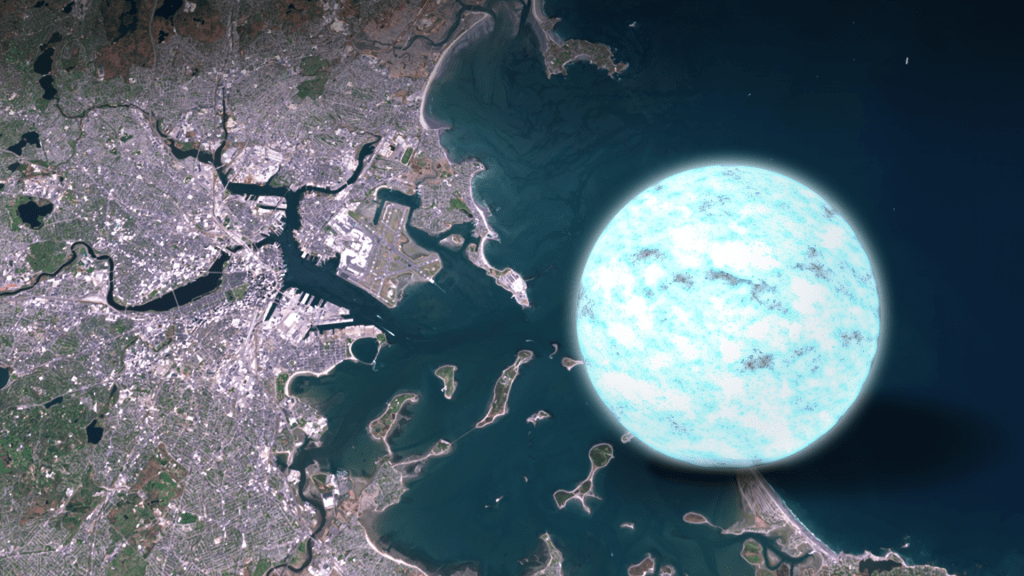
The night sky is peppered with clocks the sizes of small cities, precise enough to rival atomic timekeeping. These are pulsars, rapidly spinning neutron stars that emits rhythmic pulses of radiation like a celestial lighthouse. These exotic objects, the remnant cores of dead stars, have exquisitely precise spins, but every so often, these cosmic clocks experience a jarring disruption: a glitch. These sudden spin-ups defy expectations, briefly accelerating the pulsar’s rotation before gradually settling back to a slower pace. These are real anomalies in extremely dense objects that have been physically observed.
Astronomers have long speculated about the origins of these glitches, with one of the most intriguing theories suggests a hidden process lurking within the heart of a special class of stars—strangeon stars. The answer, it turns out, may lie in the violent fracturing of their solid crusts in seismic events known as starquakes.
Unlike typical neutron stars, which have a solid crust with a fluid interior (actually, superfluid), strangeon stars are thought to be entirely solidified due to their exotic composition. This means that as they spin down over time, internal stresses build up. When the accumulated stress reaches a breaking point, the crust fractures in a sudden quake, sending shockwaves through the star’s body. This violent process momentarily changes the star’s shape and redistributes its mass—triggering the observed glitch.
The two types of starquakes, classified as Type I and Type II, determine the nature of the resulting glitch. Type I starquakes, which occur with little energy release, cause subtle changes in rotation without major outbursts. Type II starquakes, on the other hand, are far more dramatic, releasing bursts of energy that actually shake the very fabric of spacetime itself.
Glitch Recovery
After a starquake-induced glitch, a strangeon star doesn’t remain in its accelerated state forever. The energy redistribution within the star sets off a plastic and elastic recovery process. The outer layers undergo plastic flow—irreversible deformation—while the inner layers experience elastic motion, allowing the star to gradually return to equilibrium. The extent of this recovery is measured by the recovery coefficient, which correlates with the size of the glitch itself.
The recovery period is further shaped by the viscosity of the star’s interior. As matter slowly settles into the newly cracked regions near the equator, the pulsar’s spin rate decays back toward its original trend. Some researchers propose a two-layered starquake model, which accounts for the complex interaction between the outer and inner layers, particularly in younger pulsars like the Crab pulsar, where glitch activity is more pronounced.
Gravitational Waves
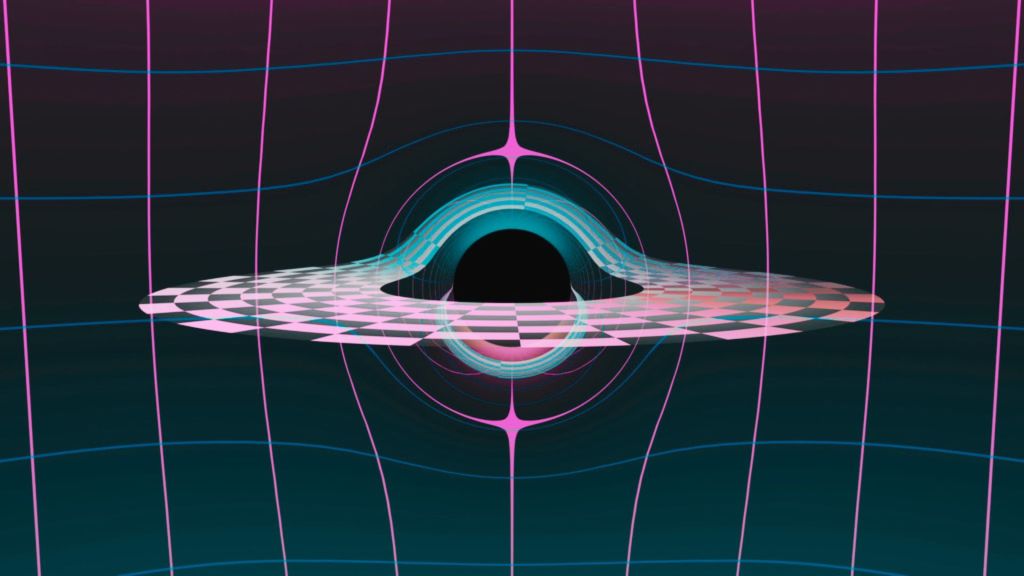
The impact of a starquake is not confined to the star itself. When the crust of a strangeon star cracks and shifts, it can excite oscillation modes that ripple outward as gravitational waves—subtle distortions in space-time that could be detectable by future observatories. These waves offer a new window into the physics of ultra-dense matter, potentially confirming the existence of strangeon stars and deepening our understanding of how matter behaves under the most extreme conditions in the universe.
The starquake model is helping scientists piece together the enigmatic behavior of pulsar glitches, linking these sudden jumps in spin to seismic events hidden deep within solid stellar interiors. As our observational tools improve, we may one day capture the precise signatures of these starquakes, unlocking a new frontier in astrophysics. For now, the mystery remains, buried within the cracked crusts of strangeon stars—silent, but waiting to tell their story through the invisible signals they send across the cosmos.
Cover Image: Illustration of a Starquake on a Neutron Star, NASA
Sources:

Leave a comment