Even today, comets remain some of the most intriguing objects in the solar system. Often dismissed as icy relics of planetary formation, these celestial wanderers may instead be life’s greatest carriers. The conditions within comets—radioactive decay keeping water liquid for extended periods, organic molecules embedded in their structure—are strikingly similar to environments where life thrives on Earth.
In some cases, complex organic molecules such as polycyclic aromatic hydrocarbons (PAHs) found in comets resemble biological waste products. These molecules could be remnants of past life, expelled into space and preserved within these icy time capsules. Even more intriguingly, the possibility of “shadow” biospheres—forms of life with molecular structures different from those on Earth—suggests that comets may not only carry life but also preserve alternative biochemistries.
Panspermia
To really understand the role of comets in the business of life, it is necessary to confront a question: Where did we come from? Humans have had a variety of answers to this question over the ages, with the prevailing view today being a spontaneous emergence of life on Earth, springing from a primordial soup of organic molecules, intermittently warmed by sunlight, and potentially catalysed by lightning strikes. This Earth-centric perspective may be a limitation of our imagination rather than a reflection of reality. The alternative—panspermia—suggests that life’s seeds were scattered throughout the cosmos, predating the formation of our planet and, perhaps, even the Sun itself.
The idea is not new. Ancient Greek philosophers speculated that life might have arrived from elsewhere. More recently, Louis Pasteur’s famous dictum, Omne vivum e vivo—’all life from antecedent life’—challenges the notion that life spontaneously generated on Earth. If life always arises from pre-existing life, then we must entertain the possibility that its origins extend far beyond our planet’s history, embedded within the very fabric of the universe.
In standard cosmology, the Lambda Cold Dark Matter with Hot Big Bang Cosmology (ΛCDMHC) model paints a bleak early universe—dominated by chaos, radiation, and slow structure formation. In such an environment, life would be an anomaly, emerging only after billions of years of planetary evolution. But what if this view is incorrect? What if life had a far earlier start?
Enter Hydrogravitational Dynamics (HGD) cosmology, a radical departure from the conventional model. HGD suggests that gravitational structures—giant clumps of gas and dust—formed soon after the universe transitioned from plasma to gas, a mere 300,000 years after the Big Bang. These dense regions provided stable, life-supporting environments far earlier than ΛCDMHC would allow. In this scenario, the necessary chemicals, temperatures, and environments for life were not rare cosmic accidents but inevitable features of an evolving universe.
The First Nurseries
HGD proposes that these early structures gave rise to primordial planets—formed in million-solar-mass clumps within the first few hundred million years after the Big Bang. These planets, each separated by mere astronomical units, could have been warm, wet, and ideal for life. Imagine an entire network of young, Earth-like worlds bathed in organic-rich environments, constantly exchanging material through cometary impacts and atmospheric transfer. In this picture, life’s birthplace was not a single pond on a single world but an entire interconnected ocean spanning the cosmos.
This cosmic scale of abiogenesis fundamentally alters our perspective. Life may not have emerged once and struggled to survive—it may have begun nearly everywhere, flourishing in vast primordial nurseries long before Earth even formed. The sheer number of these planets suggests that life’s spread was not a statistical fluke but an inevitable consequence of cosmic evolution.
Comet Forge
If life did not originate on Earth, how did it get here? Panspermia offers multiple pathways. Cometary panspermia suggests that life’s building blocks were scattered across young planetary systems via cosmic impacts. Even more dramatically, entire planets or cometary bodies expelled from dense primordial clusters could carry life to new galaxies, seeding exponential self-replication across the cosmos. In this model, comets are not passive wanderers but active agents of life’s spread, their icy tails leaving behind the precursors of biology wherever they go.
One of the most enigmatic pieces of evidence supporting cosmic panspermia came in the form of the red rain phenomenon in Kerala, India, in 2001. The microscopic red cells that fell from the sky exhibited unusual properties—resilience to extreme heat, a lack of identifiable DNA, and the ability to grow in high-pressure environments. These features are remarkably consistent with the conditions inside primordial planets, suggesting they may have originated from extraterrestrial sources rather than Earthly ‘contamination’.
Further evidence emerges from meteorites such as the Murchison meteorite, which contains a diverse array of organic molecules, including amino acids—life’s fundamental building blocks. If life was already embedded within these celestial bodies, then Earth’s biosphere may be just one node in a vast, interconnected web of cosmic biology.
Biological Big Bang
The implications of this framework are profound. Rather than life being an isolated accident on a single planet, it may be a universal principle, as fundamental to the cosmos as gravity or nuclear fusion. The HGD model proposes that life emerged almost immediately after the formation of the first stable gravitational structures, spreading homogeneously through dark matter planet-clumps in what could be termed a biological big bang.
This perspective transforms our search for life. Instead of looking for rare anomalies, we should expect to find life everywhere—on comets, within the subsurface oceans of icy moons, and in the atmospheres of exoplanets. The question is not whether life exists elsewhere but rather how much of it has survived and evolved since its cosmic inception.
As we send probes deeper into space, we may find that the primordial soup was never confined to Earth at all. It was—and still is—boiling across the entire universe, waiting for us to recognize it.
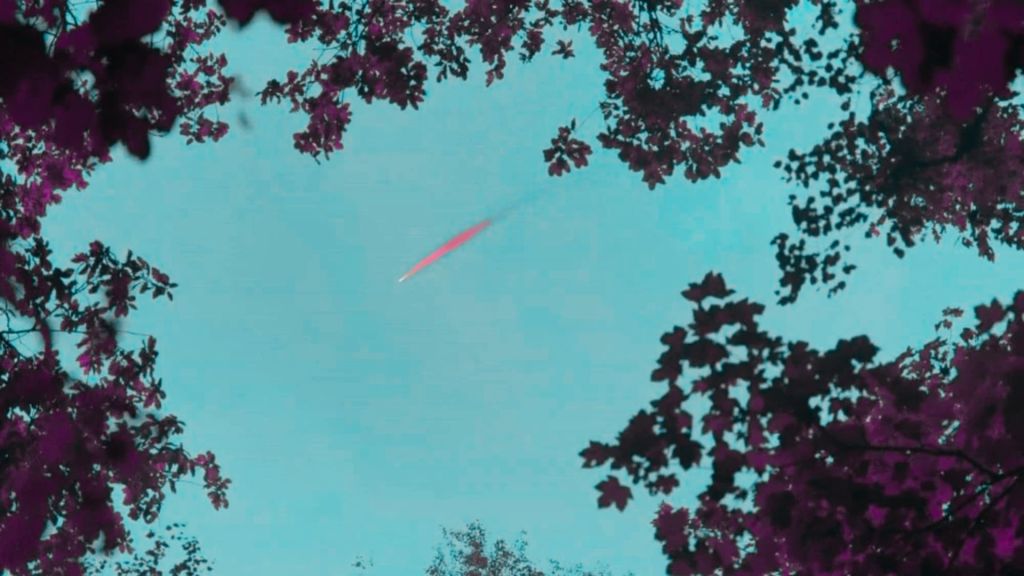
Cover Image: The Red Comet from Game of Thrones.
Sources:
The Imperatives of Cosmic Biology
Primordial planets, comets and moons foster life in the cosmos
Bacterial morphologies in carbonaceous meteorites and comet dust
Primordial Planets Explain Interstellar Dust, the Formation of Life: and Falsify Dark Energy

Leave a comment