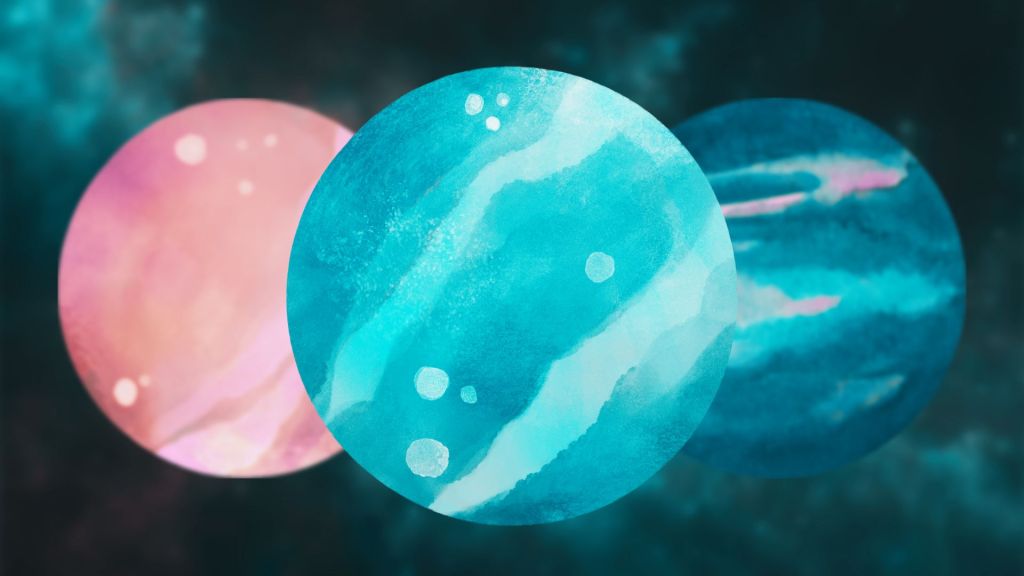
For centuries, humans have gazed at the night sky, wondering if life exists beyond our pale blue planet. Today, science is uncovering the secrets of exoplanets—worlds orbiting distant stars—many of which are unlike anything in our solar system. Some of these planets challenge our very understanding of habitability. Could life thrive in the unlikeliest of places? Let’s take a journey through some of the strangest, yet fascinating, worlds where life might be eking out a living.
Water Worlds
Imagine standing on the shores of a vast, endless ocean—but instead of a familiar blue sky, the heavens above shimmer in shades of pink and purple, tinged by a thick hydrogen atmosphere. These are Hycean worlds, sub-Neptune planets where high-pressure oceans might cradle exotic life. If the conditions are right, these planets could be teeming with microorganisms in their warm, nutrient-rich waters.

Miller’s Planet from Interstellar. (Image Credit: Paramount Pictures).
Red Stars
In the dim glow of a small, red sun, a rocky planet sits in perfect harmony, locked in an eternal day and night. One side basks in endless sunlight, while the other remains in frozen darkness. Planets orbiting M-dwarfs—tiny but long-lived stars—are promising places to search for life. Scientists are developing the Habitable Worlds Observatory (HWO) to peer into these alien landscapes, searching for signs of life in their thin, hazy atmospheres.
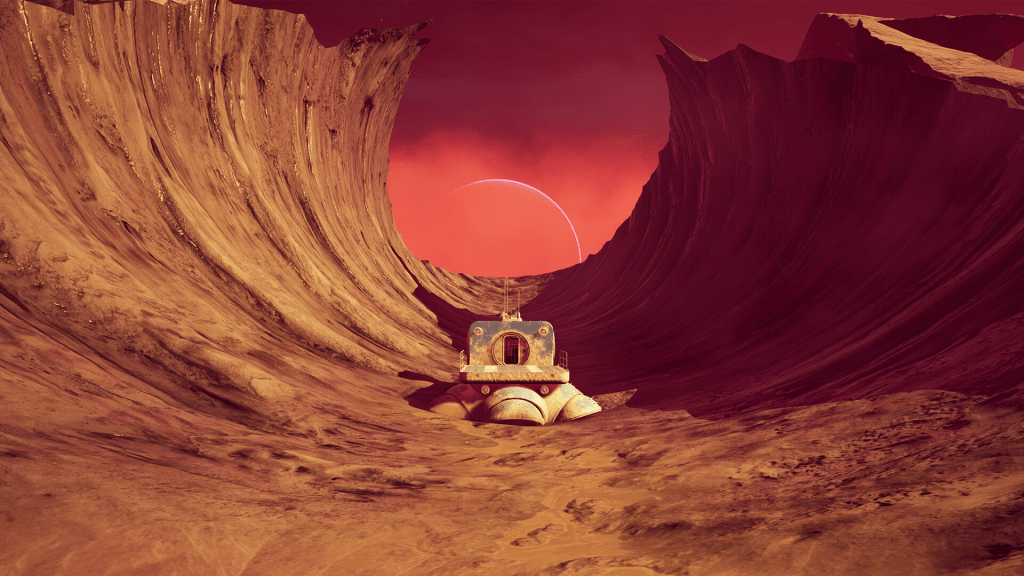
Red Dwarf exoplanet from The Invincible by Starward Industries
Red Edge
Who says life must stay within the so-called habitable zone? Some planets, though too far from their stars for liquid water, could still support plant-like organisms with unique adaptations. On these worlds, vegetation might glow with an unfamiliar hue, detectable from light-years away. Such alien ecosystems could revolutionize how we think about sustaining human life in space.
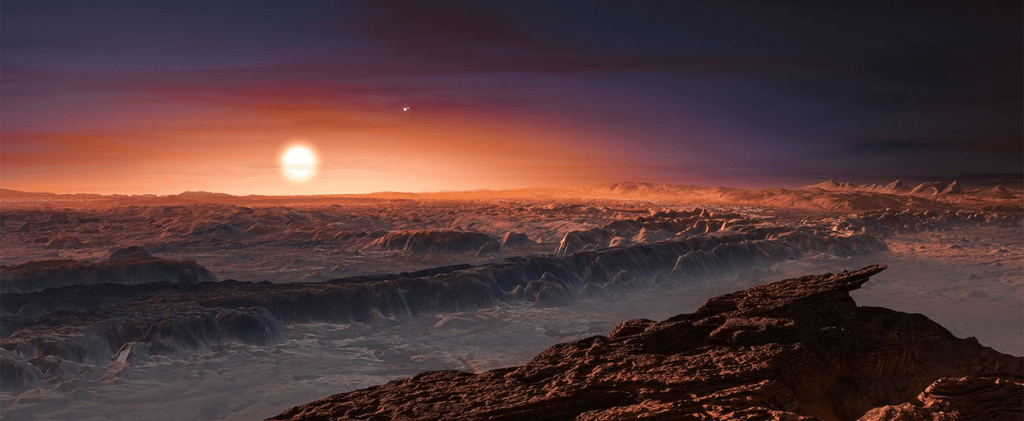
Illustration of Proxima Centauri b, ESO/M. Kornmesser.
Ice Moons
Far beyond the warm embrace of a sun, icy moons drift through the void, concealing something extraordinary beneath their frozen crusts—vast underground oceans. Europa and Enceladus, two moons in our own solar system, hint at this possibility. On distant exoplanets, these hidden seas might be even more widespread, their dark waters warmed by the pull of their planets’ gravity. Could creatures, perhaps similar to deep-sea extremophiles on Earth, thrive in these alien abysses?
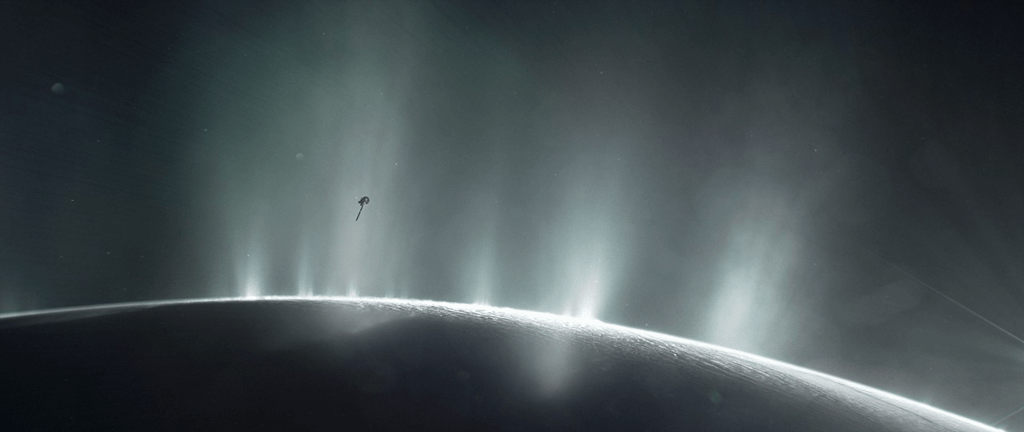
Illustration of Cassini flying through the Geysers on Enceladus, NASA/JPL-Caltech/Space Science Institute
Volcanic Worlds
Now, picture a world of endless fire, where rivers of molten rock flow like water, and a thick, searing atmosphere glows with the heat of a planet still forming. These magma ocean planets are places of violent creation, their surfaces ever-changing. Though hostile today, such worlds could hold clues to how atmospheres evolve, shaping the environments that might eventually become habitable.

Mustafar from Star Wars Databank.
Super-Earths
Somewhere in the galaxy, there might be a world twice the size of Earth, covered in dense clouds and wrapped in an atmosphere rich with water vapor. These super-Earths, larger than our planet but smaller than Neptune, may contain deep oceans or high-pressure ice layers that separate their mantles from the sky. Their thick atmospheres could provide protection against harsh cosmic radiation, giving life a chance to flourish.
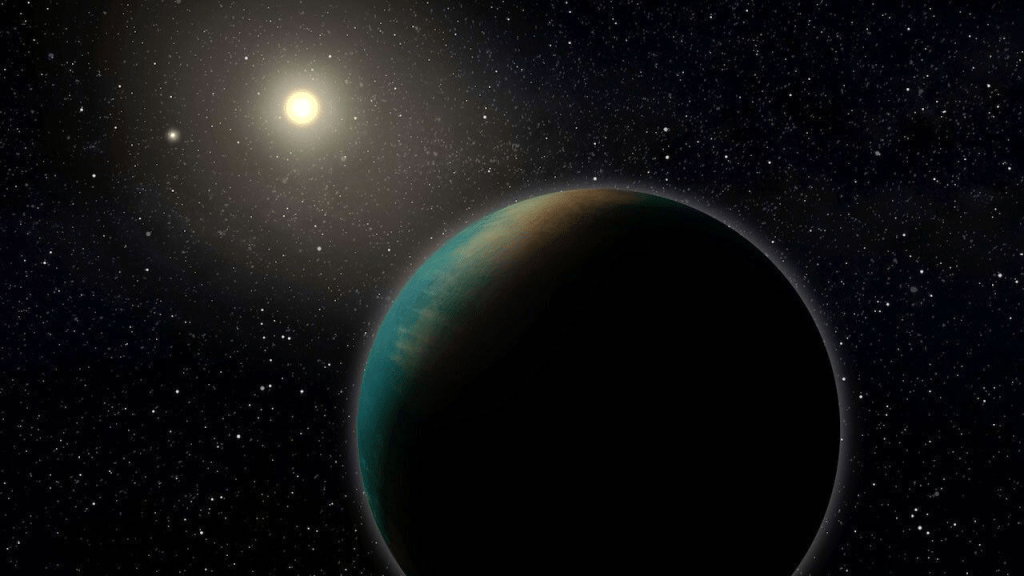
Illustration of a Super Earth, Benoit Gougeon, Université de Montréal.
Dead Stars
Even after a star dies, life may still find a way. White dwarfs—burnt-out remnants of stars like our Sun—might host planets that remain habitable for billions of years. Picture a world orbiting close to a glowing ember, bathed in soft, eerie light. If an Earth-like planet exists at the right distance, it could receive just enough energy for liquid water, allowing life to persist long after its original sun has faded.
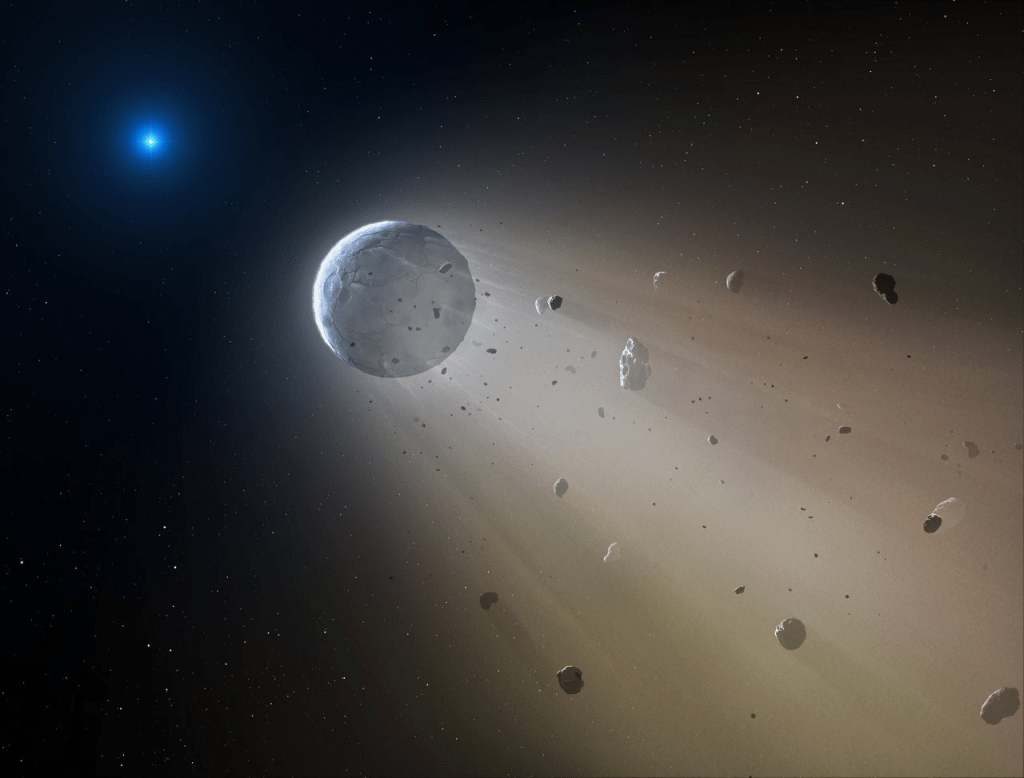
Illustration of a White Dwarf feeding on an exoplanet in orbit around it. (Image Credit: CfA/Mark A. Garlick).
Drylands
Even on the driest worlds, life might endure. Imagine a rocky planet with vast, wind-swept deserts, its surface cracked and barren, yet home to microscopic organisms clinging to life in tiny pockets of moisture. These extreme environments resemble the Atacama Desert on Earth, where certain microbes have mastered survival in near-waterless conditions. If life can exist there, why not on an exoplanet?

Arrakis from Dune, Warner Bros
Aerial Biospheres
What if life doesn’t need a solid surface at all? Some planets, especially those with thick, dense atmospheres, might harbor floating microbial lifeforms high in the skies. If scientists detect certain gases, such as a particular form of carbon dioxide (13CO2), it could hint at life suspended in the clouds, much like tiny organisms found in Earth’s upper atmosphere.
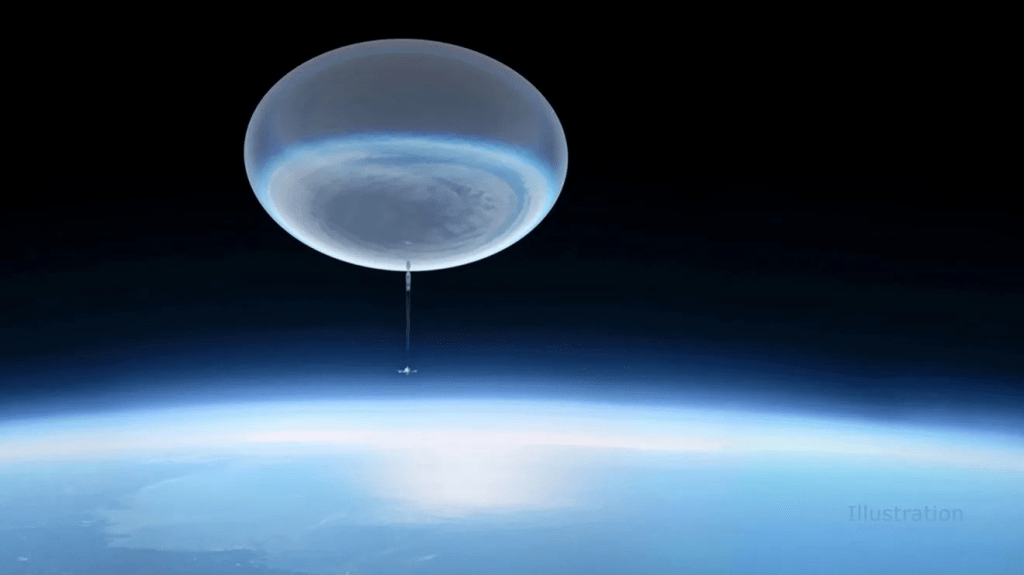
Illustration of a high-altitude research balloon, NASA.
Unknown Worlds
As we explore these bizarre worlds, we must remember—life on other planets may not look anything like life on Earth. Scientists are searching for agnostic biosignatures, clues that point to life without assuming it relies on the same chemistry as ours. Could there be silicon-based creatures? Plasma-like beings drifting through space? The universe holds endless possibilities.
Every new discovery brings us closer to answering the age-old question: Are we alone? As we build better telescopes and develop new ways to analyze distant planets, we may one day uncover the answer hiding in the light of a distant star.

Leave a comment