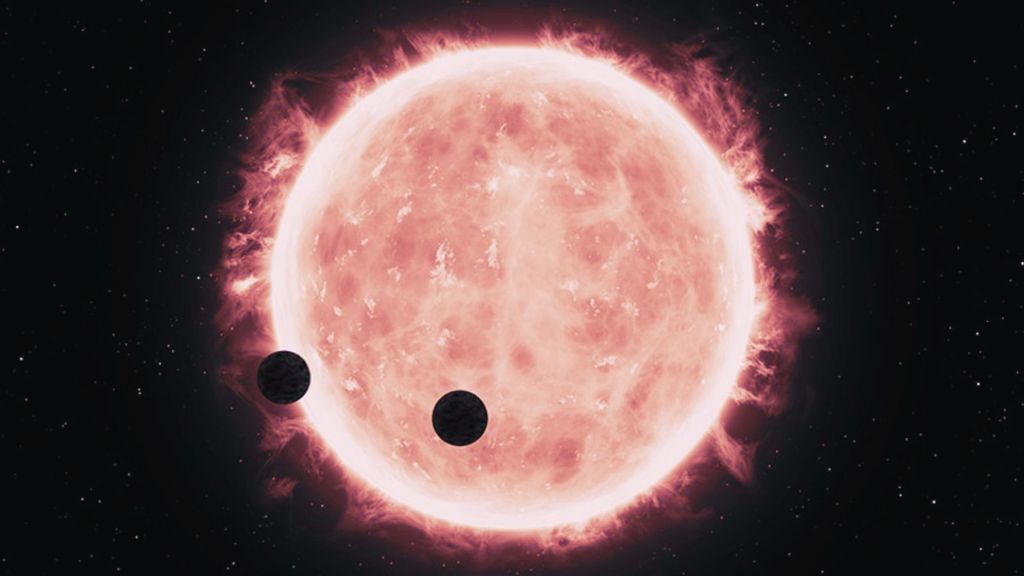
For centuries, humanity has peered into the night sky, wondering whether life exists beyond Earth. Now, with advancements in exoplanet detection and atmospheric analysis, scientists are closer than ever to answering that question. But finding evidence of life is no simple task. Every potential biosignature—a sign of biological activity—must be scrutinized to rule out non-biological explanations. The challenge is not just in detecting these signals but in ensuring that they originate from life rather than abiotic processes.
The Science of Biosignatures
The search for biosignatures spans multiple scientific disciplines, blending planetary science, chemistry, biology and even information theory to interpret what telescopes capture from distant worlds. One review paper published in Astrobiology highlights the importance of atmospheric biosignatures, particularly gases such as oxygen, ozone, methane, and nitrous oxide. These molecules, if detected in an exoplanet’s atmosphere, could hint at biological processes — yet alone, they do not confirm life. Their presence must be examined in a planetary context to rule out alternative chemical or geological sources. Other possible indicators include surface biosignatures, such as the vegetation red edge, and temporal changes in atmospheric composition that suggest biological cycles.
The difficulty lies in the fact that many biosignature gases come with false positives and even false negatives. A planet with abundant methane might seem promising, but if its environment lacks sufficient oxygen, the methane could be produced by geological processes rather than life. The same problem arises in the opposite direction—life may exist but produce no recognizable biosignatures, meaning its presence remains hidden from current detection methods. To navigate these uncertainties, researchers are exploring a broader, more agnostic approach: identifying chemical or atmospheric patterns that suggest life without assuming it behaves as it does on Earth.
Strengthening the Case for Life
One promising strategy to reduce uncertainty is the use of systems science. Network theory and thermochemical kinetics allow scientists to analyze planetary atmospheres in a more comprehensive way. By looking for chemical disequilibrium—unexpected imbalances in atmospheric composition—or identifying anomalously complex molecules, researchers can better assess whether an observed signal is biological in origin.
An essential principle in this approach is that no biosignature stands alone. The strongest evidence comes from multiple, interrelated observations that reinforce each other. A claim of life detection must rest on a combination of evidence supported by well-established scientific theories. Statistical models are now being applied to assess biosignatures probabilistically, assigning confidence levels to detections and helping scientists separate real biological signals from misleading noise.
Another emerging concept is network-based biosignatures, as described by US Govt. funded research in the Handbook of Exoplanets. By mapping planetary atmospheres as chemical networks — where nodes represent molecular species and connections represent reactions — scientists can visualize the complexity of an exoplanet’s chemistry. Certain network patterns may serve as universal indicators of life, independent of specific molecular compositions.
A New Era of Discovery
The search for life beyond Earth is entering a new phase, driven by innovative methods and interdisciplinary collaboration. As telescopes grow more powerful, they will collect data that must be interpreted with increasing sophistication. No single discovery will serve as definitive proof of alien life. Instead, a rigorous, multi-layered approach—grounded in contextual measurements, network science, and probabilistic analysis—will be key to identifying the first true biosignatures on distant worlds. The cosmos may already be whispering its secrets; the challenge lies in learning how to listen.
Illustration of Trappist-1 b and c. (Image Credit: NASA/ESA/STScI/J. de Wit, MIT).

Leave a comment